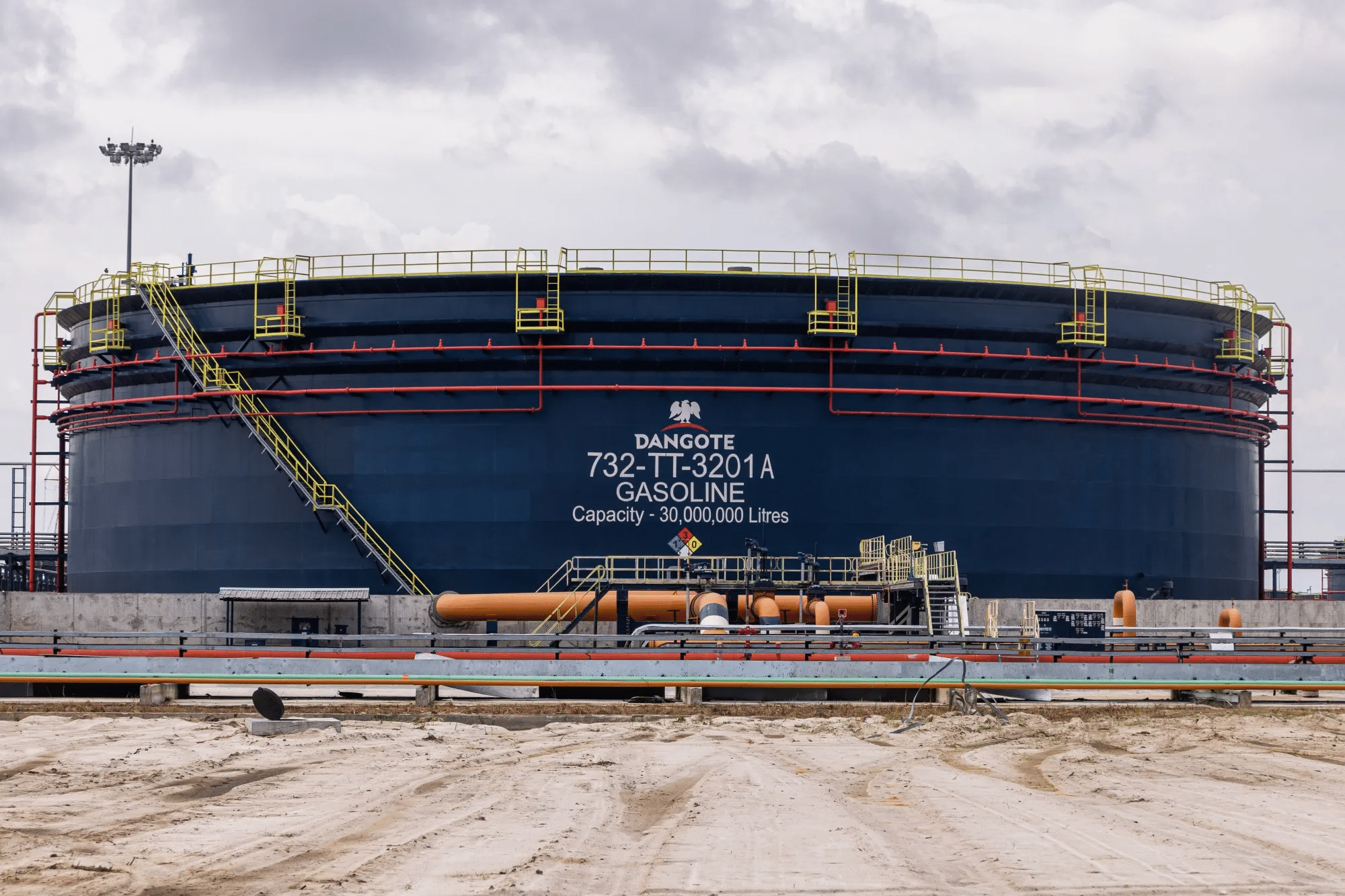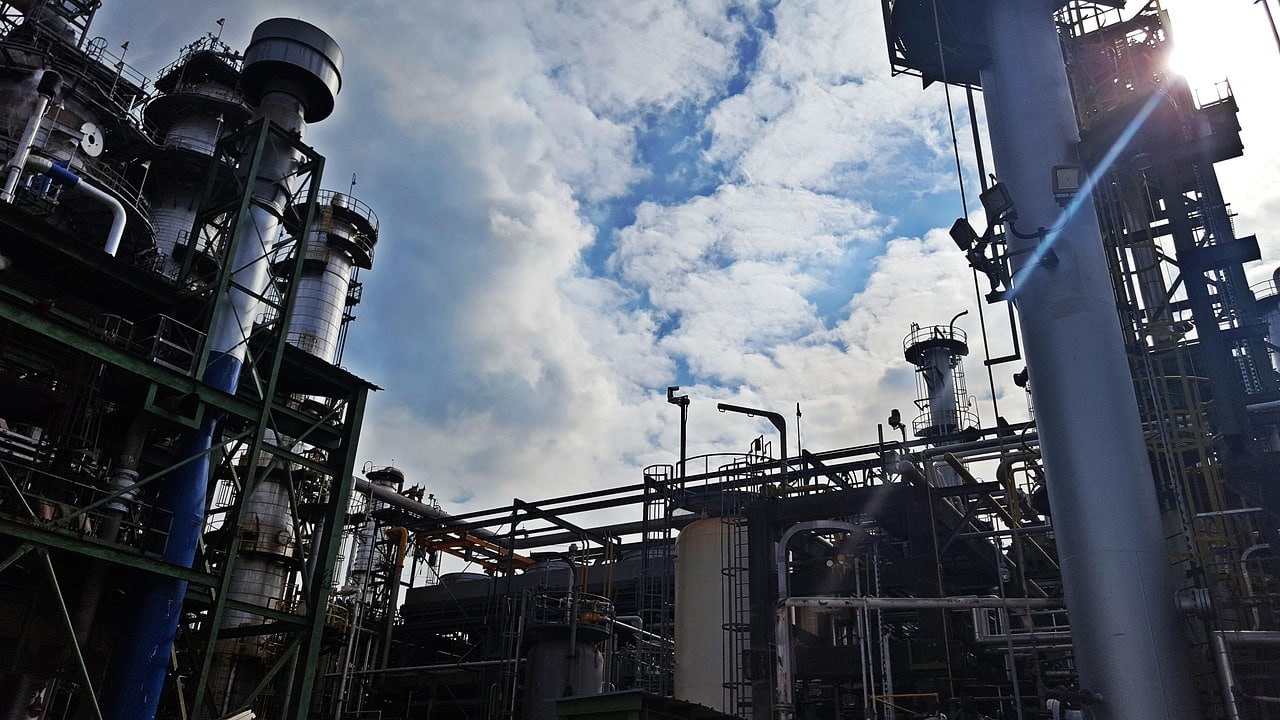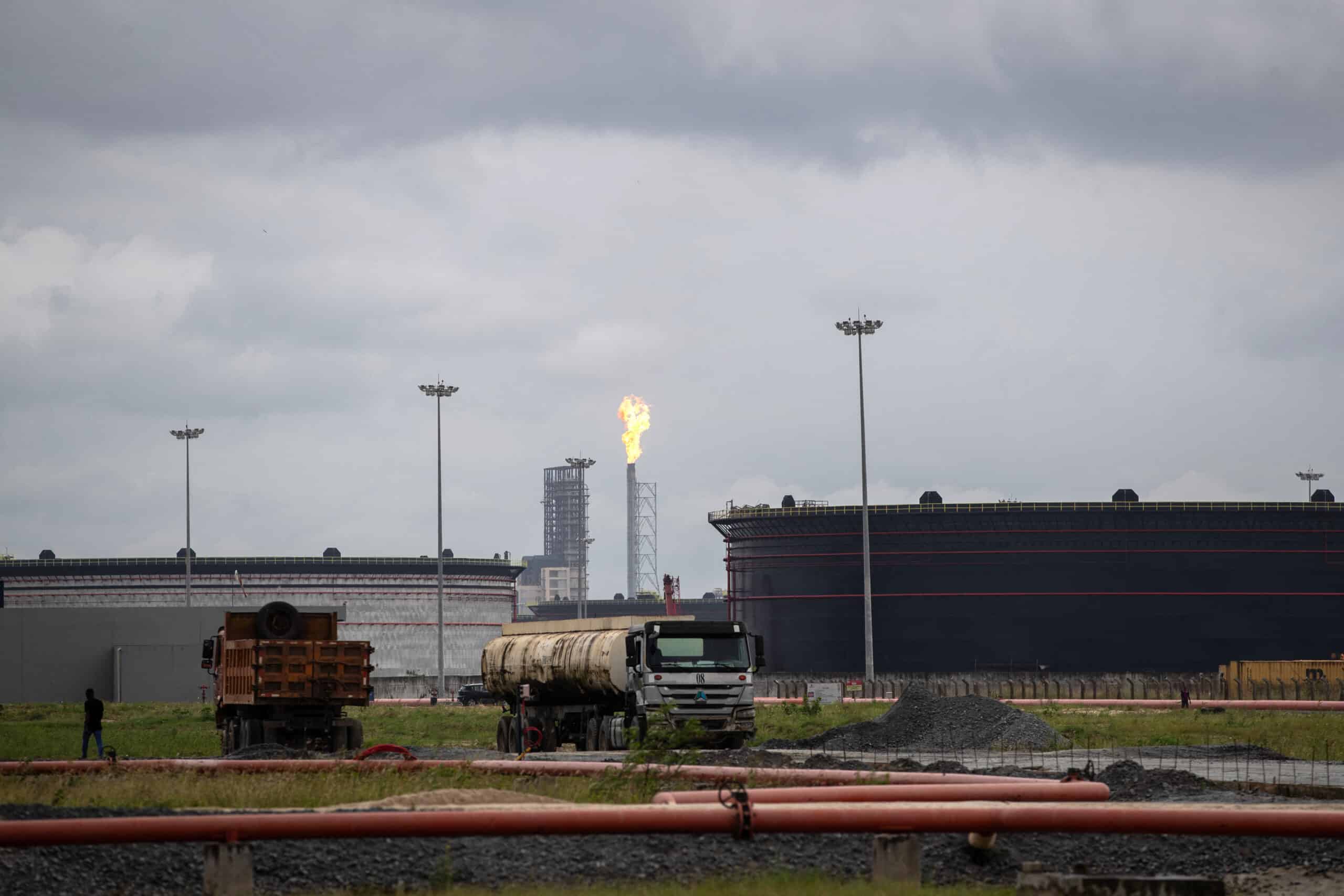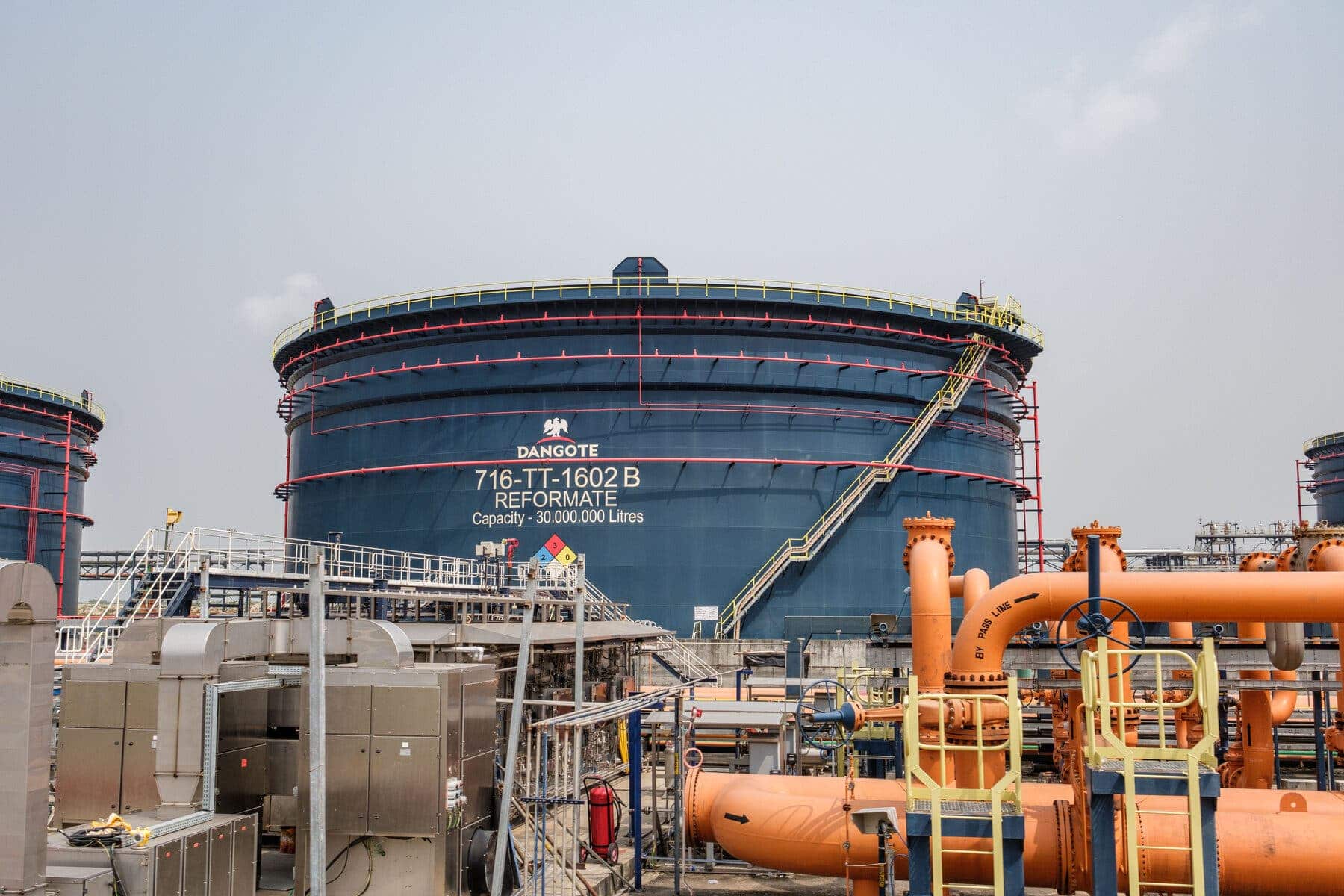


Nigeria’s Dangote Petroleum Refinery has broken ground on a second crude processing unit that will add 700,000 barrels per day (bpd) of capacity, bringing the facility’s total output potential to approximately 1.4 million bpd by 2028 — a development that could reshape fuel supply dynamics across West Africa.
The expansion builds on the refinery’s first unit, a 650,000-bpd plant commissioned in 2024, which has already transformed Nigeria’s fuel import profile.
Data from Nigeria’s downstream petroleum regulator shows the refinery now supplies between 60% and 90% of the country’s petrol demand, with imports declining sharply since 2025 — a striking reversal for Africa’s largest crude oil producer, which spent decades sending raw crude abroad and buying back refined products at significant cost.
The second unit is expected to push Nigeria beyond domestic self-sufficiency, creating meaningful export capacity for refined products across the West African sub-region and further afield.
The timing is notable in a global context. Refining capacity additions have been concentrated largely in Asia, while older facilities across Europe continue to close. That imbalance has at times tightened markets for middle distillates — diesel, jet fuel, and heating oil — during periods of supply disruption.
A fully expanded Dangote complex would give West Africa a substantial domestic anchor in those markets, reducing the region’s exposure to distant supply chains.
Already ranked among the world’s largest single-train refining complexes, the Lekki-based facility is set to climb further in global capacity rankings once the second unit comes online.
For West African economies that have long relied on imports from Europe and Asia to meet fuel demand, the expansion represents a structural shift in regional energy trade — and a test case for the kind of intra-African industrial integration that the African Continental Free Trade Area (AfCFTA) is designed to accelerate.
Nigeria’s ability to sustain and scale refinery output will be closely watched by regional governments, fuel traders, and investors assessing the continent’s downstream energy potential.