

Key Takeaways:
- Petrol prices set to hit all-time highs from June 3
- Government’s levy rollback offsets market-driven price relief
- The fuel tax reprieve cost the Treasury R17.2 billion ($941 million)
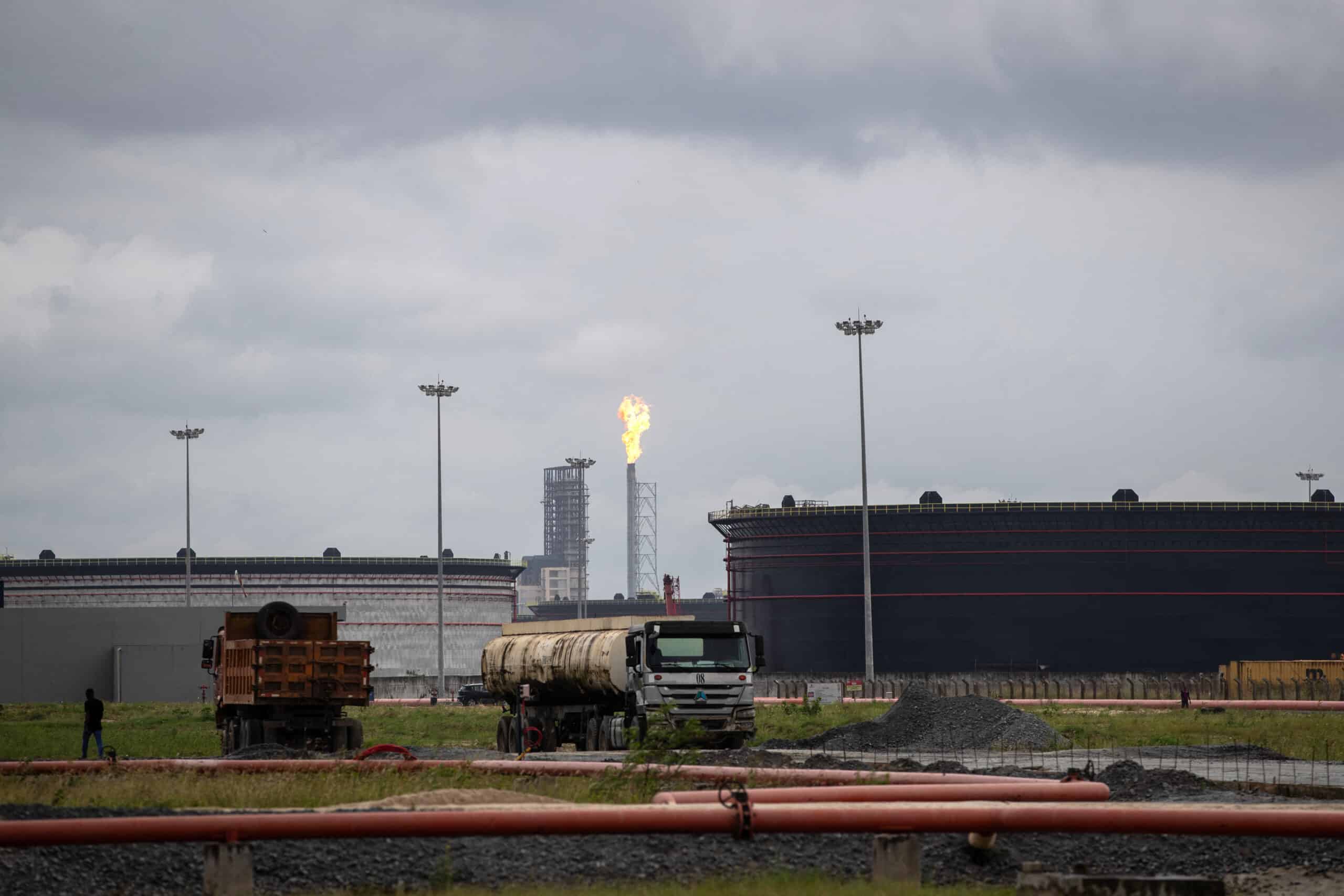
South Africa’s retail petrol price is set to reach a record high this month after the government began withdrawing temporary tax relief measures that had cushioned consumers against fuel cost increases triggered by the Iran war.
The Department of Mineral Resources and Energy announced the new prices in a statement on Monday in Pretoria. The retail price of 95-octane petrol will rise to 28.06 rand ($1.53) per litre on June 3, up from 26.63 rand ($1.45) last month in Gauteng, the country’s economic hub.
South Africa had earlier introduced a temporary reduction in its general fuel levy in April after the escalation of the U.S.-Israel conflict with Iran sent global crude prices surging.
The National Treasury and the Department of Mineral and Petroleum Resources extended the levy reduction in May as geopolitical tensions dragged on longer than expected.
The government now says the relief must be wound down to steady state finances. Finance Minister Enoch Godongwana confirmed the temporary fuel levy reduction had cost the fiscus approximately R17.2 billion ($941 million) in foregone tax revenue.
A record that was almost avoided
The timing of the price hike is made more frustrating by what the underlying data actually shows.
Month-end figures from the Central Energy Fund show both petrol and diesel have shifted firmly into over-recovery territory, with 95-octane petrol recording an over-recovery of 42 cents per litre, a sharp turnaround from the steep increases seen in April and May 2026.
Under normal circumstances, that over-recovery would have translated into a price reduction at the pumps.
The theoretical petrol price decrease of between 21 and 25 cents per litre was effectively wiped out by the reintroduction of R1.50 per litre in fuel levy that had been temporarily suspended.
Diesel fared better. Diesel users are still expected to see decreases of between R2.64 and R3.33 per litre, even after the levy adjustment is factored in.
An energy import-dependent economy
South Africa imports virtually all of its refined petroleum products, leaving its pump prices directly exposed to global crude price movements.
When Brent crude surged past $100 a barrel following the Iran conflict in early 2026, the government introduced a temporary levy reduction to prevent the full shock from landing on consumers and businesses at once.
The relief was welcomed but always described as short-term. The temporary reduction will be cut to R1.50 per litre for petrol and R1.97 ($0.11) per litre for diesel, effective June 3 until June 30, before being phased out entirely at the start of July.
Consumer inflation had already risen to 4% in April from 3.1% in March, its highest reading since August 2024, with fuel identified as a key driver.
The levy rollback is expected to add further upward pressure on prices in the weeks ahead.
New June prices at a glance
The confirmed adjustments effective June 3 are:
- 95-octane petrol in Gauteng: 28.06 rand ($1.53) per litre, a new all-time high
- 95-octane petrol at the coast: approximately 27.01 rand ($1.47) per litre, surpassing the previous July 2022 record of 26.90 rand ($1.46)
- 500ppm diesel in Gauteng: approximately 27.84 rand ($1.52) per litre, down from May
- Illuminating paraffin: over-recovery of R5.96 ($0.33) per litre, expected to bring some decrease
Moroever, the Minister of Mineral and Petroleum Resources Gwede Mantashe, during his budget vote speech, said South Africa needs a long-term solution to fuel price shocks and a deeper look at its over-reliance on imported refined products.
He indicated he is pushing for the establishment of a new state-owned company to help tackle the structural vulnerability.
No timeline or further details have been announced.
The full levy will return from July 1, meaning further price pressure is likely unless global crude prices ease significantly before then.
The Central Energy Fund releases updated mid-month data ahead of each pricing announcement, with the next official figures expected in late June.