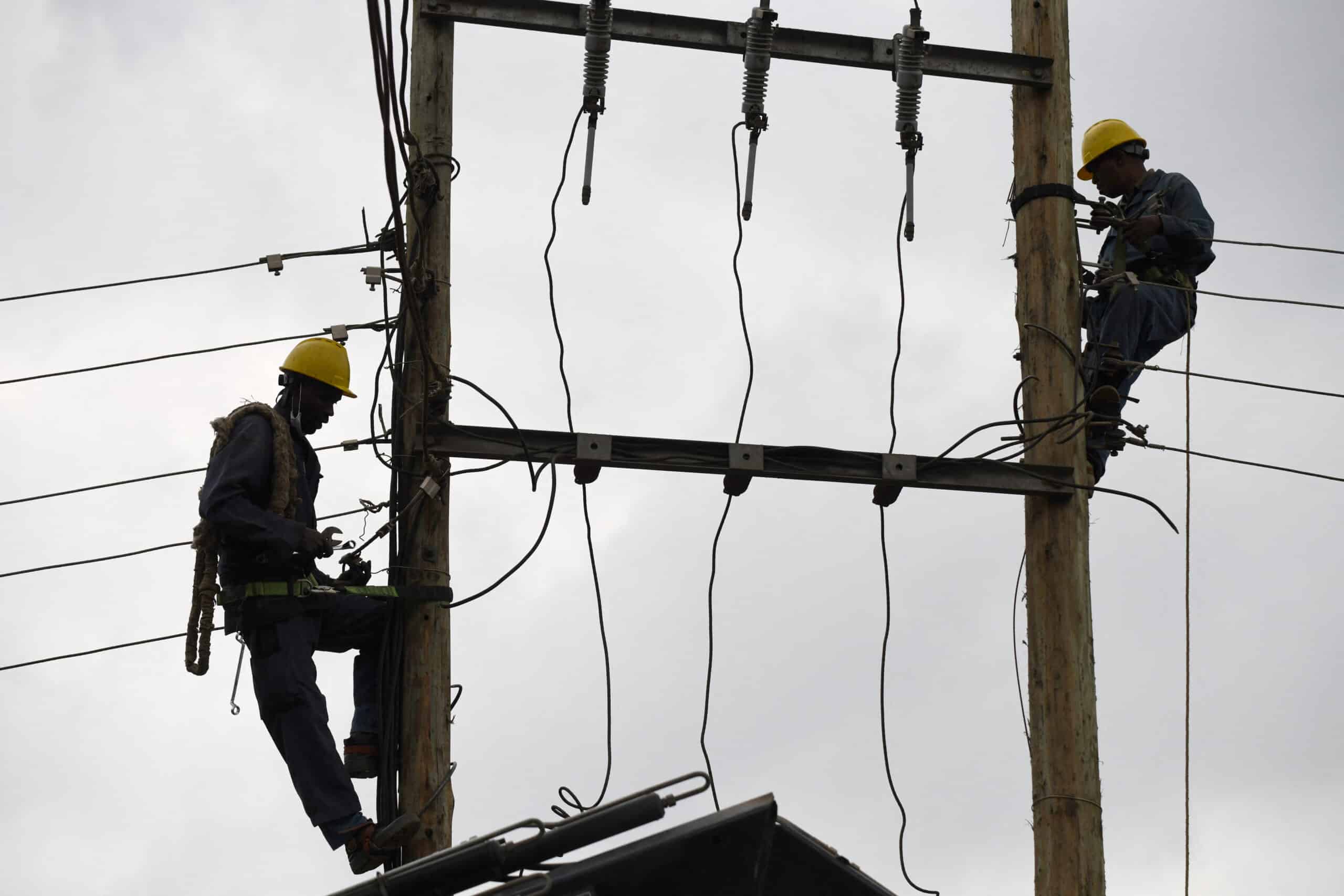


Fifteen Nigerian states have established their own electricity regulators under the country’s Electricity Act 2023, shifting oversight of local power markets away from federal authority and placing it in the hands of state-level bodies tasked with attracting investment and protecting consumers.
The Nigerian Electricity Regulatory Commission (NERC) — the federal body that oversees the Nigerian Electricity Supply Industry (NESI) — confirmed the transitions, which span from October 2024 to February 2026. Each state’s newly created State Electricity Regulator (SER) now holds responsibility for driving local market growth and enforcing consumer protections within its jurisdiction.
Enugu and Ekiti were the first to transition, both on 22 October 2024, followed by Ondo on 23 October and Imo on 31 December 2024.
The pace accelerated through 2025: Oyo transitioned on 5 February, Edo on 20 February, Kogi on 12 March, Lagos on 4 June, Ogun on 23 June, Niger on 9 July, and Plateau on 12 September. Abia completed its transition on 24 December 2025, with Anambra following on 1 January 2026, Nasarawa on 3 February 2026, and Bayelsa on 20 February 2026.
The transitions mark a significant structural shift in how Nigeria — Africa’s most populous country and largest economy — governs its power sector. For decades, electricity regulation was centralised under NERC, which administered the sector across all 36 states and the Federal Capital Territory.
The Electricity Act 2023 broke that monopoly on regulatory authority, creating a legal pathway for states to assume control of their own electricity markets.
For investors evaluating entry into Nigeria’s power sector, the development introduces both opportunity and complexity. On one hand, state-level regulation can enable more responsive licensing, tariff-setting, and dispute resolution tailored to local conditions — potentially accelerating project timelines for generation, distribution, and off-grid investments. On the other, a patchwork of 15 — and eventually more — independent regulators means that market rules, consumer protection standards, and investment frameworks may diverge significantly across state lines.
The 15 states that have transitioned represent a cross-section of Nigeria’s geographic and economic diversity, from the commercial weight of Lagos and the industrial base of Ogun, to the oil-producing south-south states of Edo and Bayelsa, and the north-central states of Kogi, Niger, Plateau, and Nasarawa. Twenty-one states and the FCT have yet to make the transition, meaning federal regulation under NERC remains the operative framework across much of the country.
The reform also carries implications beyond Nigeria.
Across Africa, centralised electricity regulation has long been cited as a bottleneck to private investment and grid expansion. Nigeria’s move toward state-level oversight — backed by primary legislation — offers a live test case for whether decentralised energy governance can unlock capital and improve service delivery at scale. Regulators and policymakers in other large, federally structured African economies are likely to watch the outcomes closely.
NERC has directed stakeholders to its website for further information on the NESI framework and the ongoing transition process.