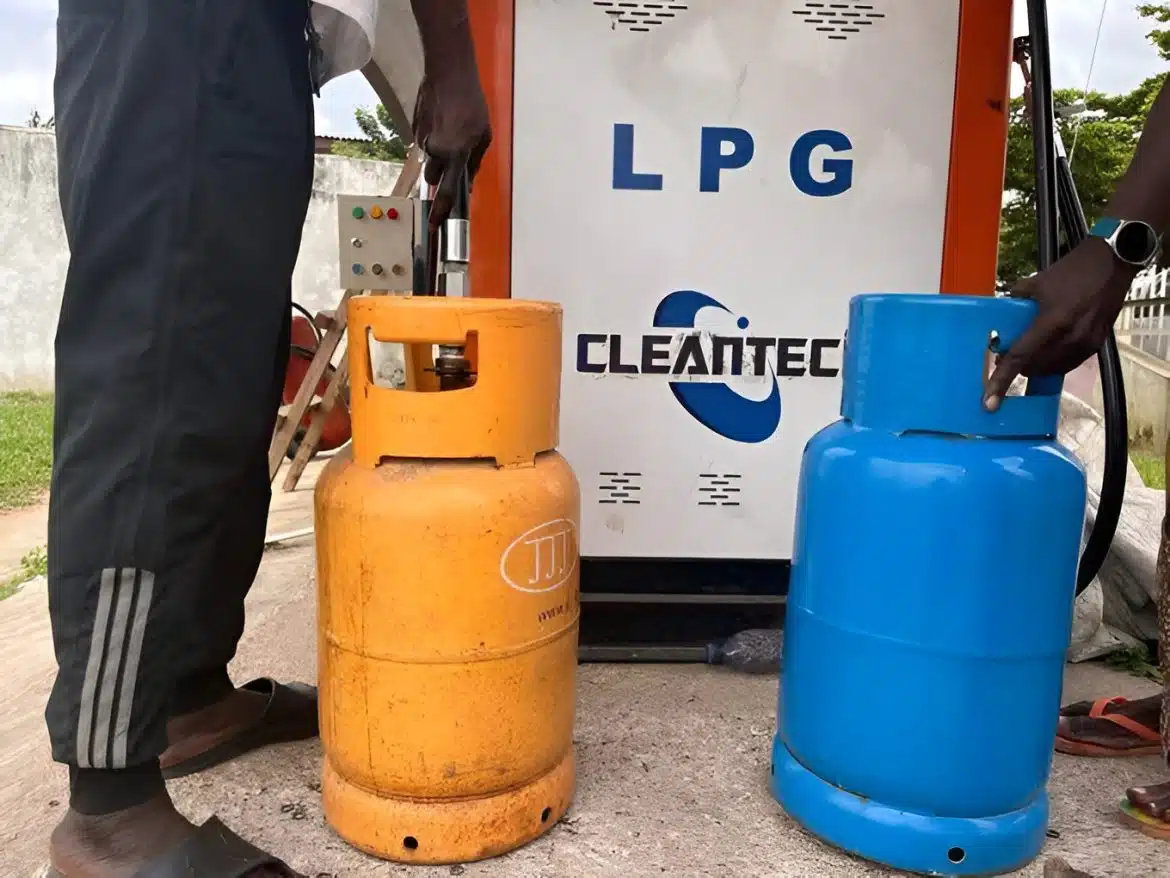


When the United States and Israel launched strikes on Iran in early 2026, the world’s oil traders did not wait for the smoke to clear. They started looking for alternatives. In West Africa, one answer became obvious very quickly: the Dangote refinery in Lagos. What followed was a scramble by African nations to secure fuel from Nigeria’s refinery — a turn of events that has repositioned Aliko Dangote’s $20 billion bet as a continental lifeline.
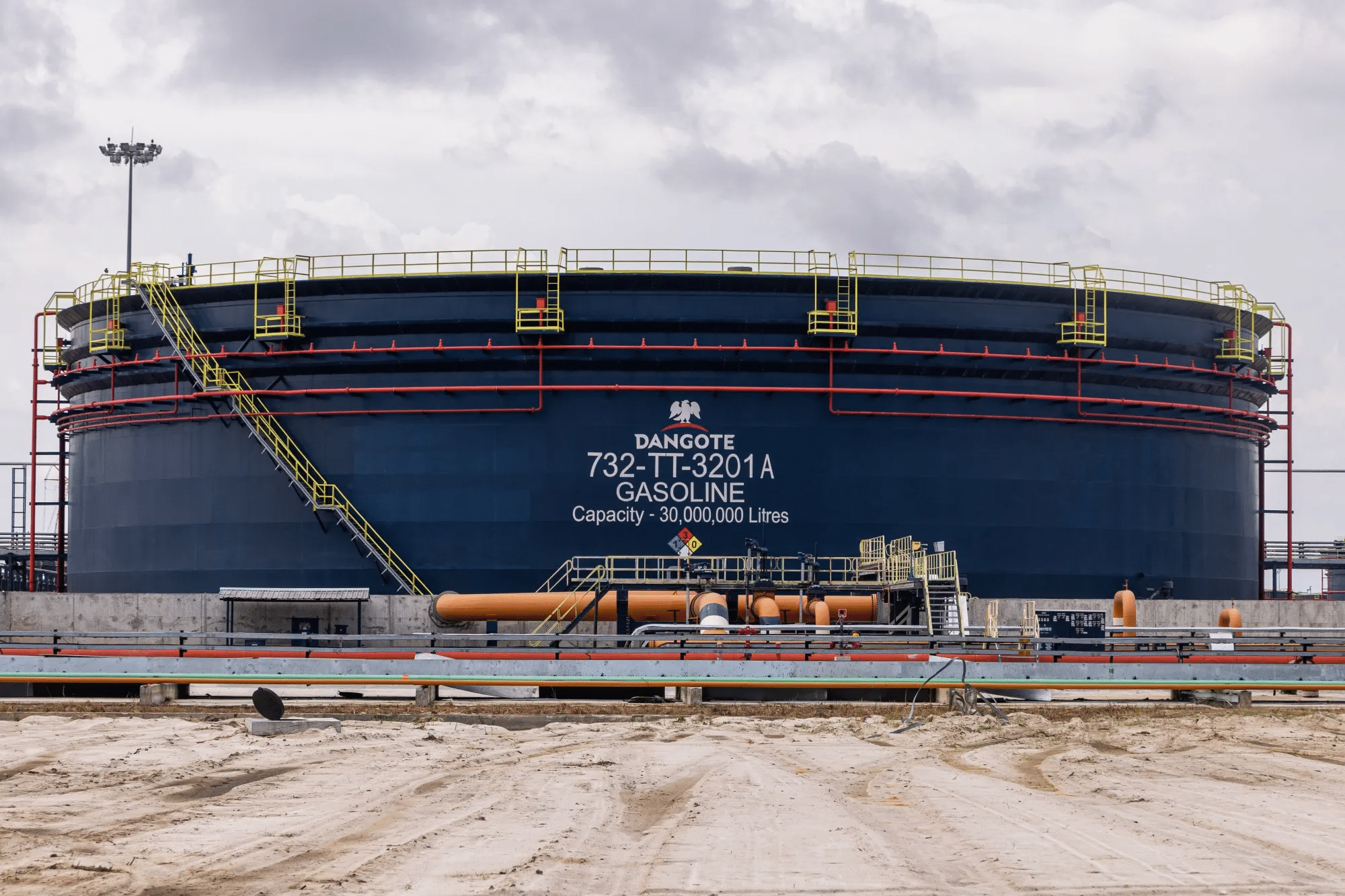
The refinery, which sits on 2,635 hectares in Lekki, Lagos, had already reached full production capacity of 650,000 barrels per day in February 2026. The timing could not have been better. Within weeks of the conflict escalating, leaders of countries from Cameroon to South Africa were on the phone with an attempt to secure long-term deal with Dangote’s sales team. A company executive confirmed that several governments had reached out directly, seeking supply agreements as an alternative to Middle Eastern fuel.
For years, critics questioned whether Africa’s largest refinery would ever live up to its ambitions. The project had been delayed multiple times, cost overruns were enormous, and Nigeria’s dysfunctional domestic fuel market made it difficult to predict whether the plant would ever operate profitably. Those doubts have largely faded. The Iran war has replaced them with a different and more interesting question: is Dangote now the most strategically important refinery in Africa, and will it stay that way?
The answer, based on what has happened over the past three months, leans toward yes. African countries have flooded the Dangote refinery for fuel at a pace that would have seemed implausible at the start of the year.
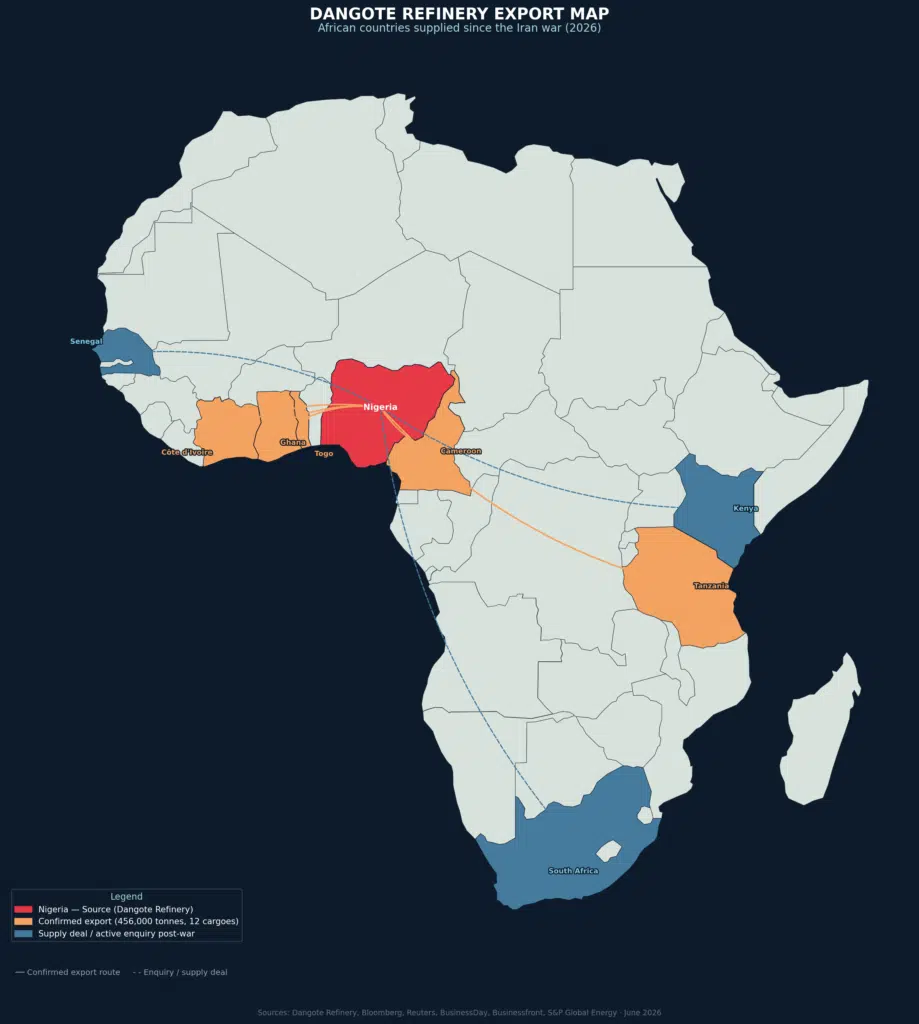
Six countries — Ghana, Cameroon, Côte d’Ivoire, Togo, South Africa and Senegal — all made formal enquiries or signed supply arrangements, according to multiple reports. The refinery has exported product to Europe. In May 2026, it was described as the world’s largest single exporter of jet fuel. None of this happened because of a master plan.
It happened because a war disrupted the supply chains that Africa had long taken for granted, and only one major refinery on the continent was ready to fill the gap.
The Strait of Hormuz: A chokepoint Africa could not ignore
To understand why the war mattered so much to Africa, you have to understand the Strait of Hormuz. About one-fifth of the world’s oil passes through this narrow waterway between Iran and the Arabian Peninsula. When military activity in the Gulf slowed tanker traffic through the strait, global energy markets buckled. Oil prices surged above $113 per barrel. Shipping costs climbed. Refineries in the Gulf that had been exporting fuel to African markets suddenly had less product to sell and fewer safe shipping routes to use.
Data from energy consultancy, CITAC, shows that about 75 percent of refined fuel imports in East and Southern Africa come from the Middle East. That kind of concentration is not a supply chain. It is a single point of failure. The war revealed this vulnerability in a matter of days. Governments that had never thought seriously about fuel security suddenly had to. Ministers began calling refineries. Traders began rerouting cargoes. The International Energy Agency (IEA) recommends that countries hold at least 90 days of net oil imports as a buffer stock. No African country currently meets that benchmark.
The Dangote refinery, which had spent its first year of full operations fighting for its place in the Nigerian domestic market, found itself fielding enquiries from across the continent. Its geographic position — on the Atlantic coast of West Africa, close to existing shipping lanes — made it a natural alternative for countries that could no longer rely on the Gulf corridor. Tankers sailing from Lagos to Accra or Douala cover a fraction of the distance they would need to travel from the Arabian Sea.
Elitsa Georgieva, executive director at CITAC, said the depth of the region’s dependence leaves countries “exposed when supply from that corridor is disrupted.” That disruption arrived in early 2026 and has not fully lifted since. For instance, Bloomberg reported in March that the conflict had triggered a continent-wide hunt to secure new fuel supplies, with Nigeria’s refinery emerging as the most viable option for West and Southern African buyers.
Fuel importers take the hardest hit
Not everyone in Africa’s fuel trade suffers the same way when global supply chains break down. The biggest losers in this episode have been the fuel importers.
Before the war, these importers could count on a steady flow of affordable fuel from refineries in Saudi Arabia, the UAE and India. They moved product through established routes, sold at predictable margins and had little reason to look closer to home. The war changed the economics entirely. Tanker rates rose. Shipping routes grew longer and more expensive as vessels avoided the Gulf. The fuel itself became harder to source at any price. Importers who had built their pricing models around cheap Middle Eastern product found their margins squeezed or eliminated.
In West Africa, the situation was especially sharp. The Lomé offshore trading hub in Togo, which had long served as the main redistribution point for fuel across the region, continued to operate — but the volumes moving through it told a new story. Dangote-origin products began to dominate the cargoes flowing into Nigeria via Lomé.
Between March and May 2026, more than 70 to 80 percent of the fuel volumes imported into Nigeria by sea originated from the Dangote refinery — exported first, then re-imported through the offshore hub. The middlemen who once thrived on long-haul arbitrage found that the refinery down the coast had undercut their entire model.
Businesses outside the fuel trading sector also felt the impact.
Exxaro Resources, one of South Africa’s major coal producers, said demand for coal rose as companies sought alternatives to disrupted petroleum supply. Its Chief Executive, Ben Magara, said prices climbed by about 20 percent to around $112 per ton.
In Somalia’s capital Mogadishu, fuel prices nearly doubled amid tightening supply. In Ethiopia, authorities directed fuel stations to prioritise public transport and urged citizens to conserve fuel.
These are the visible costs of a supply chain designed around one distant, now-disrupted region.
Dangote before the war: already dominant at home
Moreover, it is worth noting that Dangote’s ascent in the regional market did not begin with the Iran war. The refinery had already spent much of 2025 fighting — and eventually winning — a battle to supply Nigeria’s domestic fuel market.
Before the refinery came fully online, Nigeria was importing nearly all of its refined petroleum products despite being one of Africa’s largest crude oil producers. That absurdity cost the country billions of dollars a year and left ordinary Nigerians at the mercy of global price swings and the Nigerian National Petroleum Company’s subsidy decisions.
By February 2026, the refinery had reached full capacity. It had begun cutting into imports. It had also started positioning itself as a regional exporter. The refinery disclosed in March that it had exported 456,000 tonnes of refined petroleum products — including Premium Motor Spirit and Euro 5 standard diesel — to five African countries: Côte d’Ivoire, Cameroon, Tanzania, Ghana and Togo.
These exports were shipped through 12 cargoes sold to international traders on a Free On Board basis. About 75 percent of the refinery’s output is reserved for Nigeria, with the remainder available for export.
The refinery’s argument was simple: it could meet Nigeria’s domestic demand and still have product left over for its neighbours. Dangote’s refinery was not just the largest single-train refinery in the world by capacity. It was increasingly the most active one in Africa.
The war would only supercharge what was already underway.
During the war: African nations come calling
Indeed, the Iran conflict accelerated what was already in motion. Countries that had been cautiously watching Dangote’s output suddenly had an urgent reason to sign contracts. The refinery went from being a promising regional supplier to being a critical one almost overnight.
Ghana, South Africa and Kenya were among the countries that approached the refinery for supply as governments moved to secure alternative fuel sources. South Africa is seeking a standard supply contract expected to run for about 12 months, though those talks remain private.
The South African government said it was “actively coordinating with industry stakeholders to secure both crude oil and refined petroleum products from a diversified range of sources” — language that politely confirmed what traders already knew: Pretoria was looking for alternatives to the Gulf.
Cameroon, which shares a land border with Nigeria, moved early. Its proximity made Dangote a natural supplier, and the logistics of coastal and overland supply chains were far simpler than waiting on tankers from the Persian Gulf.
Ghana, which had been buying Dangote products since the first export cargoes, deepened its engagement.
Côte d’Ivoire and Togo were already receiving Dangote cargoes before the war escalated. Senegal, which has its own emerging oil production but lacks significant refining capacity, also turned to the refinery for product.
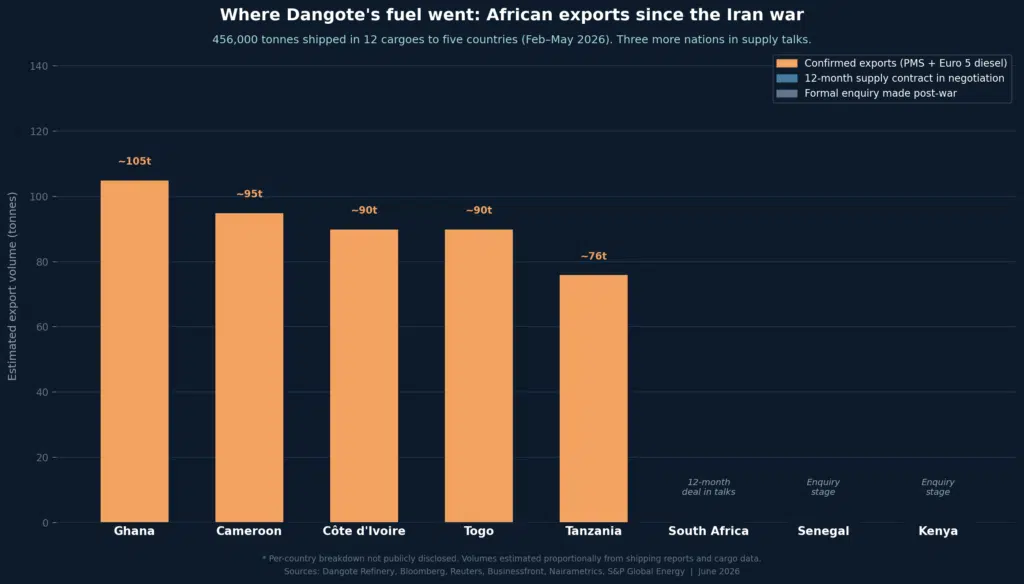
South Africa was the most significant new entrant. It is the continent’s most industrialised economy and one of its largest fuel consumers. Its interest in a year-long supply deal signalled something important: this was not panic buying. It was a structural shift in procurement strategy. South Africa holds about eight million barrels of strategic crude oil stocks through its state-owned Central Energy Fund, but has little in the way of dedicated refined fuel reserves.
Jacob Mbele, director-general at South Africa’s Department of Mineral Resources, said the government is considering building strategic reserves, though the process is still at an early stage. A supply deal with Dangote offered more immediate cover.
The refinery’s reach extended beyond West Africa and even beyond the continent entirely.
Industry data from S&P Global showed record Dangote exports between April and June 2026, with significant volumes shipped to the United Kingdom, the Netherlands, South Africa and other international markets.
Before the conflict, Europe sourced more than half of its jet fuel imports from producers in the Persian Gulf. Supply disruptions pushed benchmark jet fuel prices above $1,800 per metric tonne, creating an opening for alternative suppliers. Dangote stepped in. In May 2026, it was described as the largest single exporter of jet fuel globally — a remarkable claim for a facility that had reached full capacity only three months earlier.
No queues in Nigeria, but no relief at the pump
At home in Nigeria, the picture could be a bit more complicated.
The long lines that once stretched around corners of filling stations in Lagos and Abuja have mostly disappeared. Tanker drivers no longer sleep outside these stations. That is not a small thing in a country where fuel scarcity periodically paralysed economic activity for decades and where ordinary people lost hours of productivity waiting to fill a tank.
The refinery, however, failed to prevent record gasoline prices. According to its management, the plant prices its products against international benchmarks, and with global oil prices elevated by the Iran conflict, domestic prices have stayed high.
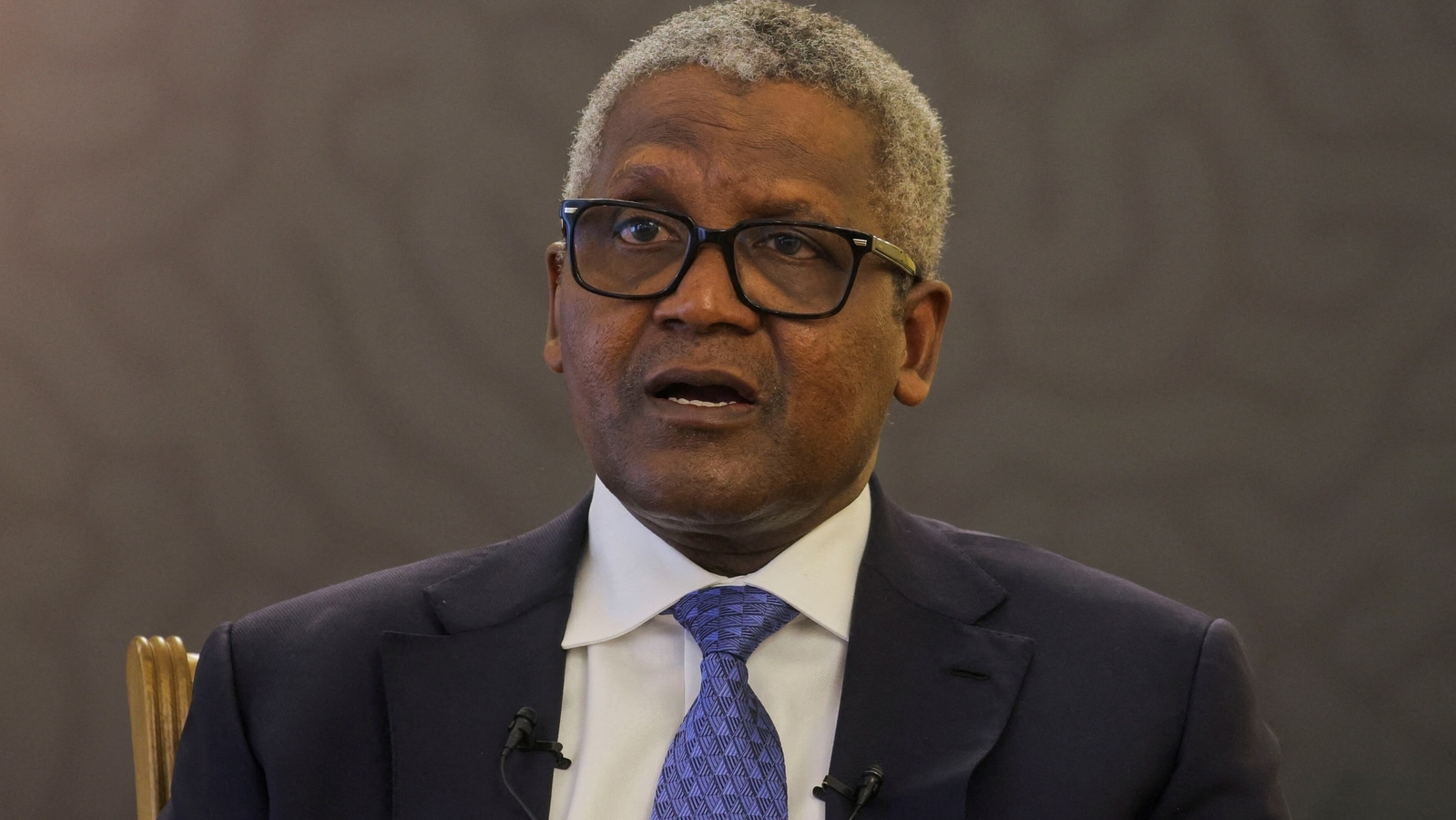
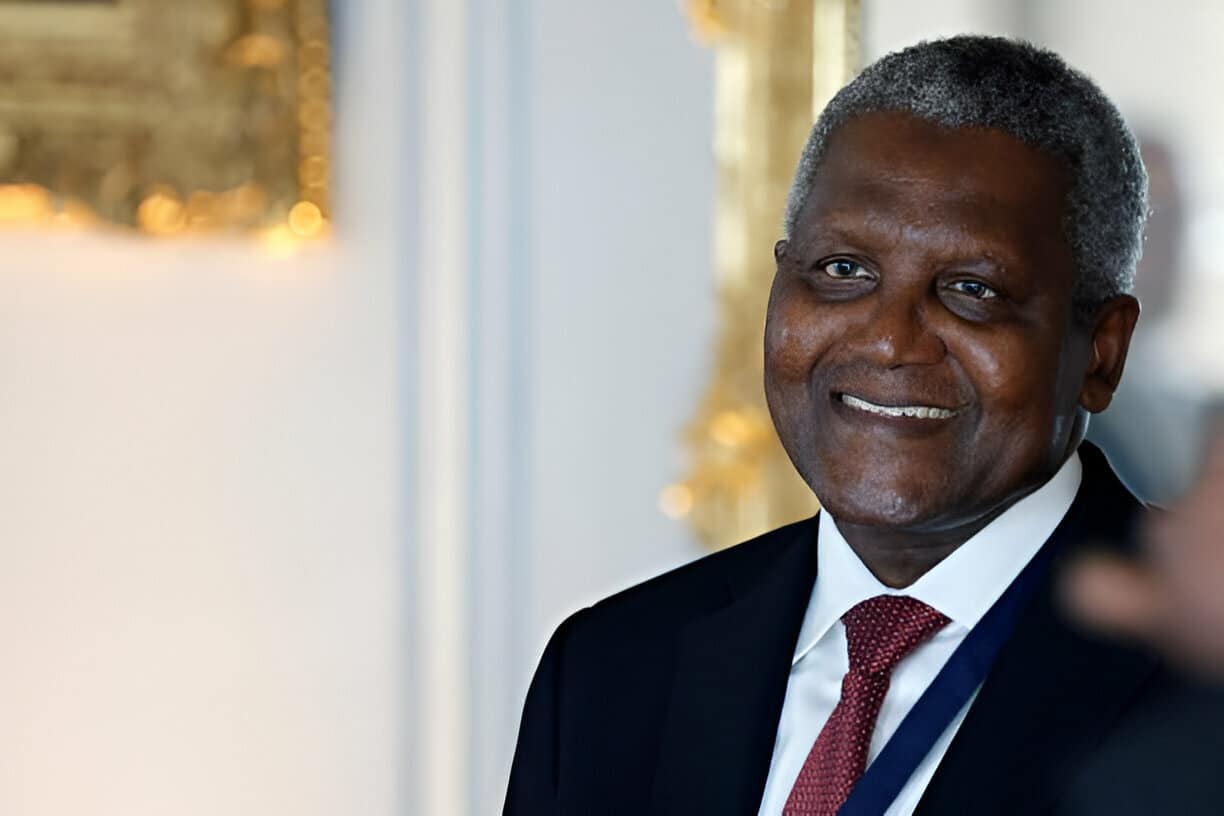
Aliko Dangote put the current moment plainly in an interview with The Economist. “Right now it is not about pricing, it’s about availability,” he said.
There is also the curious dynamic of Dangote fuel going out and coming back in.
Nigerian fuel marketers are reported to be importing refined petroleum products originally produced by the Dangote refinery through the offshore Lomé trading hub, a pattern that highlights the pricing differentials between local and international markets. Product leaves the refinery, gets traded offshore in Togo, and returns to Nigeria at market prices.
Matthew Tracey-Cook of S&P Global Energy, speaking at a MEMAN webinar, said the Dangote export market and the Lomé hub are now “the two largest and most important regional hubs of supply in the region as a whole.” It is efficient for traders but confusing for ordinary Nigerians who expected a local refinery to mean cheaper local fuel. The short answer is that it does not work that way — at least not while global oil prices remain elevated by a war.
Will the dominance last as the war ends?
The Iran war will not last forever. Peace talks between the US and Iran seem to be heading in a positive direction. The question for Dangote — and for Africa’s fuel supply chains — is what happens when the immediate crisis passes and Middle Eastern producers resume normal operations.
The refinery is on the Atlantic coast of West Africa, close to the countries it now supplies. It can load cargoes directly onto ships. It has the scale to compete on price when running at full capacity. None of those structural advantages would disappear overnight when peace returns to the Gulf.
However, when Middle Eastern fuel becomes cheap and available again, some buyers will return to old suppliers. The 12-month supply deals being signed now will also eventually expire. Countries that turned to Dangote out of necessity may do so less eagerly when the necessity fades.
The refinery’s management is aware of this. The test of long-term dominance is whether Dangote can hold market share when competing on price rather than availability alone — a harder and more sustained challenge than filling a crisis-driven gap.
That is an honest admission. The harder challenge — winning on cost when the competition returns — is still ahead.
What the Iran war has done is compress a decade of market development into a few months.
Africa has long been a continent that imports fuel it could produce and pays prices set by markets it does not control. The Dangote refinery, accelerated by a war it did not cause, is beginning to change that dynamic. The dominance may be partial and contested. But for now it is a real and growing step in the right direction.