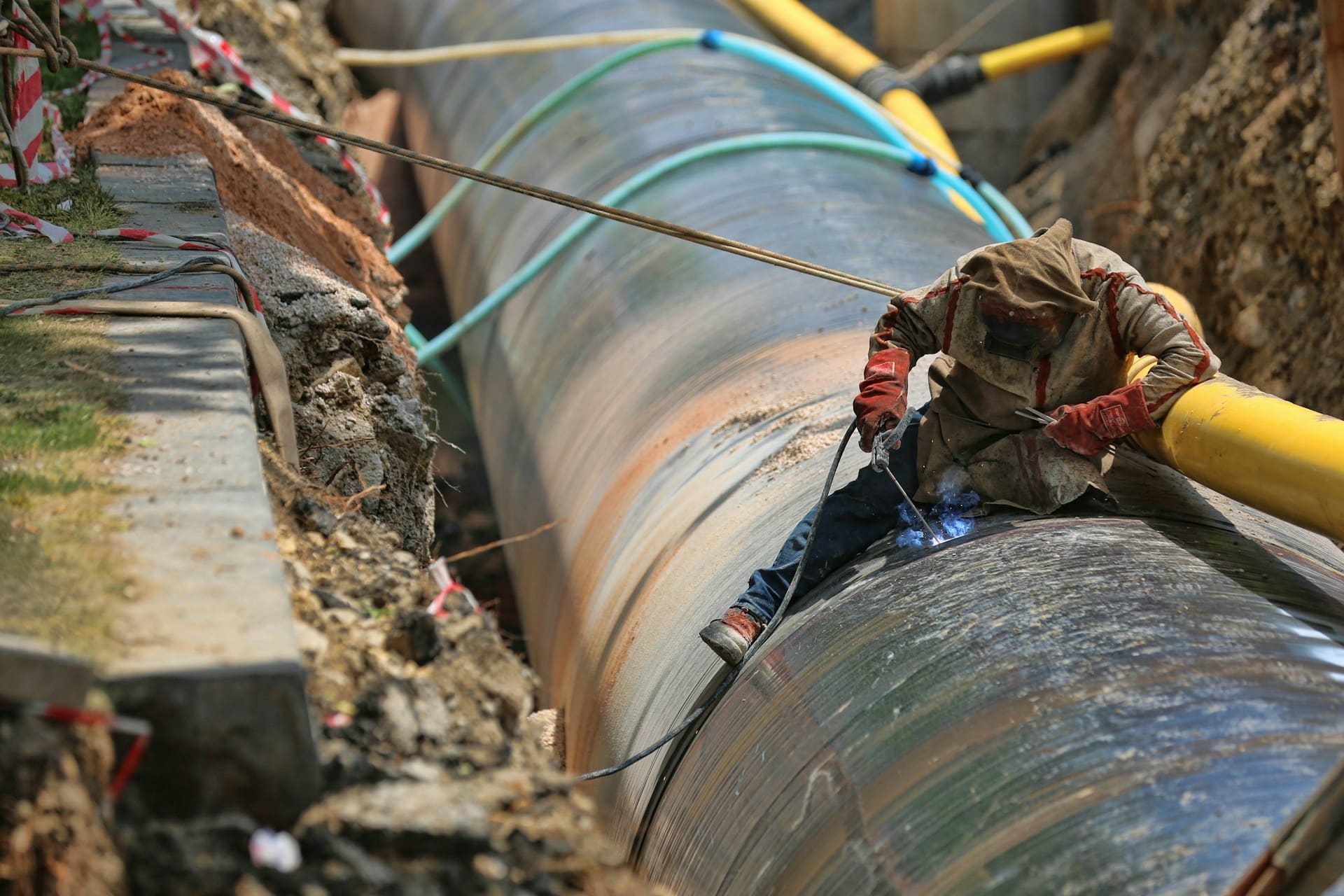


Algeria has broken ground on a 1,210-kilometre section of the Trans-Saharan Gas Pipeline (TSGP), advancing a $13 billion to $19.5 billion project designed to carry Nigerian natural gas — Africa’s largest reserves — to European markets through Niger and Algeria.
The section under construction runs from the Niger border to Aoulef in southern Algeria, where it will connect to the Hassi R’Mel gas field, the country’s principal gas hub. Niger is expected to begin work on its own 720-kilometre section in 2027. The full pipeline stretches 4,128 kilometres and is designed to transport up to 30 billion cubic metres of natural gas annually.
Energy ministers from all three participating countries — Nigeria, Niger, and Algeria — attended the launch ceremony in Algeria, signalling renewed political commitment to a project first proposed in 2009. The ceremony marks the most concrete progress the TSGP has seen since its inception.
The pipeline’s revival is closely tied to Europe’s urgent push to reduce dependence on Russian gas following Moscow’s invasion of Ukraine in 2022. As European governments scrambled to diversify supply, long-dormant infrastructure projects connecting Africa’s gas-rich south to Mediterranean export corridors gained fresh urgency.
For Nigeria, the pipeline offers a route to monetise gas reserves that have historically been underutilised due to limited export infrastructure. For Niger and Algeria, it promises transit revenues and a platform for broader industrial development. Proponents argue the project could deepen energy integration across West and North Africa — a region where cross-border power and gas infrastructure remains underdeveloped relative to its resource base.
Once complete, gas will move northward through existing Algerian trade corridors and export terminals before reaching European buyers. The pipeline’s capacity of 30 billion cubic metres annually would represent a significant addition to Europe’s non-Russian supply options, comparable in scale to major existing import routes.
The source material does not identify specific project operators or financing partners — details that will be critical to watch as construction progresses and the project moves toward its more capital-intensive phases.
The TSGP, if completed on schedule, would rank among the most consequential energy infrastructure projects on the continent, reshaping gas trade flows between sub-Saharan Africa, the Sahel, and Europe.