

Ethiopia has unveiled a five-year national e-mobility strategy that targets half a million electric vehicles (EVs) on its roads by 2030, leveraging a power grid that draws more than 90% of its electricity from renewable sources to cut a $4 billion annual fuel import bill.
The National E-Mobility Strategy and Implementation Plan 2025–2030 was launched in Addis Ababa on 25 May by the Ministry of Transport and Logistics, in partnership with the United Nations Economic Commission for Africa (UNECA), the Institute for Transportation and Development Policy (ITDP), and the World Resources Institute (WRI).
The plan coordinates policy reform, fleet electrification, market development, and domestic industrial capacity building.
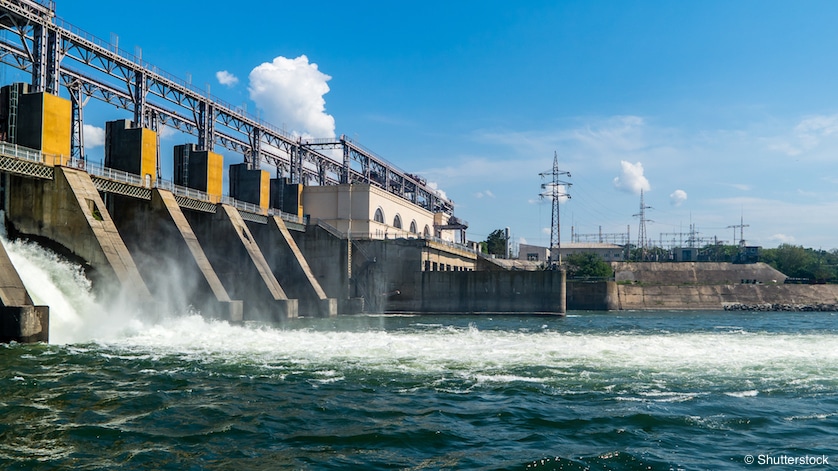
Ethiopia’s renewable electricity base — anchored by hydropower, including the Grand Ethiopian Renaissance Dam on the Blue Nile — gives the country a structural cost advantage that few African peers can match.
The government spent $4 billion on fuel imports in 2023 alone, and transport electrification is now central to its strategy for reducing that exposure.
Early momentum is already visible.
The national EV fleet grew from 7,000 units in 2023 to 115,000 by 2025–2026, a pace that the new strategy aims to sustain and accelerate.
The 2030 target of roughly 500,000 EVs is accompanied by plans for full electrification of new two- and three-wheelers and public transport fleets.
Charging infrastructure is a core pillar of the plan. More than 2,200 charging stations are targeted nationwide by 2030 — 1,176 in Addis Ababa and 1,054 across regional cities — alongside highway fast-charging corridors spaced at defined intervals.
The split between the capital and regional centres signals an intent to extend the transition beyond Addis Ababa’s urban core, a challenge that has constrained EV uptake in other African markets where infrastructure remains concentrated in primary cities.
The strategy also carries an industrial dimension. Ethiopia is targeting the expansion of local EV assembly, battery systems manufacturing, and critical mineral processing, including lithium exploration, with the aim of building domestic value chains rather than simply importing finished vehicles.
No private sector operators or specific investment commitments were cited in the strategy documents.
The plan positions Ethiopia alongside a small group of African countries — including Morocco, South Africa, and Kenya — that have moved to formalise EV policy frameworks.
Ethiopia’s renewable energy advantage, however, gives its electrification case a different economic logic: where grid carbon intensity is a concern elsewhere, Ethiopia can argue that EVs running on its network are genuinely low-emission from the point of generation.
Whether the 2030 targets are met will depend heavily on the pace of private investment in charging infrastructure and assembly capacity — neither of which the strategy document quantifies at this stage.