

Azana Electric Group has raised a $20 million senior secured portfolio debt facility from British International Investment (BII), the UK government’s development finance institution and impact investor, to accelerate the construction of run-of-river hydropower projects across Africa.
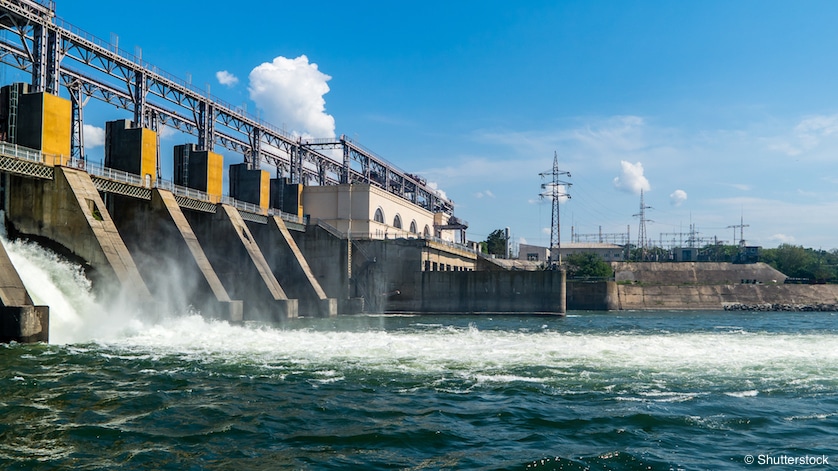
Run-of-river hydropower — a model that generates electricity by diverting a portion of a river’s natural flow rather than storing water behind a large dam — is increasingly seen as a practical solution for expanding electricity access in areas where grid infrastructure remains limited or absent.
The facility signals a broader shift in how development finance institutions are approaching Africa’s energy access challenge. Rather than concentrating capital in large-scale generation projects that can take decades to deliver power to end users, institutions such as BII are directing funding toward smaller, distributed assets that can be deployed faster and closer to underserved communities.
Africa’s electricity access gap remains one of the continent’s most pressing development constraints. Hundreds of millions of people across sub-Saharan Africa remain without reliable power, and conventional grid expansion has struggled to keep pace with population growth and urbanisation. Smaller renewable projects, including run-of-river hydro, offer a route to generation capacity that does not depend on large transmission networks.
The implications extend well beyond any single country. Across Central, East, and West Africa, river systems offer significant untapped hydropower potential, much of it in areas where national grids are thin or non-existent. Countries including the Democratic Republic of Congo, Uganda, Cameroon, Guinea, and Mozambique hold substantial run-of-river resources that have historically attracted less commercial interest than large dam projects, partly due to the difficulty of financing smaller assets at scale.
Portfolio debt facilities of the kind BII has extended to Azana Electric are designed to address precisely that constraint.
By providing a single financing structure that can be drawn against multiple projects, they reduce the transaction costs that make individual small-project financing uneconomical, allowing developers to build pipelines rather than one-off assets.
BII, which is backed by the UK government and operates as one of the world’s largest development finance institutions by portfolio, has been expanding its African energy investments as part of a broader mandate to support climate-aligned infrastructure in emerging markets.
Azana Electric’s raise comes as development finance institutions across Europe and North America recalibrate their energy portfolios toward renewables, with hydropower — particularly smaller, lower-impact run-of-river configurations — occupying a growing share of project pipelines on the continent.
For African economies seeking to close the electricity access gap without locking in fossil fuel infrastructure, the model Azana Electric is pursuing — aggregating smaller hydro assets under a single financing umbrella — may offer a template that other developers and financiers look to replicate.