

Key Takeaways
- Ghana’s inflation rose to 3.7% in May, a second consecutive monthly increase
- Energy price pressures from the Iran conflict are feeding through to consumer prices
- The Bank of Ghana is now widely expected to hold rates at its next meeting
Ghana’s annual inflation rate rose for the second straight month in May, as rising energy costs linked to the Iran war added fresh pressure on prices in an economy that had been on a strong recovery path.
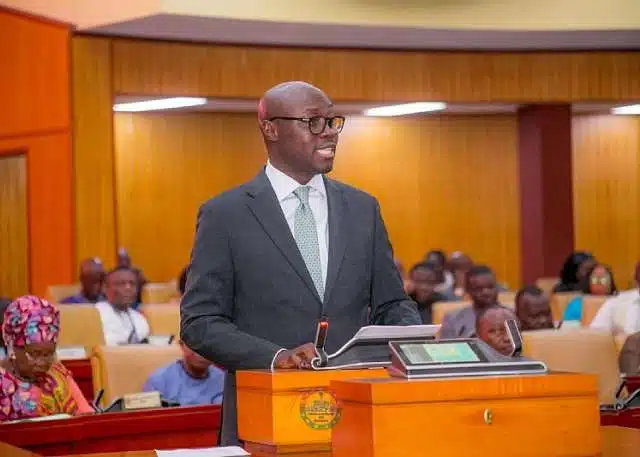
Government Statistician Dr. Alhassan Iddrisu announced the figure at a press briefing in Accra on Wednesday. Consumer prices rose 3.7% year-on-year in May, up from 3.4% in April, with prices increasing 1.1% on a month-on-month basis.
The back-to-back increases mark the first sustained upward shift in Ghana’s inflation since December 2024, when the country began a 15-month streak of falling prices.
The uptick raises fresh questions about how long Ghana can hold onto its position as one of the lowest-inflation economies in sub-Saharan Africa. Dr. Iddrisu told reporters the numbers carried two distinct messages.
“The long-term trend is firmly downward and reassuring, but in the most recent months prices ticked up a little. Both insights are true, and we report both because our duty is to give you the full and honest picture,” he said.
A recovery still intact, but no longer unopposed
The broader inflation story in Ghana remains one of remarkable improvement. Headline inflation has fallen from a crisis peak of 54.1% in December 2022 to 3.7% in May 2026, one of the steepest disinflation trajectories recorded anywhere in the world over a comparable period.
Iddrisu said the distance travelled in just 12 months alone was striking. “In the space of 12 months, the rate of price increases has fallen by a remarkable 14.7 percentage points.
That is one of the most encouraging stories in these numbers we are releasing today,” he said. But the direction of the last two months has changed. Non-food inflation accelerated to 4.2% in April from 3.9% in March, largely on account of fuel prices, while food inflation had been among the more stable components of the consumer basket.
The May data suggests that pressure is spreading.
How the Iran war is feeding through
Ghana imports roughly 70% of its refined petroleum products, leaving it directly exposed to global crude price movements.
The Bank of Ghana Governor Johnson Asiama has said the Middle East conflict “stoked inflationary concerns and heightened policy uncertainty, with potential implications for the domestic economy through the trade and financial channels.”
Ghana raised petrol prices by around 15% and diesel by roughly 19% in April after Brent crude surged past $100 a barrel following escalations in the Strait of Hormuz.
Energy costs make up approximately 15% of Ghana’s inflation basket, not counting transport.
With road transport accounting for the bulk of goods movement across the country, fuel price increases feed into food, logistics, and services costs within weeks.
What it means for interest rates
The Bank of Ghana held its benchmark interest rate at 14% at its May 2026 meeting, pausing after five consecutive rate cuts that had brought the policy rate down from 28% in May 2025.
The decision was in line with market expectations. Policymakers described the stance as cautious but supportive, designed to anchor inflation expectations while allowing room for economic activity to continue recovering.
With inflation now rising for a second consecutive month, analysts expect the central bank to maintain that hold at its next meeting.
The benchmark rate is projected to remain at 14% through the end of the current quarter, according to market forecasts, with cuts only expected to resume if inflation returns to a clear downward path.
Where things stand
The Ghana Statistical Service said the Consumer Price Index rose to 270.2 in May 2026 from 260.5 in May 2025.
No date has been set for the Bank of Ghana’s next Monetary Policy Committee meeting, though it typically convenes every two months.
The government has indicated it is monitoring petroleum levy options to limit further fuel price increases, though no formal decision has been announced.