

The European Union is financing a €690 million overhaul of Egypt’s electricity transmission network, a package designed to integrate 22 gigawatts (GW) of renewable energy into the national grid by 2030 — enough to supply almost 10 million households.
The financing combines a €600 million loan from EIB Global — the development arm of the European Investment Bank (EIB) — with up to €90 million in grants from the European Commission. Together, EU funding covers 44% of the programme’s total cost, with the Egyptian Electricity Transmission Company (EETC), the state body responsible for high-voltage transmission infrastructure, contributing the remainder from its own funds.
The EETC will lead construction of new substations and advanced transmission lines connecting solar and wind generation in the Red Sea and Gulf of Suez regions to the national grid. Those two corridors are among Egypt’s most resource-rich zones for utility-scale renewables, and integrating their output has long been a bottleneck for the country’s clean energy ambitions. The investments are expected to reduce transmission losses, improve electricity reliability, and strengthen energy security.
The project sits within the EU-Egypt Strategic and Comprehensive Partnership, a bilateral framework that positions Egypt as a regional energy hub while advancing the EU’s broader push to secure clean energy supply chains beyond its borders. For Egypt, the upgrade supports national targets to expand renewable capacity and modernise ageing grid infrastructure that has struggled to keep pace with both demand growth and the rapid build-out of generation assets.
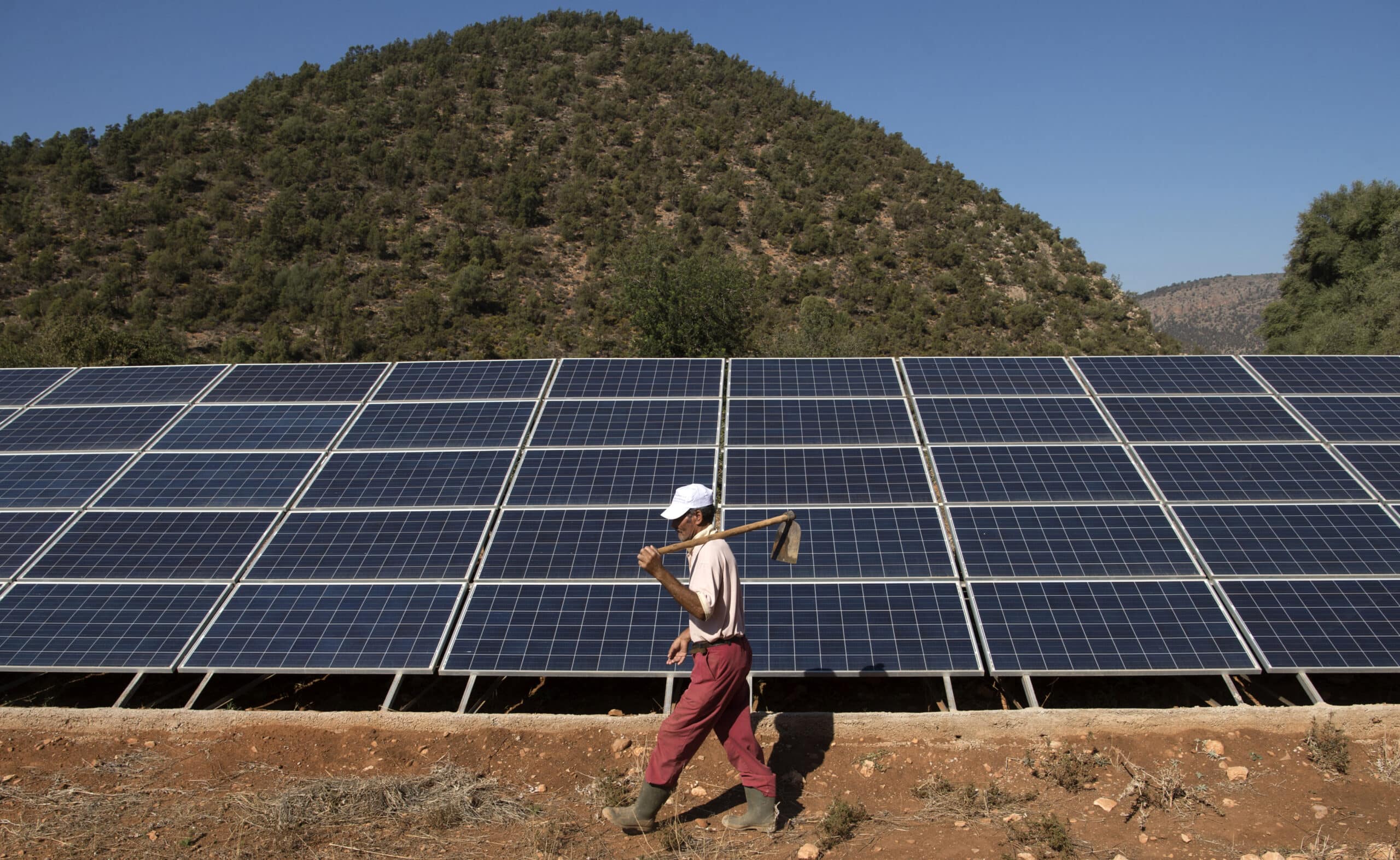
The grid programme is the latest in a growing pipeline of EU-backed energy investments in the country. The EIB has separately financed the Obelisk solar photovoltaic plant — a 1 GW facility with battery storage, funded with $150 million — while the Green Economy Financing Facility, supported by more than €23 million in EU grants, is mobilising private-sector investment in renewables and energy efficiency. The Nexus of Water, Food and Energy (NWFE) platform, a blended-finance mechanism that pairs concessional public funding with private capital to accelerate Egypt’s energy transition, also forms part of this broader EU-supported effort.
The scale of the transmission investment reflects a wider recognition across African energy markets that generation capacity alone does not deliver electrification or decarbonisation goals — grid infrastructure capable of absorbing and distributing variable renewable output is equally critical. Egypt’s position at the intersection of African, Middle Eastern, and European energy corridors gives the upgrade strategic significance beyond its domestic impact, particularly as European governments seek to diversify energy imports and develop green hydrogen supply routes from North Africa.
With 22 GW of additional renewable capacity targeted by 2030, Egypt would substantially advance its position as one of the continent’s leading clean energy producers, alongside South Africa, Morocco, and Kenya.