

Living standards remain one of the clearest tests of Nigeria’s economic performance. They are shaped not just by growth figures, but by what households can afford, how far incomes stretch, and whether daily life is becoming easier or more expensive.
On that measure, Nigeria’s latest economic data presents a mixed picture.
The economy expanded by 3.89% in Q1 2026. Inflation has eased compared to 2025 levels. External reserves have climbed close to $50 billion, and the naira has shown more stability than in previous periods of foreign exchange pressure.
These are clear signs of macroeconomic stabilisation. They suggest that some of the shocks that defined earlier years are gradually easing.
But the pressure on households has not fully followed the same path. Household conditions tell a different story.
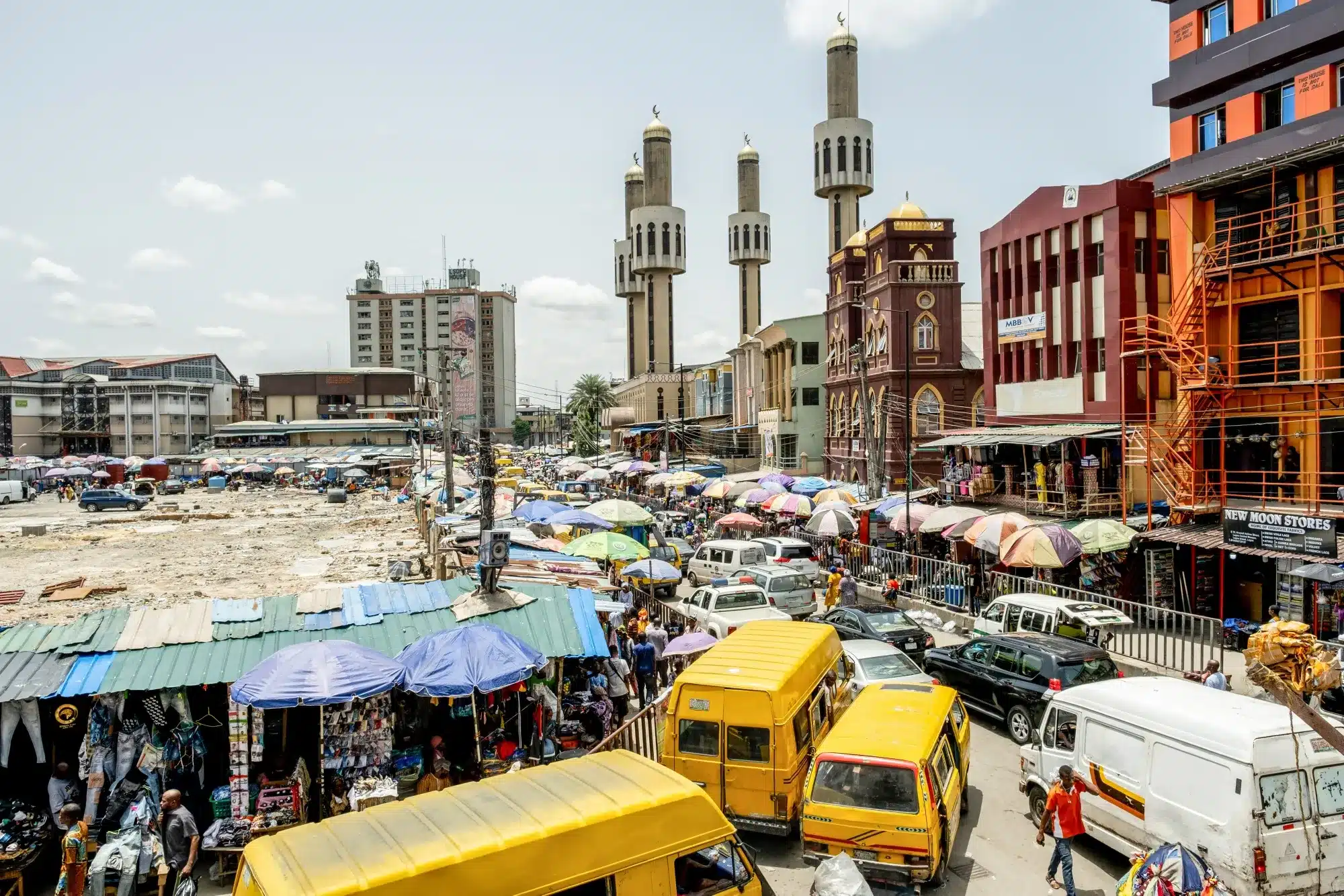
Food prices remain high across urban and rural markets. Transport costs are still elevated. Many households continue to struggle with weak income growth that does not match basic expenses. Access to credit also remains limited, especially for small businesses and informal workers.
This gap raises a central question. What do Nigeria’s latest economic numbers actually say about living standards, and how much of the recovery is being felt in everyday life?
What the data says about how Nigerians are earning
Nigeria’s latest growth figures show expansion across several non-oil sectors. ICT grew by 10.98% in Q1 2026, while telecommunications expanded by 12.24%. Construction grew by 6.38%.
Manufacturing rose by 3.29%, and agriculture recorded 3.15% growth. Financial and insurance activities also increased by 8.54%.
Within manufacturing, performance was uneven but positive. Cement production grew by 11.53%, while oil refining rose sharply by 37.46%. Chemical and pharmaceutical output also improved, pointing to gradual recovery in parts of the industrial base.
Taken together, these figures show that Nigeria’s growth is becoming more broad-based outside the oil sector. Services now account for 57.73% of GDP, while agriculture contributes 23.16% and industry 19.11%.
However, the key issue is not only where growth is happening, but whether it is translating into better earnings for households.
Adewale Oke-Bankole, a financial analyst explains the gap clearly.
“Nigeria’s economy is expanding in more sectors now, but the structure of that growth is still not strong enough in job creation. Many of the gains remain concentrated in formal or capital-intensive areas,” he told Businessfront.
This means that while business activity is improving in several sectors, the transmission into stable employment and higher wages remains uneven. The result is a situation where the economy is growing, but household earnings are not rising at the same pace for most Nigerians.
Why income growth is not matching price reality
Nigeria’s economic data shows a clear gap between income growth and the cost of living. Nominal GDP grew by 17.79% in Q1 2026, while real GDP growth was 3.89%. The difference reflects the continued impact of inflation on purchasing power.
Although inflation has eased compared to 2025, prices remain high for food, transport, and essential goods. These costs continue to take a large share of household income, especially for low and middle-income earners.
Food pressure remains particularly important in shaping household spending. Nigeria spent $2.34 billion on food imports in 2025, a 7.4% decline from the previous year. The figure highlights continued dependence on external supply for key food items, even as import patterns shift.
Even where earnings rise in nominal terms, their real value remains limited. For many households, income gains are quickly absorbed by rising expenses rather than improving purchasing power.
This pressure is reinforced by structural costs in the economy, especially electricity. The power sector contracted by 15.3% in Q1 2026, reflecting ongoing instability in supply.
Weak electricity supply forces households and businesses to rely heavily on alternative energy sources such as generators. This adds a hidden cost layer to daily life and business operations.
These costs are often passed through the economy in the form of higher prices for goods and services.
The combined effect is a squeeze on households from both sides. Inflation reduces real income, while energy costs increase the price of living.
Are Nigerians finding it easier to borrow and spend?
Access to credit remains one of the weakest parts of Nigeria’s recovery. Interest rates are still high at 26.5%, keeping borrowing expensive for households and businesses.
At this level, loans for small businesses, expansion plans, and even household consumption remain expensive. Many SMEs face limited access to affordable credit, while households are increasingly cautious about taking on debt for consumption needs.
The effect is visible in overall demand conditions. Even where some sectors are growing, tight credit slows the pace at which that growth translates into real spending in the economy.
Tola Adeniran, a Lagos-based macroeconomic analyst, explains that interest rates are currently serving two competing roles in the economy.
“They are helping to stabilise inflation and the currency, but at the same time they are limiting the recovery in domestic demand because credit is not easily flowing to households and small businesses,” she told Businessfront.
Borrowing conditions are therefore acting less as a growth engine and more as a stabilisation tool. While this supports macroeconomic control in the short term, it continues to restrain consumption and business expansion at household level.
What stronger reserves and a stable naira actually mean
Nigeria’s external reserves have strengthened in recent months, moving closer to the $50 billion mark. The naira has also been more stable compared to the volatility seen in 2024 and 2025.
This reflects improved confidence in the foreign exchange market and better external management. It also shows the impact of policy measures aimed at stabilising currency flows.
But this stability has not fully reached households. Imported goods remain expensive, and many prices are still adjusting to earlier currency shocks.
Stronger reserves mainly reduce volatility. They help smooth exchange rate movements and support planning for businesses. But they do not quickly reduce the cost of goods already embedded in the economy.
Adeniran says reserve strength is mainly about stability, not immediate relief.
“Stronger reserves reduce uncertainty in the FX market and help prevent further shocks, but they do not translate quickly into cheaper goods for households,” she said.
The result is a situation where macroeconomic stability is improving, while household relief is still lagging behind.
Who is feeling improvement and who is not
The recovery is not being felt evenly across Nigeria. While macroeconomic indicators show progress, household experiences differ widely.
Some gains are visible among salaried workers in ICT, banking, construction-related services, and parts of manufacturing. These sectors have seen more stable activity and more predictable incomes.
But a larger share of the population remains under pressure. Low-income households, informal workers, and small businesses continue to face rising costs without matching income growth. Import-dependent businesses are also affected by higher input costs.
This reflects the structure of the recovery. Growth is concentrated in formal and capital-intensive sectors, while much of employment remains informal and cost-sensitive.
Overall, the Nigeria’s economy is stabilising more than it is fully improving in welfare terms. Growth is present, but not yet strong enough to lift purchasing power broadly.
Electricity constraints, tight credit, and inflation continue to shape daily economic life, even as headline indicators improve.
Are living standards actually improving?
Nigeria’s macroeconomic indicators continue to show progress. The economy is more stable than it was a year ago. Growth has returned, and external buffers have strengthened. Foreign exchange volatility has also eased compared to earlier periods.
But household conditions remain under pressure. The benefits of stabilisation are not yet evenly felt across income groups and sectors.
The key feature of the current economic phase is the gap between macro recovery and lived experience. The data shows improvement, but daily realities remain uneven.
According to Oke-Bankole, Nigeria’s recovery is still driven more by stabilisation than by broad improvements in welfare. Structural cost pressures continue to limit how far growth translates into better living conditions.
The key challenge for 2026 is not whether growth can be sustained, but whether it can begin to translate into stronger purchasing power and more visible improvements in everyday living conditions.