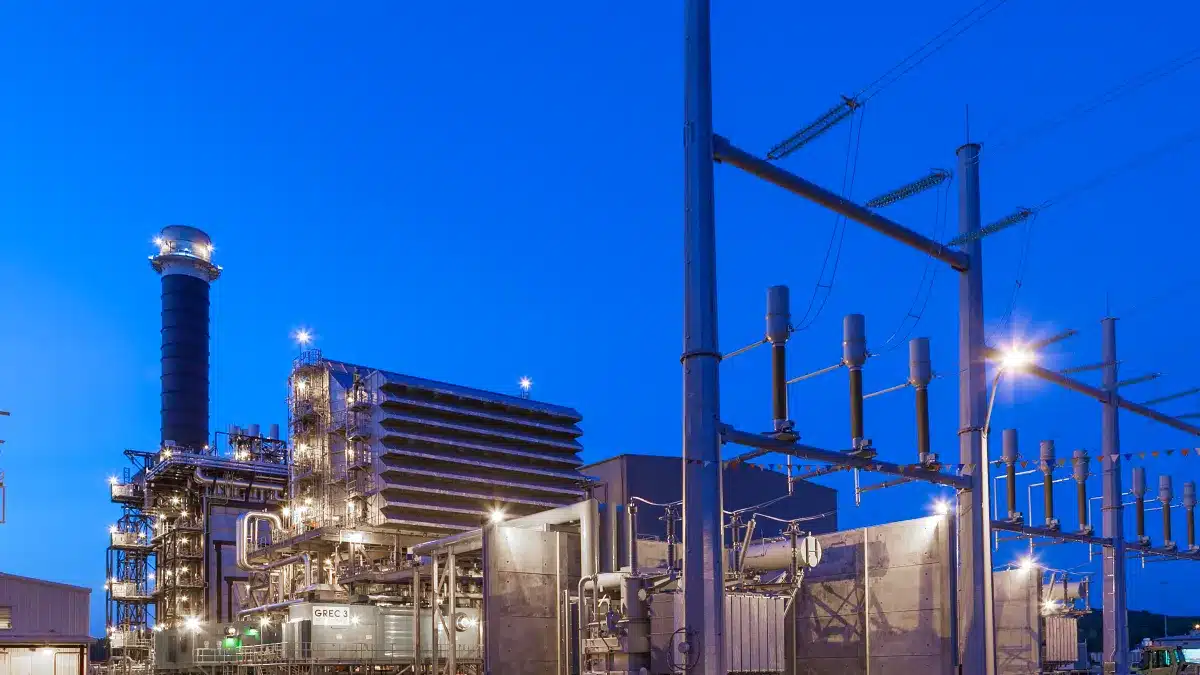


On May 16, 2026, Eskom quietly made history. South Africa had gone 365 consecutive days without a single second of load shedding, a milestone the country had not seen since September 2018. Eskom marked the occasion with a formal statement.
The Board Chairperson Mteto Nyati called it the product of three hard years of work.
On his part, the Chief Executive of Eskom, Dan Marokane, said the country now had a stable electricity platform to grow from.
Eskom’s spokesperson Daphne Mokwena said the milestone marked a decisive turning point from a recovering grid to a stable, high-performing power system, restoring national confidence and saving R26.9 billion ($1.47 billion) in diesel costs over three years.
The grid’s Energy Availability Factor improved from 54.56% to 65.16%. Unplanned outages fell from 32.34% to 22.88%. S&P upgraded Eskom’s credit rating for the first time in a decade.
These are real numbers. The improvement also is genuine. But underneath the celebration, some major electricity problems are still very much alive, and any one of them could push South Africa back into crisis.
The towns still going dark
Ending load shedding and ending power cuts are not the same thing. The distinction matters enormously to people who live through it.
Data collected by energy data company, Wetility, reveals there were 91,934 grid power outages across South Africa last year, translating to an average of six to nine unplanned outages each month, depriving households of between 73 and 132 hours of power. Unlike load shedding, these outages arrive with no warning and no schedule.
In Gauteng, the country’s industrial heartland, the average unplanned outage lasts 14 hours. The Eastern Cape fares better at 6.6 hours. Nationally, the average blackout lasts 12.1 hours, with only 23.6% resolved within two hours.
Ikenna Oguguo, group president and co-founder of Wetility, put it plainly. “Load shedding was disruptive, but it was predictable. Businesses could plan around it, households could prepare, and medical facilities could arrange backup power in advance,” he said. “The current outages arrive without warning and with no certainty of when power will return. What we have now is thousands of localised crises — these are largely invisible at an aggregate level but profoundly felt by those experiencing them.”
Eskom says more than half a million households are currently part of a targeted load reduction programme, and that the Northern Cape and Western Cape have fully eradicated load reduction. It expects the rest of the country to be addressed progressively by 2027. That is still more than a year away.
Theft and bypassed meters are keeping the lights off
One of the main reasons communities continue to experience unplanned blackouts is electricity theft. It is getting worse, not better.
Eskom reported that non-technical losses amounted to 8% of its power supply in the last financial year, resulting in R17.5 billion ($959 million) in lost revenues. Illegal connections overload transformers. Overloaded transformers explode. When a transformer blows, entire neighbourhoods lose power, sometimes for days.
On May 13, a technician was killed in Johannesburg’s Crown Mines district after accidentally contacting an illegally connected cable during routine maintenance. City Power called it “a stark reminder that illegal electricity connections are not a victimless crime.”
Behind many illegal connections are organised criminal gangs sophisticated enough to divert power from Eskom substations and sell electricity to informal settlements as so-called ghost vendors. A 2023 academic study found that direct theft had been normalised in many communities, with residents saying they had no choice but to steal electricity in the absence of a formal Eskom supply.
This is not a fringe problem. It eats directly into Eskom’s ability to maintain the infrastructure that keeps the rest of the grid stable. Every rand lost to theft is a rand not spent on the transformer replacements and cable upgrades that would end load reduction.
The municipal debt that will not go away
Apart from illegal electricity that has become rampant in some local districts, the country still faces mounting debt owed by customers to Eskom.
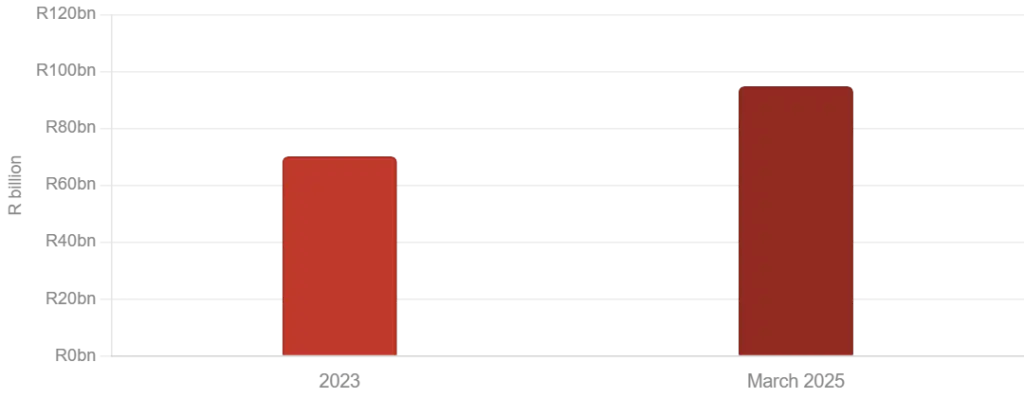
Every year, South African municipalities owe Eskom more money than the year before. Municipal debt stood at R70 billion ($3.8 billion) in 2023. By March 2025, it had risen 27% to R94.6 billion ($5.2 billion). It grows by roughly R20 billion ($1.1 billion) annually.
Eskom CEO Marokane has said the long-delayed unbundling of the distribution business will not happen until municipalities settle the arrears. “The unbundling of the distribution business will not happen unless we can solve the municipal debt,” he said. His Chief Financial Officer, Calib Cassim, has warned that the pace of municipal debt accumulation could wipe out the gains made under the government’s debt-relief programme.
The consequences are already showing up in Eskom’s books. In the current financial year, Eskom cannot recognise R8.9 billion ($488 million) in revenue because several municipalities lack the capacity to repay what they owe. This figure was significantly higher than what it was two years ago, which was around R6.3 billion ($345 million) in 2023) It is expected to keep climbing.
Still running on coal, still short on renewables
Meanwhile, part of how Eskom fixed load shedding was by doubling down on coal. Coal-fired power stations supply more than 70% of grid electricity.
The rollout of wind and solar projects has helped at the margins, but the bulk of the stability gains came from better performance at existing coal plants. Less than 10% of South Africa’s electricity output today comes from renewable energy.
South Africa’s Integrated Resource Plan set a target of renewables contributing 35% of total generation by 2030. The country is not on track, and the reasons are partly structural. Key parts of the transmission grid are already full, leaving many approved wind and solar projects unable to connect because there is no room.
Under the Renewable Energy Independent Power Producer Procurement Programme, South Africa once led Africa’s renewable race, attracting billions in private investment and installing over 6GW of clean energy between 2012 and 2020. Since then, growth has slowed because of delayed procurement rounds, policy uncertainty, and Eskom’s high debt burden.
Lisa Makaula, Programmes and Advocacy lead at The Green Connection, said the energy wins cannot be separated from the social cost.
“For a transition to be just, communities should benefit through socially owned renewable energy technologies such as rooftop solar and be able to sell a portion of their units to the grid,” she said. “Since 2008, Eskom’s tariffs have been raised over five times in real terms, which could continue to impact communities.”
Eskom’s CEO has repeatedly said the country needs nothing less than $2 billion annually to migrate its electricity system to a renewable-based system; how it intends to get the funding still remains uncertain. For now, coal continues to be a safe bet from nation’s energy output. The political pressure to keep the lights on, regardless of how the electricity is generated, appears to outweigh the need for both Eskom and its investment partners to prioritise renewable energy development.
The bills keep going up
Even as some areas are being spared the outages, electricity has become more expensive every year.
South Africa’s National Energy Regulator (NERSA) recently approved an 8.76% electricity tariff increase for Eskom’s direct customers, effective April 1, 2026, and a further 9.01% increase for municipal customers from July 2026.
An additional 8.83% hike has already been approved for the 2027/28 financial year, leaving consumers facing a cumulative increase of more than 18% over two years.
Ruse Moleshe, managing director of energy consultancy RUBK, said the trajectory was unsustainable. “Rising power tariffs erode household affordability while increasing input costs for industry. This can dampen investment, production and job creation,” he said, warning that the impact could be compounded by broader cost pressures.
The Energy Intensive Users Group, which represents heavy industry, has said the ongoing tariff escalation is already forcing some operations to shut down and deterring new investment.
For households, electricity prices have risen roughly 180% in real terms over the past decade. The bills are now rising at nearly 9% a year in a country where inflation runs at around 4%.
So is the crisis over?
Eskom has done something real. Keeping the lights on for 365 days straight is not a small thing. It required genuine technical improvement and consistent discipline at every level of the utility.
But the problems that remain are not footnotes. Municipal debt that grows by R20 billion a year will eventually threaten the financial stability that makes grid reliability possible. Electricity theft costing R17.5 billion annually keeps communities dark long after load shedding has ended.
Tariffs rising nearly 9% a year are pricing out the businesses and households that keep the system financially viable. And South Africa’s renewable energy target is falling further behind with each year that coal stays dominant.
Whether this moment becomes the beginning of a full recovery or just a pause before the next crisis depends on choices that have not yet been made. The grid is stable. The system around it is not.