

Top stories
Finance
Top stories
Nigeria’s newly gazetted tax laws—set to take effect on January 1, 2026—have triggered intense public debate, much of it driven by misconceptions about key provisions.
Lagos state has announced plans to raise ₦214.8bn ($142.8m) from the capital markets under its one trillion naira debt programme, as Governor Babajide Sanwo-Olu seeks investors’ commitment.
With less than 7 months to the CBN’s March 31, 2026, recapitalisation deadline, Nigeria’s mid-sized lenders are scrambling to shore up their balance sheets, deploying a mix of capital raises, mergers and asset sales to meet the new minimum capital thresholds.
Nigeria’s easing headline inflation reflects a broader trend across key African economies in August 2025, with Kenya standing as the outlier.
Uganda has obtained a $313 million syndicated loan from Ecobank, FirstRand and the Development Bank of South Africa to finance infrastructure projects, underscoring its growing reliance on African lenders after a two-year freeze in Western funding.
The milestone extends BUA Foods’ lead over MTN Nigeria, which it overtook on 7 August, and ahead of Airtel Africa (₦8.68trn/$5.78bn) and Dangote Cement (₦8.63trn/$5.74bn). Its sister firm, BUA Cement, holds a market cap of ₦5.14trn ($3.42bn).
The Gold Board is also working on establishing a wholly state-owned refinery built to international standards, enabling Ghana to transition from exporting doré to producing bullion.
The measure, which aligns with the Bank of Ghana’s new forex directive, only applies to withdrawals from accounts funded through electronic transfers or cheque deposits.
Authorities are turning to a fresh vehicle following years of draining the nation’s diamond-backed reserves to plug budget shortfalls.
Among the eight major banks reviewed, I&M Group posted the highest jump in after-tax profit at 36%, followed by Equity Group at 17% and NCBA at 12.6%.
Backed by the Central Bank of Nigeria (CBN), the country has unveiled its first Bank Neutral Cash Hub (BNCH), a move to curb theft, risk, and high cost of moving cash across locations.
Under the Nigeria Tax Administration Act (NTAA), the use of a Tax Identification Number (Tax ID) will be mandatory for a range of activities, from banking to business registration, beginning January 1, 2026.
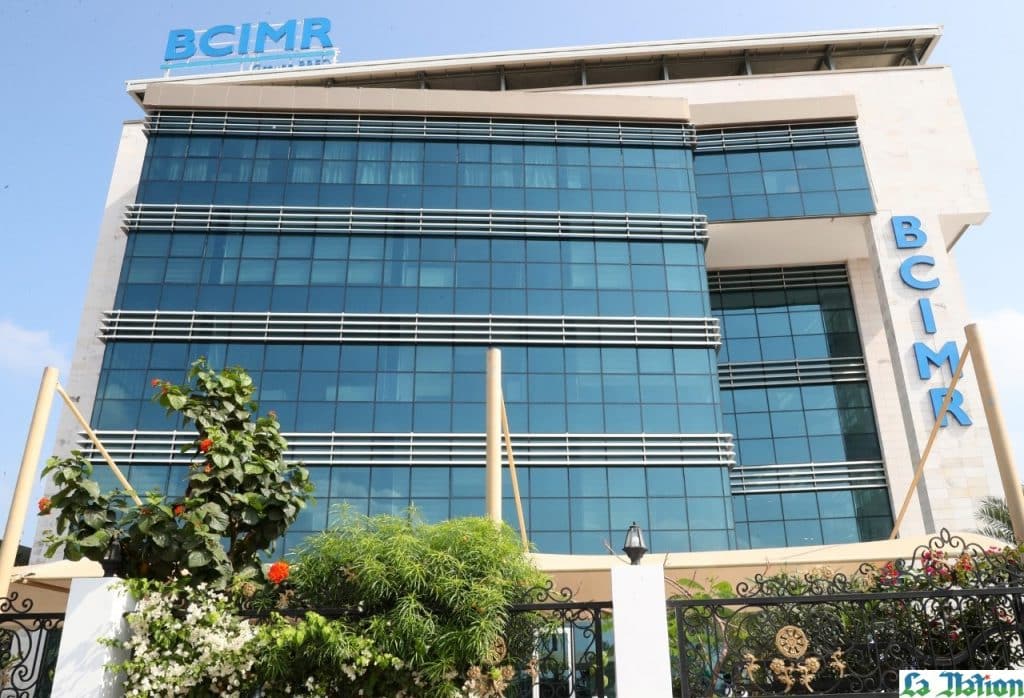
Banque pour le Commerce et l’Industrie Mer Rouge (BCIMR), which controls nearly half of Djibouti’s banking market, is preparing an entry into Ethiopia’s recent liberalised financial sector.

In July, the CBN announced that eight banks had met their revised capital requirements, well ahead of the March 2026 deadline.
The softer financial results coincided with a quarterly increase in fraud, with 35 incidents reported during the three-month period from 29 cases in Q4 last year.
The outturn also marked an acceleration from the 5.3% growth recorded in Q1, making it the fastest pace since Q3 2024, when growth reached 7.2%.
Dangote Cement Plc, Africa’s biggest cement producer, is expanding into Botswana with a new plant that will lift its operations on the continent to 12 countries.
Business activity across Nigeria, Kenya, South Africa, Egypt, Uganda, Zambia, and Ghana moved on diverging paths in August, according to the latest S&P Global Purchasing Managers’ Index (PMI).
CBK noted that reported fraud cases more than doubled to 353 from 153, with the value of attempted fraud rising from KSh 680.9 million ($5 million) to KSh 1.9 billion ($14 million).
With 5,150 megawatts of capacity, Africa’s largest hydro project positions Ethiopia among the world’s top power producers.
