

The African Export-Import Bank (Afreximbank) will inject between $50 million and $100 million to build a gold refinery in Egypt, with construction scheduled to begin by end-2026 and commercial operations targeted for 2027 or 2028 — a move designed to reduce Africa’s dependence on offshore refining and bolster central bank reserves across the continent.
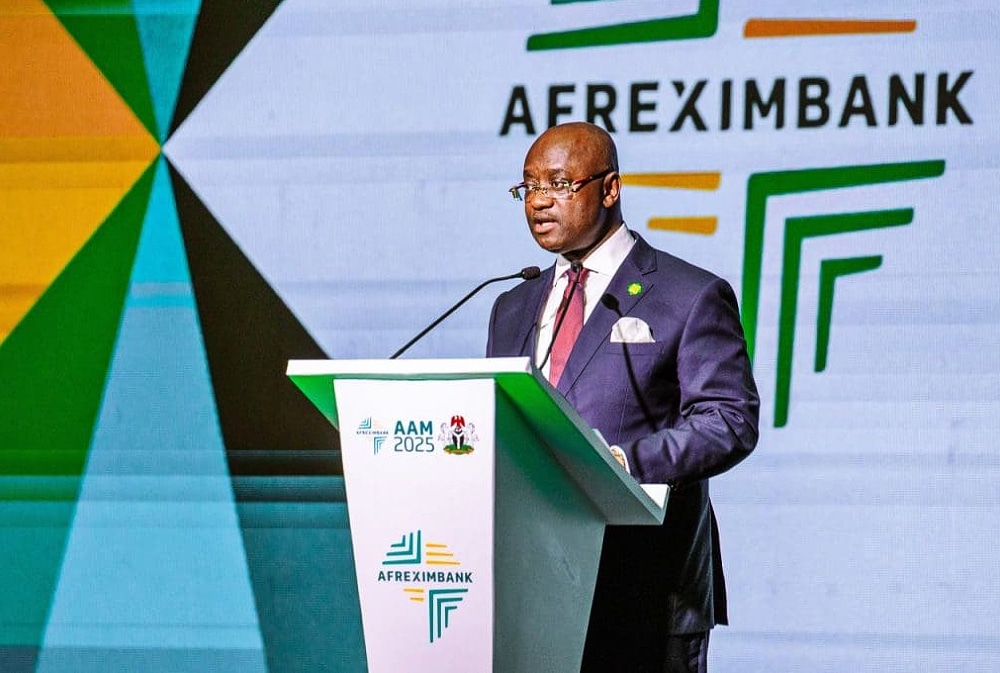
Ayman Elzoghby, Head of Intra-African Trade Finance, Investment, and Corporate Finance at Afreximbank, disclosed the investment to Asharq, describing the refinery as the first phase of a broader continental gold bank initiative developed with the Central Bank of Egypt (CBE) under a Memorandum of Understanding (MoU) signed in December 2025.
The refinery will be sited inside a designated Egyptian free zone and is intended to convert raw gold into globally tradable bullion. Global consultancy McKinsey and Company is conducting the feasibility framework for both the refinery and the wider pan-African gold bank. Afreximbank says the operational rollout timeline for the specialised bank will be announced in the third quarter of 2026.
The project reflects a deliberate continental strategy: Africa produces a significant share of the world’s gold but has historically sent much of it offshore for refining, limiting the value retained on the continent and constraining the ability of African central banks to hold domestically processed bullion as reserves.
Egypt at the centre of Afreximbank’s portfolio
The refinery announcement sits within a much larger financing relationship between Afreximbank and Egypt. The country holds at least 25% of Afreximbank’s total loan portfolio — the institution’s single largest country allocation — spanning heavy industry, pharmaceuticals, power generation, hydrocarbons, and contracting. Egypt’s outstanding credit facility stood at approximately $9 billion at the end of April 2026, pushing aggregate historical financing extended to the country past $40 billion since the bank’s inception.
In the first quarter of 2026 alone, Afreximbank injected between $600 million and $700 million into Egypt’s electricity and petroleum sectors, targeting feedstock and petroleum product imports, infrastructure expansions, and the settlement of outstanding state dues to foreign investment partners.
The bank is also expanding financial guarantees to Egyptian engineering firms operating across borders. One unnamed major Egyptian contractor is executing projects worth $1 billion across Saudi Arabia, the UAE, and Oman under this mechanism. Separately, state-owned Petroleum Projects and Technical Consultations Company (PETROJET) has entered a multi-partner venture with Italian and Nigerian firms to deliver a $1 billion hydrocarbons infrastructure project in Algeria.
The gold refinery initiative, if it proceeds on schedule, would give Africa a continent-based processing hub at a moment when gold prices and reserve diversification strategies are drawing renewed attention from central banks globally — and when several African governments are pushing to capture more value from their mineral wealth before it leaves the continent.