

Top stories
News
Top stories
The UK is the second major economy, after China, to move to deepen trade ties with African nations amid a global trade war sparked by U.S. President Donald Trump’s sweeping tariffs announced on April 1.

Kenya’s private sector activity fell to an 11-month low in June 2025, as weak consumer demand, economic headwinds, and renewed protests dragged performance.

North African country, Libya, has officially launched its first oil and gas licensing round in 18 years, offering 22 new offshore and onshore blocks to global energy companies.
The African Development Bank (AfDB) has approved a $400,000 grant to bolster Ethiopia’s nascent capital market ecosystem.
With its latest move, the central bank aims to lower Namibia’s interest rate margin from 3.7% to align with other Common Monetary Area (CMA) countries such as South Africa and Lesotho, where margins stand at 3.5%.
This marks the first time in over four years that current-year inflation projections have dipped below 4%, strengthening the central bank’s case for a lower inflation target.
The lender’s latest move comes weeks after Access Bank’s – Nigeria’s biggest bank — received regulatory approvals from both counties to acquire National Bank of Kenya Limited (NBK) from KCB Group.
Moody’s has downgraded Afreximbank’s credit rating to Baa2, citing rising risks from its exposure to debt-distressed African sovereigns, particularly Ghana and Zambia
The International Monetary Fund (IMF) has commended President Bola Tinubu’s tax reform bills, describing them as a significant step towards boosting revenue mobilisation and creating fiscal space for development spending while maintaining debt sustainability.
According to Government Statistician Alhassan Iddrisu, the continuous decline signals that the underlying causes of the inflation — high food costs, currency depreciation and global supply chain bottlenecks — were easing.
Under the new rules, Dedicated Electronic Money Issuers (DEMIs) and Enhanced Payment Service Providers (EPSPs) must reserve at least one-third of board seats for independent directors with no financial ties to the company. These directors cannot hold more than 5% equity stakes or maintain business relationships that could compromise their judgment.
The facility will also support South Africa’s transition to a green economy under its Just Energy Transition (JET) programme. The IMF estimates that the development initiative could lift annual GDP growth by 0.2 to 0.4 percentage points between 2025 and 2030.
As a fallback plan, Pretoria is willing to accept a maximum tariff of 10% if exemptions are not granted, its trade ministry revealed.

According to the World Bank, the AfCFTA has the potential of becoming the world’s largest trade area, connecting 1.3 billion people across 54 countries into a single market valued at $3.4 trillion. But progress remains slow due to uneven implementation.
Business activity in Nigeria fell to a seven-month low in June 2025, despite continued declines in inflation, according to the latest Purchasing Managers’ Index (PMI) from Stanbic IBTC Bank.
While BAHL’s exit is relatively minor—it had no retail operations in Kenya—it adds to growing concerns about reduced access to trade finance and foreign capital as more global lenders cut back their presence.
By increasing green financing, the bank is looking to reduce its exposure to climate risks while positioning itself as a key player in Mauritius’ low-carbon transition.
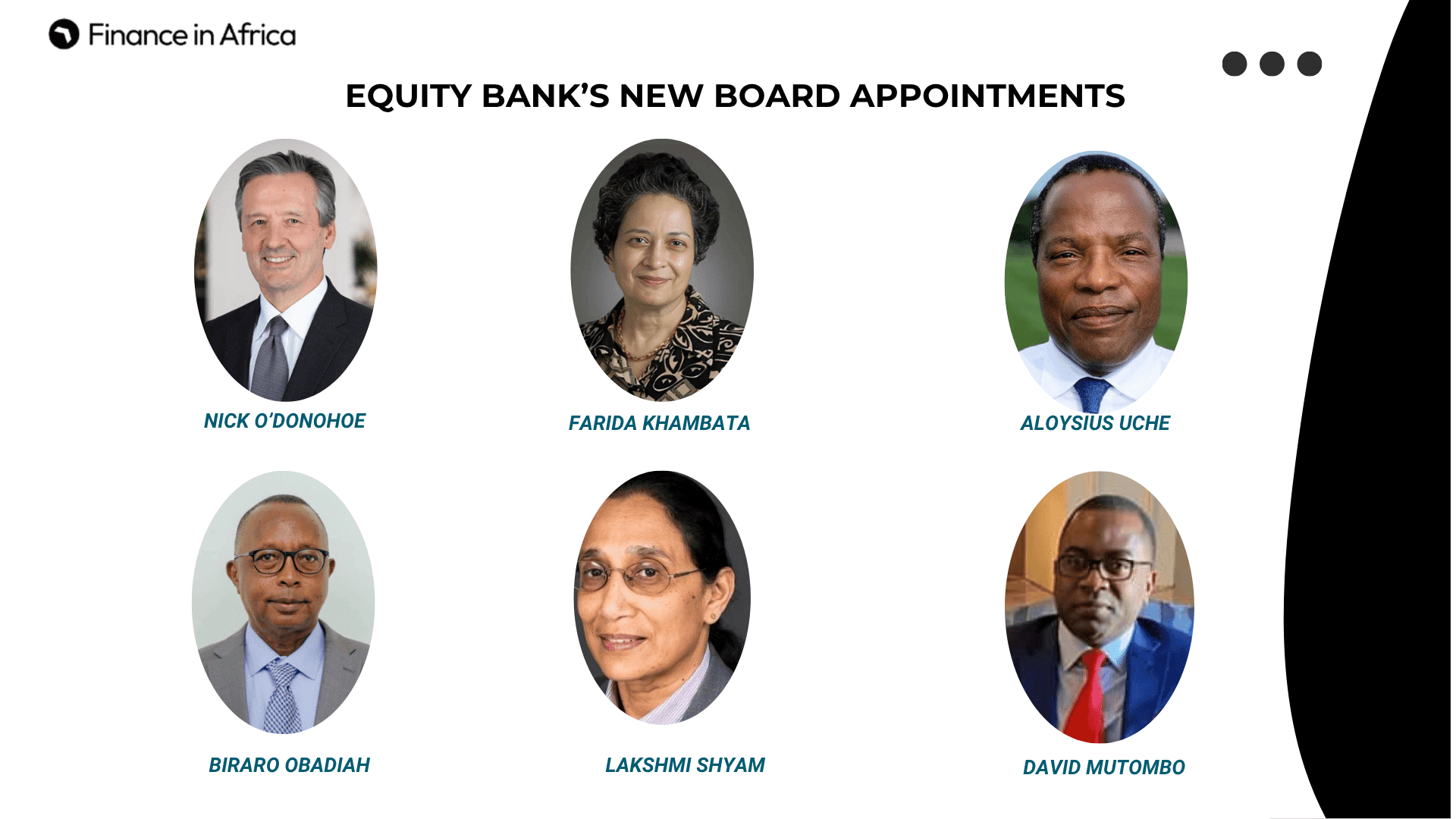
Kenya’s Equity Group appoints six new directors and secures approval to open its first office outside Africa in the UAE, targeting diaspora and cross-border growth.
President Bola Tinubu has signed into law four tax reform bills that are set to transform Nigeria’s fiscal and revenue framework. The four bills, the Nigeria Tax Bill, the Nigeria Tax Administration Bill, the Nigeria Revenue Service (Establishment) Bill, and the Joint Revenue Board (Establishment) Bill, were passed on Thursday after extensive consultations with various…
The signing comes a day after Kenyans returned to the streets to commemorate victims of last year’s nationwide protests, which were sparked by the highly controversial tax reforms proposed in the Finance Act 2024.
