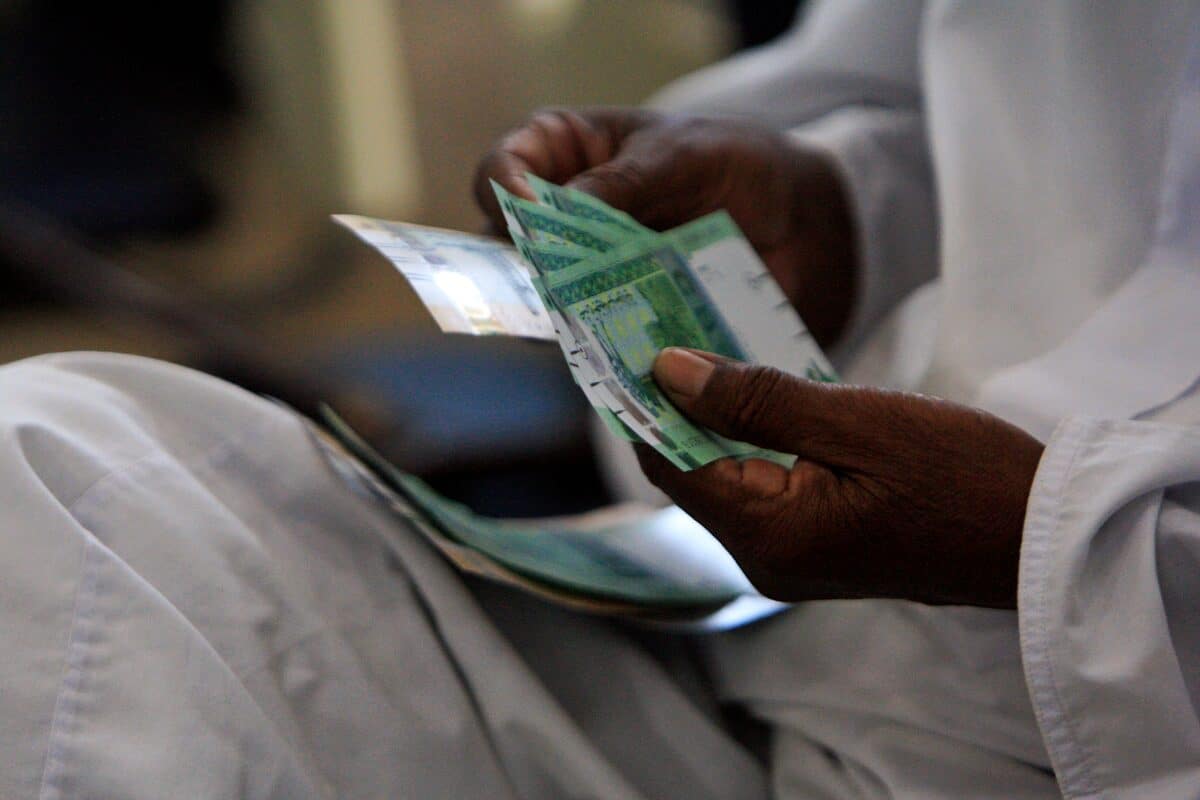



The International Monetary Fund (IMF) has cautioned Ethiopia and Kenya about the potential currency risks of converting parts of their Chinese loans from US dollars to yuan, according to Bloomberg.
The strategy, designed to reduce debt servicing costs, mirrors Kenya’s earlier move that trimmed its annual repayment burden by an estimated $215 million. Ethiopia is now considering a similar shift as it restructures $5.38 billion in Chinese debt under the G20 Common Framework following its $1 billion Eurobond default.
While the IMF acknowledges that currency swaps can ease short-term fiscal pressure, it warned that such arrangements can expose countries to new forms of volatility.
“While these transactions may lower costs, they can also introduce currency risks depending on their structure,” an IMF Spokesperson said, emphasising that any conversion should align with a long-term debt management strategy.
The global lender’s caution underscores a growing dilemma for debt-laden African economies—how to balance the appeal of cheaper yuan loans against the risk of exchange rate instability.
The yuan’s global push
The Chinese yuan has emerged as a popular alternative for countries seeking to cut borrowing costs and diversify away from the dollar. Yuan-denominated bonds—known as panda bonds—offered average yields of around 2.4% in 2025, roughly half the rate of comparable dollar debt.
The trend extends beyond Africa. Sri Lanka has requested yuan funding worth $500 million for a highway project initially priced in dollars, while Hungary is preparing to issue five billion yuan in panda bonds. For Beijing, this reflects a strategic win in its long-term campaign to internationalize its currency and expand its financial influence.
Yet for many developing countries, this growing yuan reliance comes with challenges. Currency mismatches, limited convertibility, and exposure to China’s domestic monetary policy can increase financial vulnerabilities—especially for economies already struggling with weak export earnings and foreign exchange shortages.
Ethiopia and Kenya: Contrasting currency fortunes
Ethiopia’s birr has been Africa’s weakest-performing currency in the first eight months of this year, according to the World Bank, undermined by falling export revenues, restricted foreign exchange inflows, and persistent macroeconomic pressures.
Kenya, by contrast, has seen a mix of turbulence and recovery. The shilling lost 21% of its value against the dollar in 2023—its sharpest annual decline since 1993—before rebounding in 2024, supported by improved remittances, stronger reserves, and tighter fiscal discipline.
“The currency can be said to have experienced a freefall, depreciating from KSh 113 to KSh 160 to the US dollar,” said Jared Ariemba, Senior Lecturer and Head of Accounting and Finance at the Technical University of Kenya, in a recent article.
By December 2024, the shilling had appreciated by about 17.4%, ending the year at KSh 129.3 per dollar and maintaining stability within a narrow range so far in 2025.
Still, the IMF’s warning highlights that even for relatively stable currencies, yuan swaps could introduce fresh uncertainty if exchange rate movements turn unfavorable.
Balancing debt relief and stability
As China’s role in African debt expands, more countries may consider yuan conversions as a tactical move to manage costs. But experts say the success of such strategies depends on robust currency risk frameworks, transparent debt reporting, and credible monetary policy coordination.
In the short term, yuan-linked loans may relieve pressure on fiscal budgets. In the long run, however, they could test the resilience of local currencies—especially in economies already struggling with inflation and dollar shortages.
For both Ethiopia and Kenya, the path forward lies in balancing cost savings with risk management. As the IMF warns, short-term relief should not come at the expense of long-term stability.