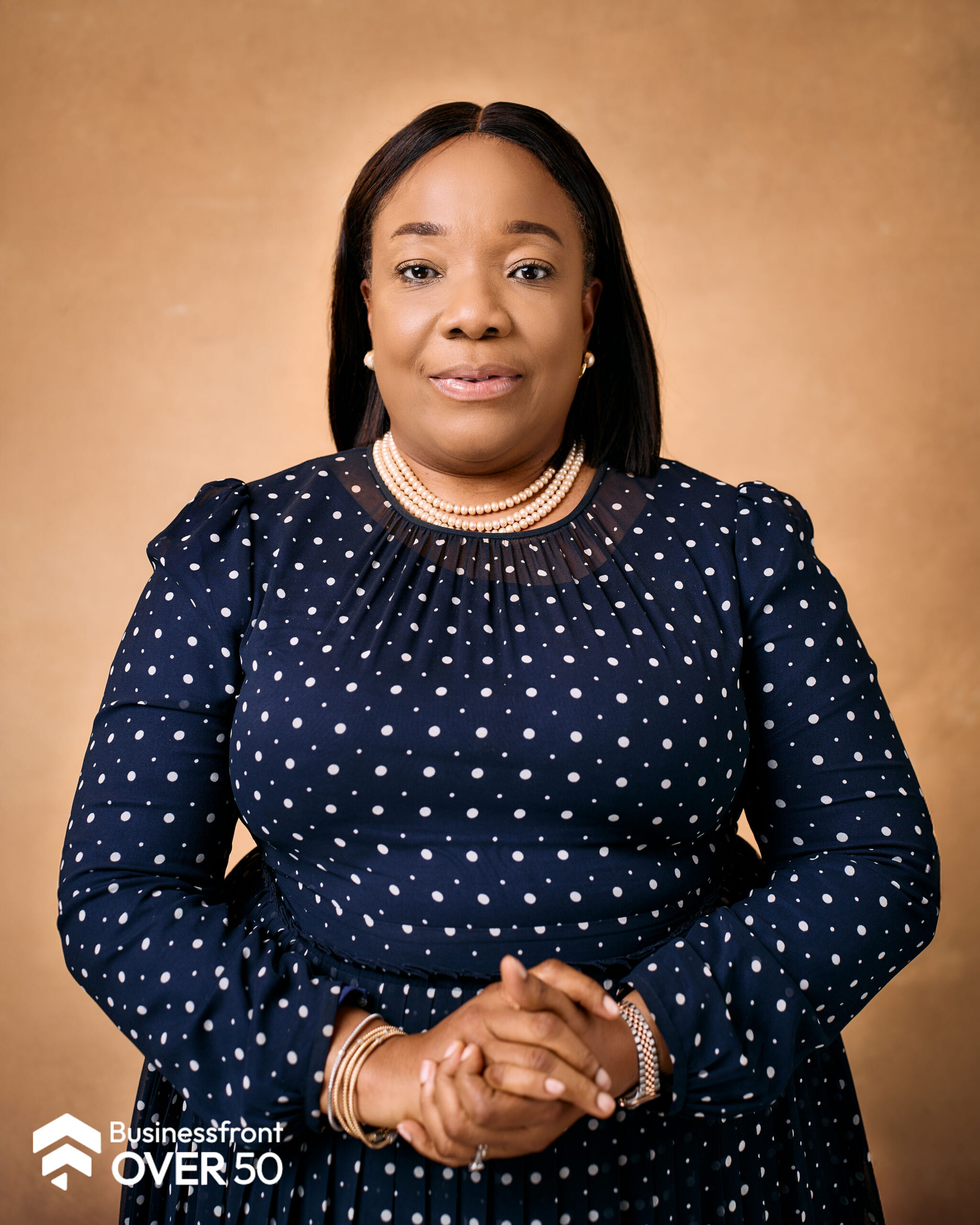
Mandilas recently celebrated 75 years. What are the core strengths that have allowed the company to remain relevant over the years?
First, you cannot take away the personality and commitment of Mr. John Basil Mandilas. To many indigenous business adventurers, the founder, Mr. J.B. Mandilas, symbolises what the entrepreneurial guts should visibly encapsulate – hope, hard work, and humility. He had the Can-Do entrepreneurial spirit that says that no challenge is insurmountable. The Mandilas drive has kept the company going.
Other critical success factors for Mandilas over the years have been our commitment to Nigeria and Nigerians. As a matter of fact, Mr. J.B. Mandilas was the first naturalised Nigerian, reinforcing his belief and the Group’s commitment to Nigeria.
We have built up expertise and credibility over the years, especially in after-sales service, repair, and maintenance. We are a learning organisation, an organisation that adapts to challenges in its environment and is resilient enough to come out of those challenges on top. We are mindful of our obligations to our employees and place a premium value on business credibility, so we live our core values and promote good work ethics.
How would you describe Mandilas Group’s role, past and current, in Nigeria’s mobility and cooling solutions sectors?
Mandilas have always been at the heart of Nigeria’s mobility and cooling story. In the past, we helped introduce iconic brands like Volkswagen and Carrier, built Africa’s first air-conditioning factory, and set the benchmark for after-sales service.
In cooling, we pioneered the industry as the exclusive distributor of Carrier. In 1972, Mandilas launched Norman Industries Ltd in Lagos, the first and largest airconditioning factory in Africa, which produced room and split airconditioners under Carrier’s license, bringing cooling technology production to Africa.
In 1973, the company helped set up the “Volkswagen of Nigeria” assembly plant in partnership with the federal government and Volkswagen AG, heralding the industrialisation of the automobile industry. In the mid-1960s, Mandilas moved into a flagship building on Broad Street, Lagos, a significant meeting point for commerce.
Over the years, Mandilas has become known for its strong after-sales service and ability to adapt to new technologies. In 2020, we embarked on a transformation agenda centered on “Committed to You,” prioritising customer-centric innovation, relevance to younger markets, and a renewed brand positioning. Celebrating 75 years, we reaffirmed our evolution from a modest trading firm to a diversified lifestyle solutions provider deeply embedded in Nigeria’s economy.
Today, we continue that legacy as a leading Toyota distributor and exclusive partner for Carrier HVAC and cold chain solutions. Our role has remained consistent – to pioneer, to serve, and to adapt, ensuring Mandilas remains a trusted name in Nigeria’s mobility and cooling sectors.
After-sales service plays a role in building brand equity. How is Mandilas enhancing its after-sales service to meet rising customer expectations for reliability and speed?
Service excellence remains a formidable differentiator for the Mandilas brand, and we have been able to sustain strong brand equity through it over the years.
At Mandilas, we understand that service excellence is a journey, and we must constantly push the bar to get better. To win, we must continuously evolve to meet current market demands and consistently deliver good service experiences at all our touch points. Delivering on this bold promise clearly involves leveraging relevant technology, best practices, and the development of innovative solutions to consumers’ pressing lifestyle issues.
We have invested in modern diagnostic tools, staff training, and process optimisation to reduce turnaround times while maintaining high service quality.
What is your view on Nigeria’s readiness for electric vehicles (EVs), and how is Mandilas positioning itself for that transition?
Nigeria’s Energy Transition Plan sets an ambitious goal of deploying 13 million EVs (roughly 60% of the vehicle fleet) by 2050, aiming for full electrification by 2060. As of early 2025, approximately 15,000 to 20,000 EVs are already on Nigerian roads, a sign of growing visibility and awareness.
Nigeria’s EV journey is still in its infancy, marked by early adopters and pilot projects rather than mass uptake. But the direction is clear: with policy support, infrastructure development, and consumer education, electrification can accelerate.
As a well-established player in vehicle distribution and servicing, we are well-positioned to explore EV opportunities, be it through importing EV models, investing in charging infrastructure, or developing after-sales capacity for electric vehicles. The conversations have started internally. We are engaging with auto dealers and technology partners, and preparing our workforce for EV adoption.
Mandilas has a long history of brand partnerships. What qualities are driving these partnerships?
Global brands have trusted Mandilas because of our unbroken record of honouring agreements, shared values, and a deep understanding of Nigerian consumers, culture, and market dynamics. Mandilas is known for ethical business practices, timely delivery, and transparency in partnerships, values that have built trust across industries.
Our after-sales excellence has also been a major driver of partnerships. This has made us a natural choice for auto dealers and Carrier’s long-term Nigerian presence. Market longevity is one of our admirable staying powers; even when competitors exited, Mandilas stayed, sustaining consumer confidence and protecting its partners’ reputations. In a nutshell, Mandilas’ partnerships thrive because of a blend of trust, infrastructure, local expertise, resilience, and adaptability.
You are the first African CEO of the company. What legacy do you hope to leave behind as part of the company’s ongoing story?
As the first African and female GCEO of Mandilas, my goal is to deepen our African identity and position the company as a pan-African powerhouse in mobility, cooling, and sustainable innovation. I want my legacy to be that we not only honoured Mandilas’ proud 75-year history but also prepared it for the next 75 years by driving the shift to green energy, expanding our footprint across Africa, and building a service culture that is timeless in its impact and a talent pipeline that empowers generations.
In short, I hope to be remembered for transforming Mandilas from a Nigerian institution into a global brand with African roots and global relevance.
What role do you see Mandilas playing in Nigeria’s industrial or infrastructural future?
Mandilas has a pivotal role to play in Nigeria’s industrial and infrastructural future. In mobility, we see ourselves driving the transition to electric vehicles, CNG adoption, smart fleet solutions, and the infrastructure that will support them.
In cooling, our focus is on building nationwide cold chain systems that will reduce food losses, safeguard pharmaceuticals, and support agriculture and healthcare. We also intend to build on our history of local assembly by investing in manufacturing and skills development, strengthening Nigeria’s industrial base. At the same time, we are committed to advancing energy-efficient and renewable-powered cooling solutions to support climate goals.
We are also making investments in the agriculture and real estate sectors. Ultimately, Mandilas’ role will be to combine our 75-year legacy with innovation, ensuring we remain a trusted lifestyle solutions partner in Nigeria’s industrialisation and infrastructural growth.
How is the company balancing the legacy of a 75-year-old with the need for innovation and modernisation?
Our 75-year journey is both a source of pride and a springboard for the future. Our legacy gives us credibility, deep market knowledge, and the trust of generations of Nigerians and Nigerian businesses. At the same time, we recognise that legacy without innovation risks irrelevance.
To create this balance, we have safeguarded the values that have sustained us: integrity, care for the future, accountability, respect for people, reliability, and excellence. We boldly embrace new technologies, changing consumer expectations, and sustainability imperatives. Our transformation agenda, anchored on Committed to You, embodies this. It means reimagining our offerings to resonate with our target markets, embedding digital solutions across our operations, and aligning with global shifts in cooling and mobility.
At the same time, we’ll continue to nurture our strategic partnerships, strengthen our after-sales portfolio, and build local capacity through training and industry-relevant initiatives. In essence, Mandilas is not choosing between legacy and modernisation. We are weaving both into a stronger narrative that ensures we remain relevant, trusted, and future-ready.
Taking the shift in economic conditions in recent times into account, what is the outlook for vehicle distribution and after-sales services in Nigeria?
The outlook for vehicle distribution and after-sales services in Nigeria appears promising.
Post-COVID, the automobile industry was not left out of the general economic rebound. We have seen a gradual rise in demand for new vehicles in the mid and low-cost segments of the market, and this trend is likely to continue at an increasing rate as the global and local economies attain more stability, barring any unforeseen disruption. The high-end segment of the market is gradually picking up as well, but at a much slower pace. There are opportunities in the local assembly of vehicles that would ensure more affordable models.
The recent devaluation of the naira has provided the public sector, which is a high consumer of high-end vehicles, with more liquidity as government allocation of funds to States, Local Governments, and MDAs has more than doubled. This has elicited increased public sector procurement of vehicles.
The growing availability of electric vehicle brands and models, coupled with increased awareness and interest of consumers, has opened a new vista in the Nigerian automobile market and further boosts the aggregate outlook for vehicle distribution and after-sales.
After-sales will continue to be a strong differentiator for trusted brands. So, while distribution may recover gradually, the real growth and stability for now will come from building stronger after-sales service networks and ensuring customers have reliable, affordable support to keep their vehicles on the road.