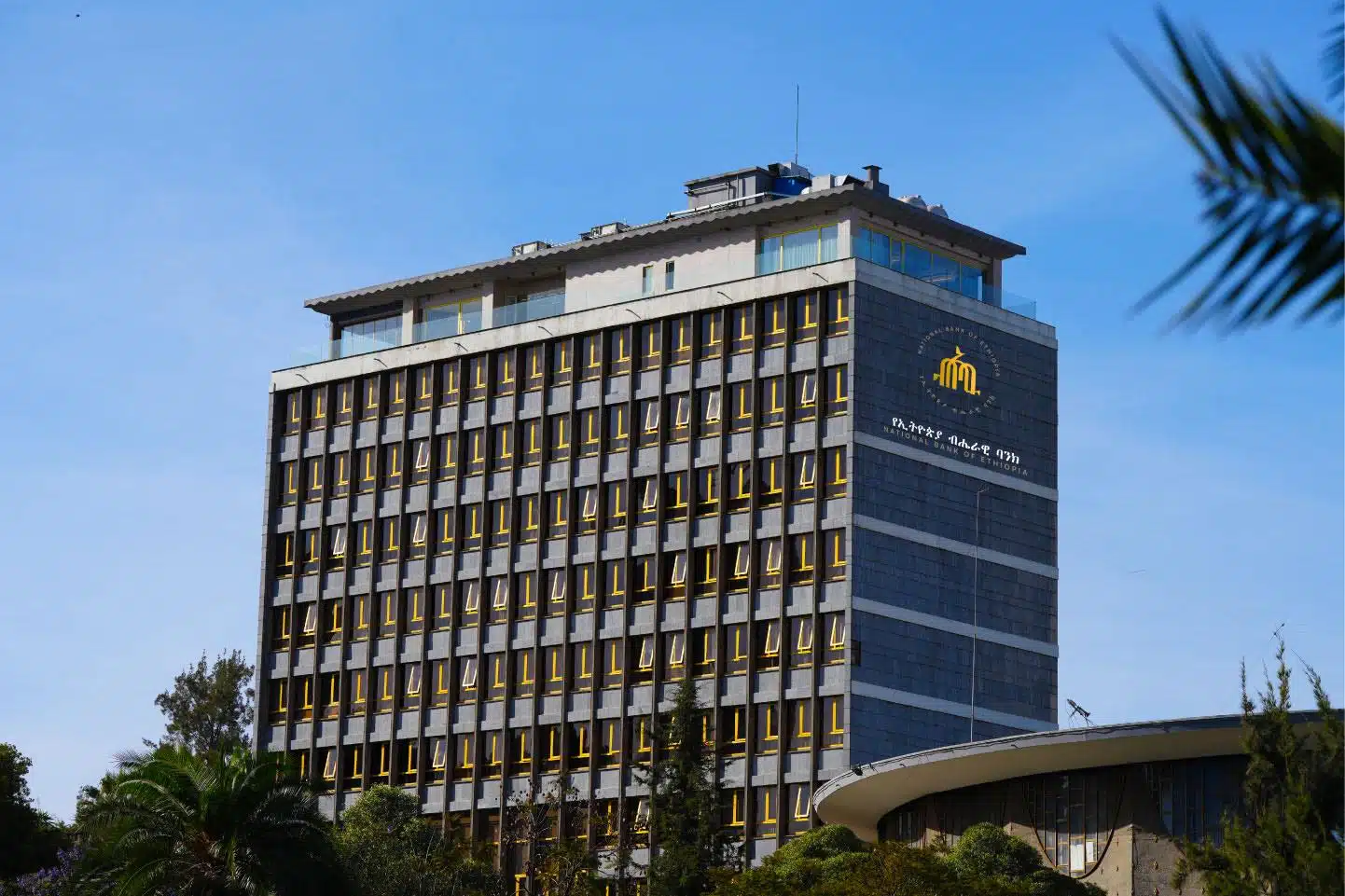


The National Bank of Ethiopia (NBE) has published a fixed bi-weekly foreign exchange auction calendar for the second quarter of the 2026/27 fiscal year, committing $140 million per auction across six sessions running from October 13 to December 22 — a total of $840 million in planned foreign currency supply.
The NBE announced the schedule on October 6, with auctions set for October 13, October 27, November 10, November 24, December 8, and December 22.
The fixed cadence continues the central bank’s practice of publishing auction calendars in advance, a transparency measure introduced as part of Ethiopia’s broader foreign exchange market reform programme.
The auctions supply foreign currency directly to commercial banks through a competitive bidding process. The latest schedule follows a series of auctions conducted throughout 2026, with allocation sizes varying according to market conditions. At a May 19 auction, the NBE offered $500 million against total bids of approximately $1.06 billion — nearly double the amount on offer.
By September 23, demand had moderated considerably: banks submitted $123.49 million in bids against a $125 million allocation, leaving $1.51 million unallocated. All 27 participating commercial banks were successful in that auction.
The shift in demand dynamics between May and September suggests the market is gradually finding equilibrium as the reform programme matures — a signal that will be closely watched by importers, FX traders, and investors tracking Ethiopia’s currency liberalisation.
The auction programme sits within a wider reform agenda triggered by Ethiopia’s move to a market-determined exchange rate in July 2024 — a significant policy pivot that ended the country’s long-standing managed currency regime.
Since then, the NBE has overhauled several related mechanisms, including export-proceeds requirements, forward foreign exchange transactions, foreign currency retention accounts, and the authority granted to commercial banks to handle a broader range of trade-related FX transactions.
Efforts to deepen the interbank foreign exchange market have also advanced.
In January 2026, an automated interbank FX trading platform was launched at the Ethiopian Securities Exchange (ESX) — the country’s nascent capital market infrastructure — marking a further step toward a more liquid and transparent currency market. The NBE has also expanded the information it publishes on auction outcomes, reinforcing the transparency push.
For businesses operating in Ethiopia — particularly importers dependent on dollar access — the predictable bi-weekly schedule offers a degree of planning certainty that was largely absent under the previous managed-rate system. The $840 million second-quarter commitment also signals that the NBE intends to remain an active supplier of liquidity as the market continues to develop.
Ethiopia’s FX liberalisation is among the more consequential currency policy shifts on the continent in recent years, and its trajectory will be of interest beyond Addis Ababa — particularly to regional trading partners and international investors assessing the country’s macroeconomic stability.