

Ethiopia’s deposit insurance ceiling has lost nearly two-thirds of its real value since the country floated its currency last year, exposing a growing gap between the fund’s nominal growth and what it can actually deliver to depositors.
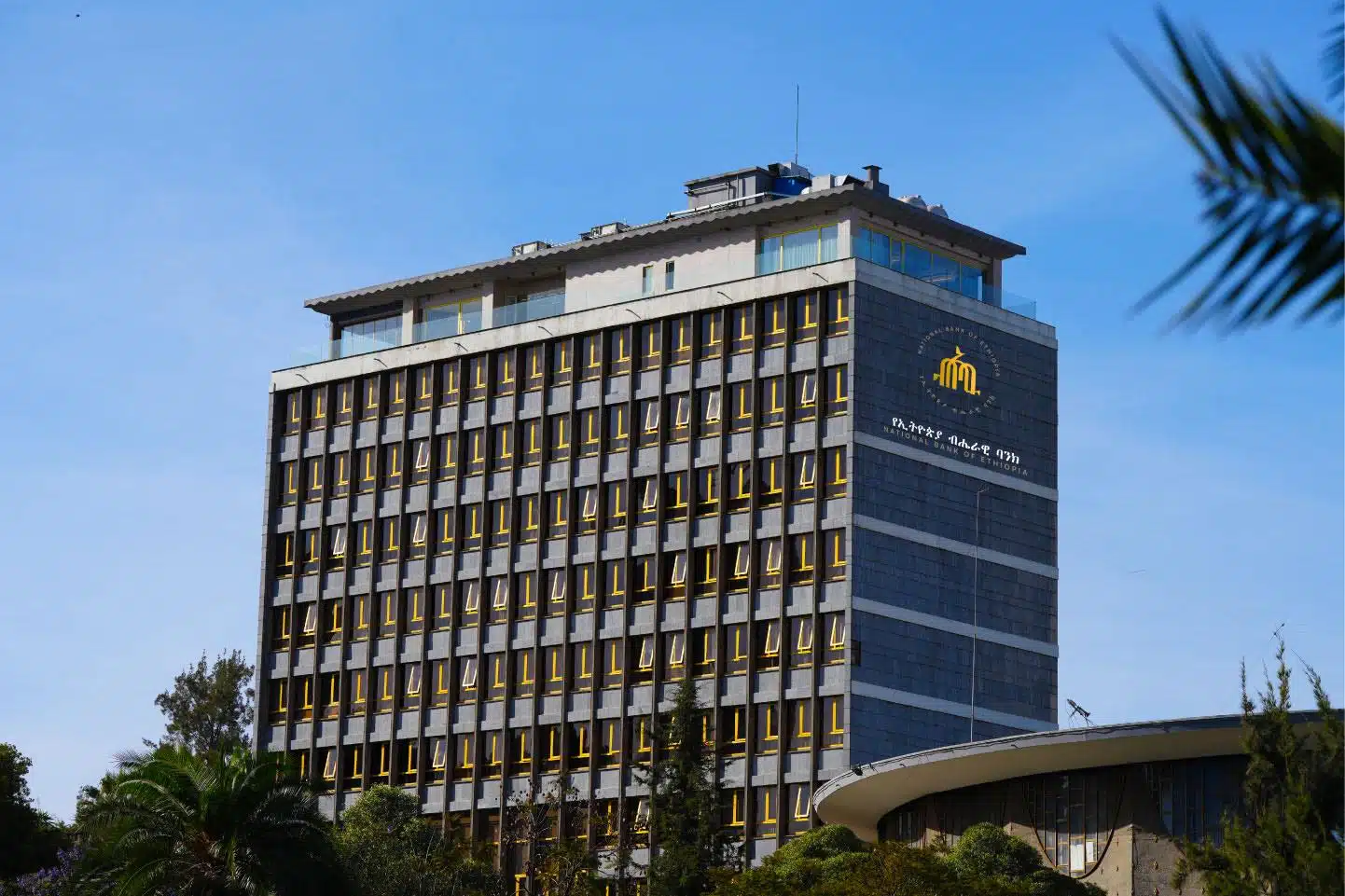
The Ethiopian Deposit Insurance Fund (EDIF) — established under a Council of Ministers regulation and operating under the National Bank of Ethiopia (NBE), the country’s central bank — has kept its coverage ceiling fixed at 100,000 birr per depositor since it began operations in November 2023.
At the exchange rate then in effect, that ceiling was worth close to $1,750. At today’s rate of roughly 162 birr to the dollar, the same 100,000 birr covers approximately $620.
The collapse in real-terms coverage stems almost entirely from the birr’s depreciation after the NBE floated the currency in July 2024 — a liberalisation move that sent the exchange rate from around 57 birr per dollar to its current level. The coverage ceiling has not moved.
The erosion is particularly striking against the backdrop of EDIF’s nominal growth. The fund’s total reserves have reached 27.43 billion birr, up from roughly 6.5 billion birr at launch — a more than fourfold increase in under two years. Premium collections in the 2025/26 fiscal year alone reached 9.35 billion birr, with regular deposits accounting for 8.40 billion birr and non-interest-bearing deposits contributing 951.96 million birr.
Cumulative premiums over three fiscal years total 23.42 billion birr, according to Chief Executive Officer Desalegn Ambaw.
Desalegn confirmed that a review of the payout ceiling is planned, but no revised figure has been announced.
EDIF’s 97 member institutions include 31 commercial banks and 66 microfinance firms. The fund says approximately 97% of bank depositors fall within the scheme’s coverage, which excludes interbank deposits, government accounts, and deposits held by majority shareholders.
The state-owned Commercial Bank of Ethiopia (CBE), which controls nearly half of the sector’s assets, is the fund’s largest contributor. Total financial-sector assets exceed 3.2 trillion birr — more than one-third of gross domestic product — though they remain heavily concentrated at CBE. That concentration creates an asymmetric risk: a failure at any of Ethiopia’s smaller private banks would likely fall well within EDIF’s capacity to absorb, but a crisis at CBE — the institution most responsible for funding the scheme — would test the fund’s design in ways it has not yet faced.
Microfinance institutions, by contrast, hold around 2% of sector assets but recorded 21.6% growth in 2024, reaching 60.1 billion birr.
To build financial capacity, EDIF invests the premiums it collects. Its investment portfolio stood at 26.81 billion birr at the close of the 2025/26 fiscal year, generating 2.53 billion birr in ancillary income. The portfolio is weighted towards treasury bills — which currently yield 18% — with a portion allocated to Mudarabah, a Sharia-compliant profit-sharing instrument. The fund has arranged with the NBE to redeem its treasury bills on demand, Desalegn noted. Investment income from holdings reached 1.3 billion birr.
EDIF began with 50 million birr in seed capital from the Ministry of Finance, part of a 200 million birr allocation. A backstop agreement with the ministry allows the fund to draw from the Treasury if a member institution’s liabilities exceed collected premiums.
The fund says its current reserves are sufficient to meet statutory insurance obligations and support public confidence in the financial system. No payout events have occurred since launch, and EDIF says its response systems are operational. Whether the 100,000 birr ceiling still commands depositor confidence — given what it now buys in dollar terms — is a question the fund has yet to answer publicly.