

China is coming for Africa’s shoppers one store at a time.
Chinese companies that once supplied the continent from behind the scenes are moving into spaces long dominated by local businesses. From supermarkets in Kenya to e-commerce platforms in South Africa and Nigeria’s open markets, these companies are finding new routes to Africa’s retail sector.
The expansion marks a new phase in Beijing’s economic relationship with the region, long centred on trade, investment and infrastructure development.
Africa’s consumer economy gives Chinese merchants plenty to chase. McKinsey estimates the region could unlock $3 trillion in consumer spending by 2030, with 250 million more people joining the consuming class. China’s vast manufacturing base also gives its businesses a built-in cost advantage, allowing them to compete aggressively on price where affordability often drives consumer choice.
The result is a growing Chinese retail presence in a market where major American retailers have struggled to crack despite years of investment on the continent.
From factories to storefronts
A Chinese product sold in an African market once passed through several hands before reaching the consumer. It left a factory in China, crossed the ocean to an African port, passed from an importer to a wholesaler before finally reaching the shelf of a small retailer.
Millions of African businesses built their trade around that chain.
China benefited from the scale of the regional demand. Local merchants benefited from access to cheap imports. A true win-win relationship. The commercial scale of this arrangement is reflected in historical trade numbers.
China-Africa trade reached a record $348 billion in 2025, with Chinese exports accounting for about 65% of the total. Manufactured goods have long dominated this trade, making up more than nine-tenth of Africa’s imports from the Asian nation between 2000 and 2022.

Now Chinese companies are appearing on the other side of the transaction.
China Square, a Chinese-owned discount retailer, offers one of the clearest examples of this shift. Since launching its South African footprint in 2017, the company has expanded to seven other major regional markets including Zambia, Ghana and Kenya. The retailer offers a wide range of household goods and general merchandise.
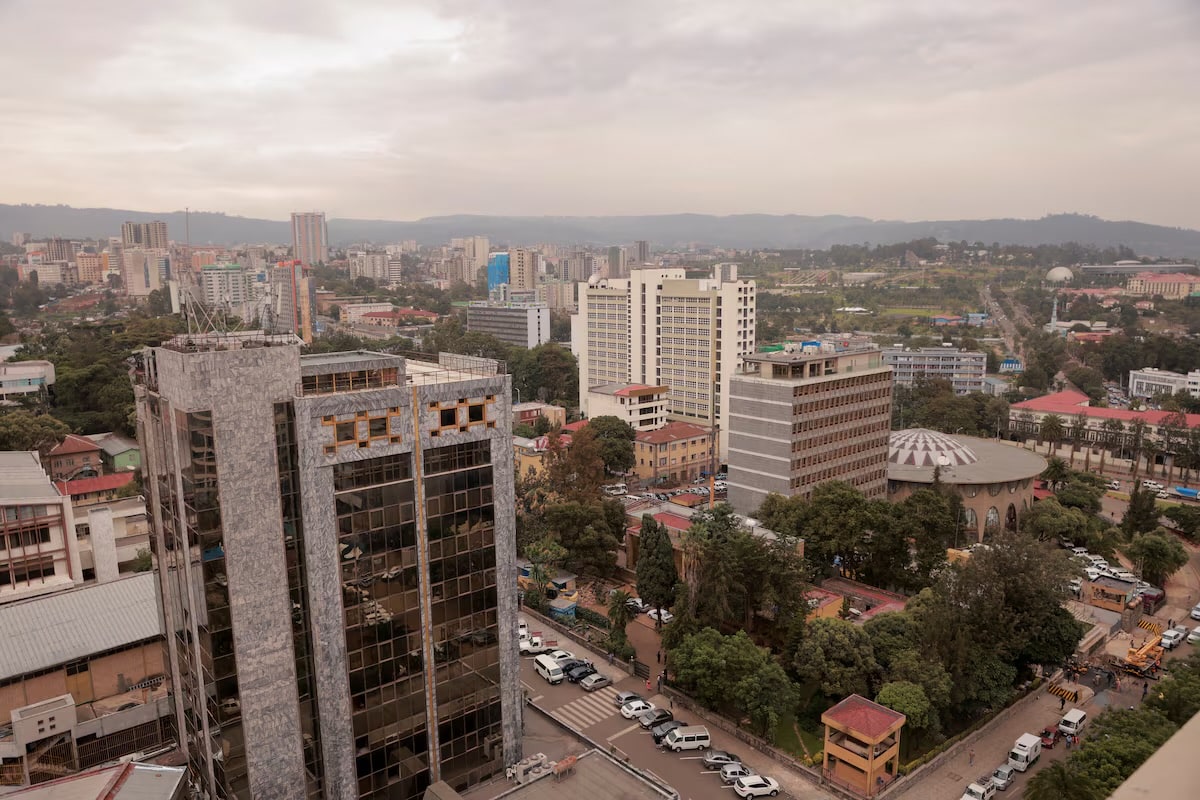
Nairobi quickly became an important testing ground. China Square opened its seventh Kenyan outlet in early 2025, less than two years after entering the country. It is eyeing expansion beyond the capital city.

By buying in bulk directly from Beijing, China Square avoids most of the mark-ups built into the traditional wholesale chain. It can therefore sell goods at prices local retailers can only struggle to match, a source of both its popularity with shoppers and friction with traders.
Elsewhere, Nigeria is seeing Chinese traders move into products that local merchants have sold for years, including fabrics, textiles, telephone accessories, and automobile spare parts. Major commercial cities are also seeing Asian firms make inroads beyond traditional retail, including into electric vehicles and renewable energy.
The Centre for the Promotion of Private Enterprise, an economic tink tank based in Abuja, estimates that distributive trade employs 27.5% of the country’s workforce, making the new competition a livelihood issue for millions of Nigerians.
The storefront is only part of the story. Customer-facing Chinese companies are also reaching African shoppers through apps and websites.
In South Africa, Shein and Temu generated R7.3 billion ($440 million) in the clothing, textile, footwear and leather market in 2024. Their combined sales represented 37.1% of online spending in the sector, putting them ahead of established international retailers including H&M, Zara and Cotton On within five years of entering the market.
The common thread across these businesses is their ability to bring the economics of Chinese manufacturing closer to the African consumer. Cheap capital and extensive supply networks reinforce the advantage, says Aliyu Ilias, an Abuja-based development economist, giving foreign businesses greater capacity to compete on scale.
“China possesses significant advantages over many other foreign suppliers: it has a massive economy of scale, access to low-interest capital at 2% to 3%, and free trade zones areas,” Ilias told Businessfront.
Why American retailers are struggling in Africa
Meanwhile, China is not the first foreign retail power to see an opportunity in Africa’s growing consumer market. American companies have been testing the continent for years, with Walmart’s 2011 acquisition of Massmart marking one of the biggest bets.
The Bentonville-based retailer paid about $2.4 billion for a controlling stake in the South African group, gaining established brands including Game, Makro and Builders Warehouse.
Massmart operated in 14 African countries at the time, giving Walmart an immediate foothold across the continent.
More than a decade later, that footprint has grown considerably narrower. Massmart now operates 304 stores across eight sub-Saharan African countries, but 273 are in South Africa. Its other seven markets collectively account for just 31 stores.
Game, once central to the group’s expansion, has also withdrawn from several African markets.
Amazon’s African entry has been even more concentrated. The e-commerce giant launched its first sub-Saharan marketplace in South Africa in 2024, choosing the continent’s most developed economy as its entry point. Its expansion elsewhere remains limited.
A closer look at the market reveals a broader pattern. Africa has attracted relatively few large American retailers with continent-wide ambitions, leaving much of the region served by African chains, Chinese businesses and European groups.
America has therefore been present without building the kind of broad retail footprint its global consumer companies might suggest. Meanwhile, China is taking a wider route to African shoppers, combining physical discount stores with direct sales, e-commerce and fashion platforms.
The battle for the African shopper
For local retailers, the competition is becoming harder to ignore.
In Nigeria, scores of traders took to the streets last month to protest what they said was an increasingly difficult fight for customers. Chinese businesses that had entered the market as wholesalers were, according to the traders, now selling directly to consumers.
Price sits at the centre of the dispute. Nigerian importers absorb shipping, clearance and other costs before goods reach their shops, squeezing already thin margins. Chinese traders can sell closer to wholesale prices, making the gap harder to bridge.
In Sunyani, Ghana, traders say the arrival of Chinese discount shopping malls is creating a similar problem. At some outlets, products can sell for nearly half the price of comparable goods in local shops.
Scale adds another advantage. Chinese retailers can stock a much wider range of goods and buy in volumes that smaller African businesses often cannot match. Access to cheaper capital, larger supply networks and direct factory relationships can further widen the gap.
The International Finance Corporation estimates that unmet demand for finance among smaller retailers in sub-Saharan Africa stands at about $331 billion, leaving many businesses with little room to expand.
Despite the tensions, Beijing continues to deepen its commercial ties with Africa. In May, China removed tariffs on imports from all 53 African countries with which it has diplomatic relations. China is positioning itself to remain a major supplier to Africa even as it keeps the continent’s retail markets firmly within its sights.
Local retailers, however, are far from marginal. They remain deeply embedded in African communities and consumer habits. In Nigeria, for instance, McKinsey estimates that traditional trade still accounts for 90–95% of grocery sales.
Protectionism is becoming part of the retail debate
As foreign businesses move deeper into African retail, governments are beginning to draw a line between welcoming foreign capital and protecting small local businesses.
Tanzania made that distinction explicit in 2025, barring non-citizens from wholesale and retail trade. Exceptions include supermarkets, specialised outlets and wholesale centres serving local producers. Ghana has also reserved informal retail, including open markets, small shops and kiosks, for citizens under its 2026 investment law.
Kenya is now taking a similar direction. Earlier in the year, President William Ruto directed authorities to restrict foreign nationals from small-scale retail and hawking, while noting that foreign investors remain welcome in activities that require greater capital. The government has described the policy as regulatory rather than a blanket ban on foreign businesses.
African governments still want the foreign capital, technology and expertise that outside companies bring. They are becoming less willing, however, to let well-capitalised outsiders compete with small traders on their home turf.
“Foreign investments should strengthen domestic production and distribution rather than enable foreign businesses to dominate retail markets at the expense of local traders,” Ilias argues.
The dilemma is made sharper by the state of the consumer market. African households are under pressure from inflation and higher living costs, giving cheaper imports an obvious appeal. Restrict foreign competition too heavily and consumers pay more. Leave the market entirely open and small retailers may struggle to survive.
Policymakers are being forced to decide where competition ends and economic displacement begins.