

When Africans talk about the institutions financing the continent’s biggest projects, the African Development Bank and Afreximbank usually come to mind. Both are household names in the world of African development finance.
A quieter institution has been building a different sort of reputation.
The Africa Finance Corporation, or AFC, does not give out small loans or run aid programmes. It builds and funds railways, refineries, power plants and mines. Its balance sheet is smaller than its rivals, but its reach into large projects is growing fast.
AFC is not as large as the World Bank or AfDB. Nor was it created with the same broad development mandate. Its speciality is narrower: finding, structuring and financing large, complicated projects that can move goods, generate power, process resources or create industrial capacity.
“AFC started as a credible alternative to Western financing or the absence of it, so that African leaders do not have to rely completely on the West for their mega projects,” says Tolulope Ayinla, an investment banker in Lagos.
“While it shares similarities with the likes of AfDB and Afreximbank, its own positioning makes it focus primarily on mega projects.”
A modest beginning from Lagos
The corporation began in 2007, when the idea of an African infrastructure financier was still relatively unusual.
Its creation was driven in large part by Nigeria’s Central Bank. The bank then chief, Chukwuma Soludo, said local banks had already put up about $700 million for a new infrastructure financier.
Months later, the institution launched with Soludo as chairman and Austine Ometoruwa, a former Citibank executive, as its first chief executive. Its authorised share capital was $2 billion.
The initial equity capital was about $1.1 billion. While that may sound substantial, it pales in comparison with the scale of Africa’s infrastructure deficit. AFC’s founders were betting that a relatively small pool of capital could be used repeatedly, alongside borrowing and co-investment, to finance much larger projects.

The model was different from simply handing governments development loans.
The founding owners were mostly Nigerian. A few years in, the central bank held 42.5% and a group of African banks held 47.6%.
Ecobank, United Bank for Africa and First Bank were among them. Industrial and corporate shareholders held the remaining 9.8%. Early deals were quite modest.
Things changed after Samaila Zubairu took over as chief executive in 2018. AFC set out to more than double its assets from $4.5 billion to $10billion in five years. It hit the target a year early.
Its balance sheet continues to grow as new shareholders joined.
By 2023, AFC had $3.4 billion in shareholder funds. Its authorised share capital remained $2 billion, with $1.5 billion paid in. Total assets had reached $12.34 billion that same year.
Today, AFC describes itself as an investment grade multilateral finance institution. It has 46 African member states and has invested across 36 countries. Its total disbursements have reached about $15 billion.
AFC’s own capital is only one part of the money behind the projects it supports.
The money behind the money
Years on, the Nigeria’s apex bank remains AFC’s largest shareholder, with a stake of roughly 42%. Other shareholders include African banks, governments, pension funds and institutional investors.
The shareholder base has also become more international.
Côte d’Ivoire, Benin and Botswana have taken equity stakes. Cameroon’s public pension fund, CNPS, and Mauritius-based SBM Capital Markets have also invested.
Türkiye’s export credit bank, Türk Eximbank, became AFC’s first non-African sovereign shareholder in 2023.
Angola subsequently committed $184.8 million to become a sovereign shareholder.
It also secured a $1.16 billion syndicated loan in 2024, with Bank of China and ICBC London playing important roles. This explains why the corporation can participate in projects whose headline values are several times larger than its own equity.
AFC is often the catalyst rather than the only cheque writer.
From Lagos to Lobito
In 2024, AFC takes on its first mega project outside Nigeria, the Lobito Corridor—a rail and road route meant to carry copper and cobalt from Zambia and Congo to Angola’s Atlantic coast.
The United States backs the plan as a way to secure critical minerals and counter Chinese influence.
Few projects demonstrate this better than the Lobito Corridor.
The corridor links the mineral rich regions of the Democratic Republic of Congo and Zambia to Angola’s Atlantic port of Lobito.
The next stage requires much more money.
AFC is working with more than 10 African and international financial institutions to raise between $3 billion and $5 billion for the corridor.
Potential participants include Citi, Standard Bank, Absa and Ecobank, alongside development financiers such as the U.S. EXIM Bank, Saudi EXIM Bank, Germany’s KfW and the Development Bank of Southern Africa.
The railway would require hundreds of kilometres of new construction in Zambia and the DRC.
“Without funds from AFC, it would have been difficult for the Eastern Lobito corridors to be opened up, with funding being the main issue,” says Joshua Ibrah, an economist based in Zambia.
For AFC, Lobito also illustrates the institution’s broader ambition. Africa has enormous mineral reserves, but much of the infrastructure surrounding them was designed to move raw materials out of the continent.
The refinery that made AFC visible
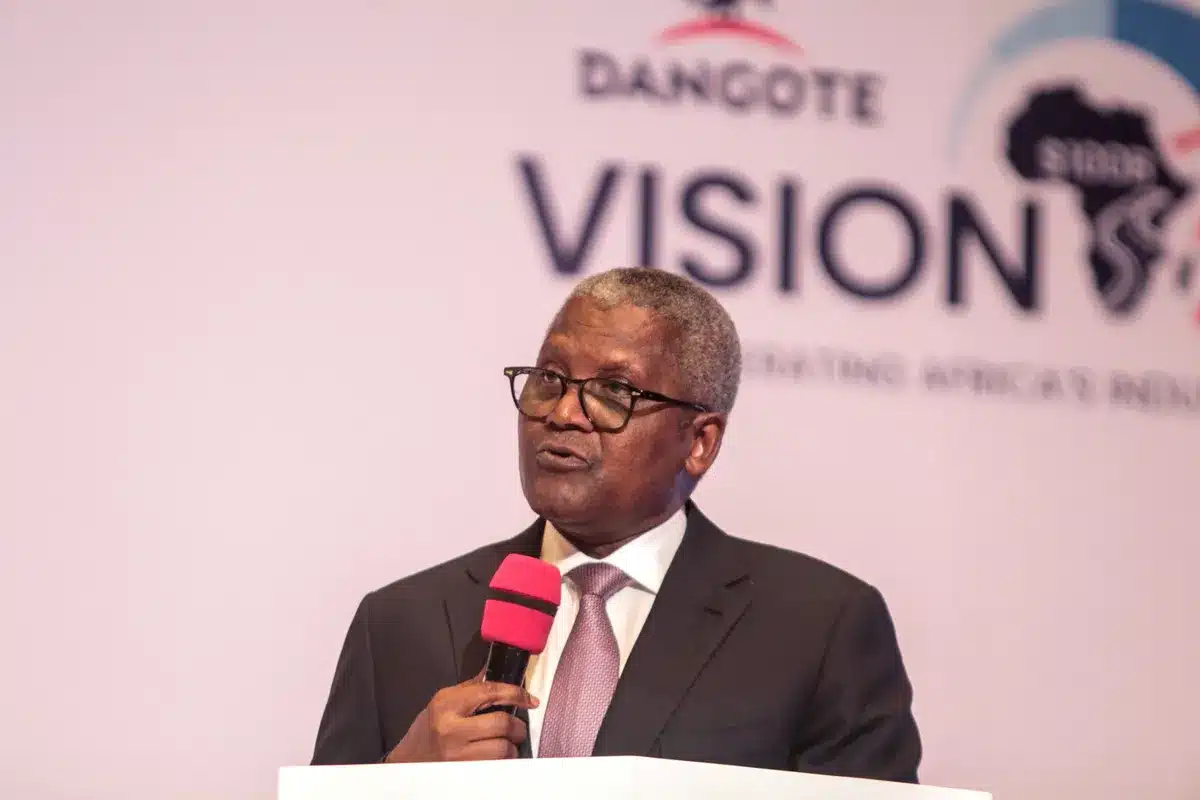
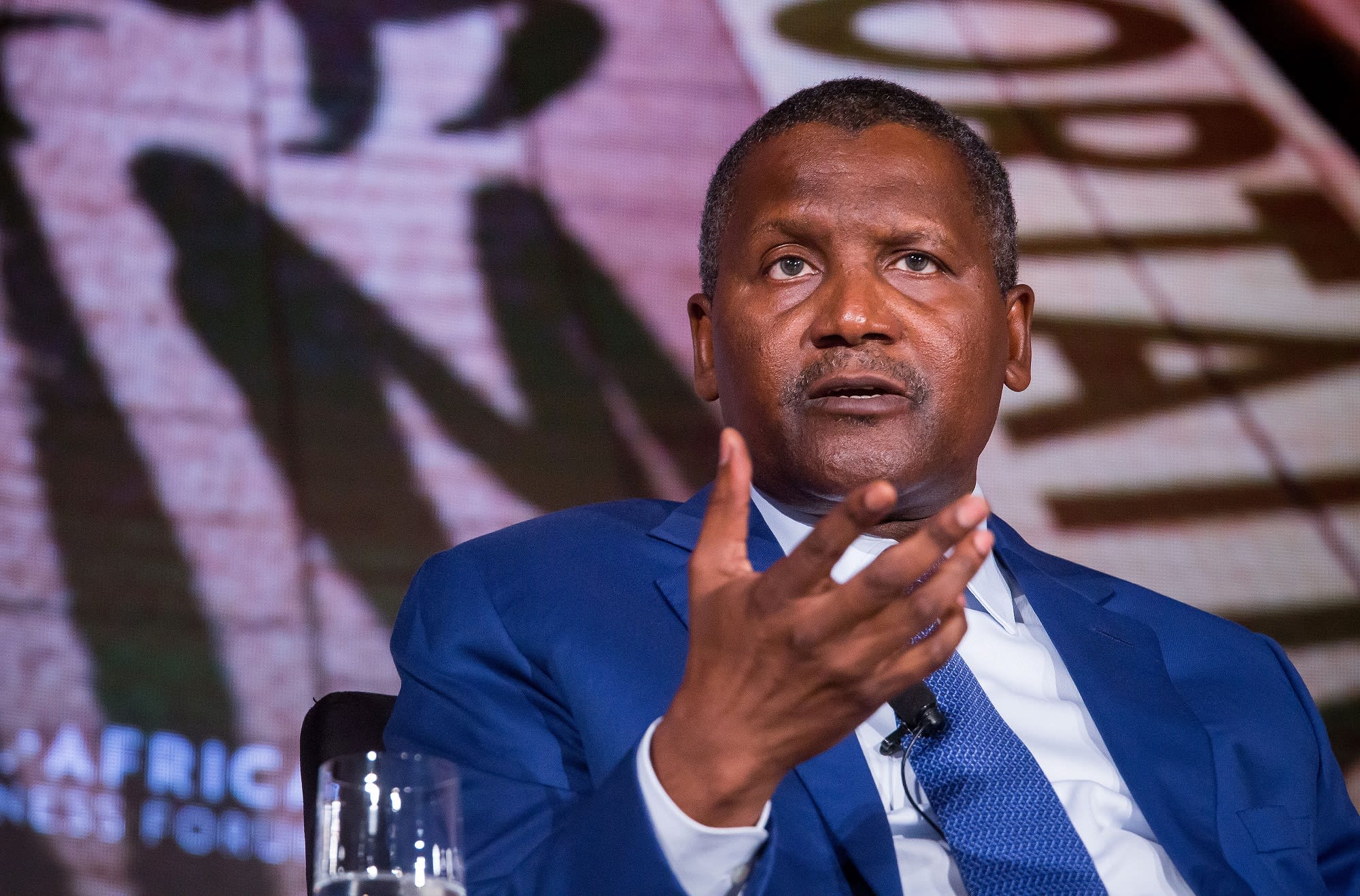
AFC’s relationship with Aliko Dangote provides perhaps its clearest example of how the institution operates.
The Dangote refinery in Lagos is one of Africa’s largest industrial projects. The integrated refinery and petrochemical complex cost about $20 billion and has a nameplate capacity of 650,000 barrels of crude a day.
AFC provided $300 million of senior debt to Dangote Industries to help finance the refinery and an adjoining 2.8 million tonne per year fertiliser plant. It was one part of a much larger $5.6 billion debt financing package involving development finance institutions, commercial banks and export credit agencies.
The relationship did not end when the refinery was built.
In August 2026, AFC led a group of strategic investors in a $2.5 billion private placement by Dangote Petroleum Refinery and Petrochemicals. AFC said it had fully recovered its original $300 million senior term loan, allowing capital to be recycled into another stage of the Dangote business.
The new money will help finance the expansion of the refinery and related petrochemical operations.
Then there is East Africa.
In April, Dangote announced plans for a refinery of roughly the same scale as his Nigerian facility in East Africa. Kenya, Uganda and Tanzania have been involved in discussions around the project, with Lamu emerging as the site for a proposed refinery. By September, Kenyan officials were discussing financing and preparations for construction with Dangote and AFC chief executive Samaila Zubairu.
The proposed project is estimated at about $17 billion and would have capacity of roughly 700,000 barrels a day.
AFC’s role here is revealing. It is not simply waiting for a project to arrive at its door with a finished business plan. It is increasingly helping governments and investors develop the projects themselves.
The quiet financier
AFC’s rise says something about the changing architecture of African finance.
The continent still depends heavily on the World Bank, AfDB, Afreximbank, Chinese lenders, Western governments and international commercial banks. AFC does not replace any of them. In many of its biggest transactions, it works alongside them.
Its significance lies elsewhere.
“AFC is an African institution that has learnt to use African capital, international borrowing and global financial partnerships to assemble large pools of money for African projects,” Ibrah told Businessfront.
Its shareholder base now includes more than 47 investors, ranging from sovereigns to pension funds, banks and multilateral institutions.
The institution that began with about $1.1 billion of seed capital has grown into a multibillion-dollar balance sheet capable of helping structure projects worth many times that amount.
For a continent where the shortage of infrastructure finance is often more binding than the shortage of infrastructure ideas, that may be AFC’s most important achievement.
It has made itself useful in the space between ambition and execution, where African mega projects tend to spend the longest time waiting.
And unlike the loudest financiers in Africa, AFC has largely done it without becoming a household name.