Key Takeaways:
- Electricity Minister Kgosientsho Ramokgopa says Eskom will no longer rely on government bailouts.
- He said about R292 billion ($17.8 billion) has gone into Eskom and could have funded other infrastructure.
- Municipalities owed Eskom R120.26 billion ($7.32 billion) by July, creating another pressure on the utility’s finances.
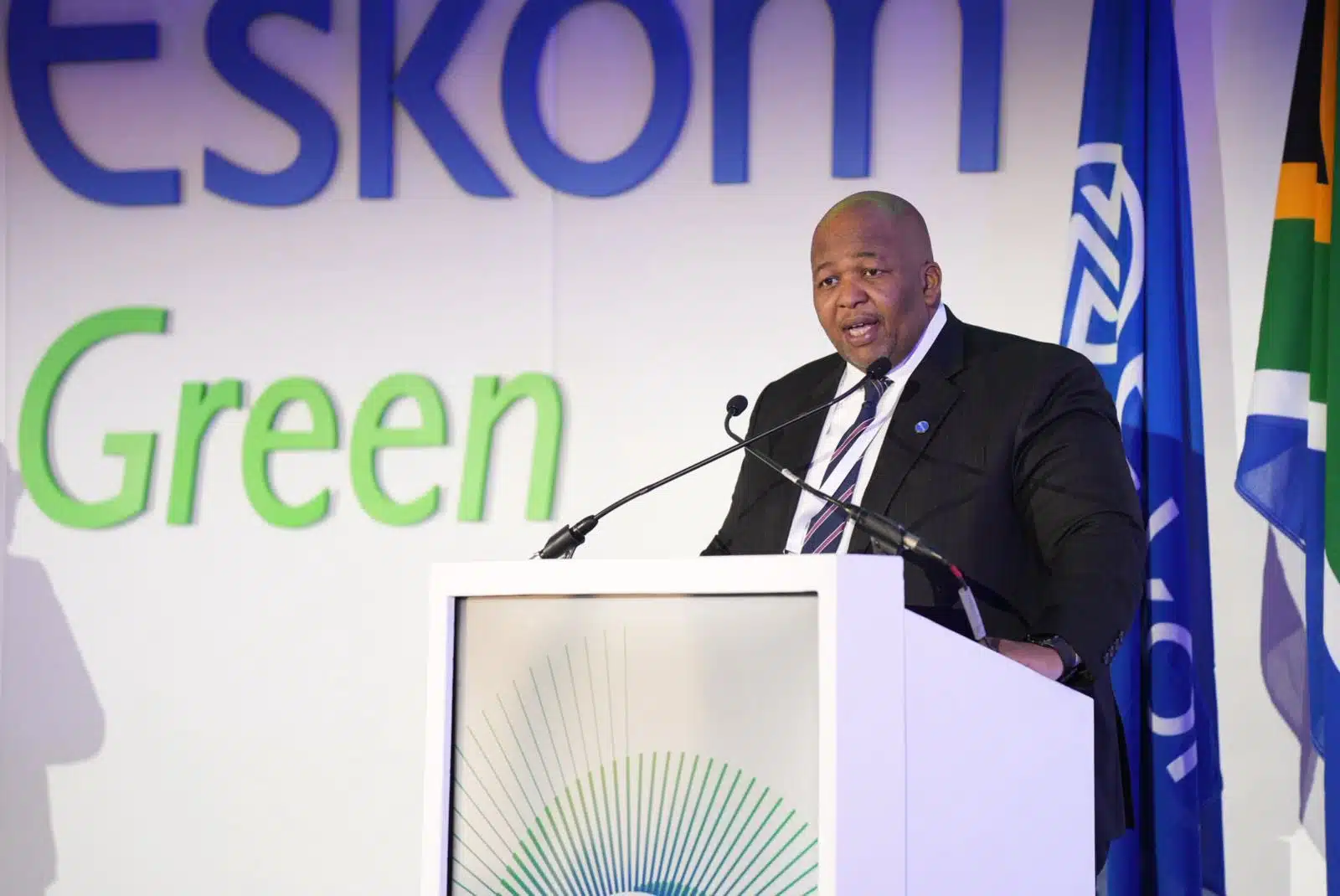
South Africa is moving to end government bailouts for Eskom after years of financial support, with Electricity and Energy Minister Kgosientsho Ramokgopa saying the utility must now operate under a more competitive electricity market.
Ramokgopa told journalists on Friday in Pretoria that Eskom’s position had changed as the electricity sector moves towards liberalisation, with private players increasingly competing with the state utility in generation.
He said the government would also no longer support the utility through repeated bailouts, arguing that public funds could be used for other infrastructure and development needs.
“There will not be any bailout from the government. That’s some money that could be deployed somewhere else,” Ramokgopa said.
The shift comes as Eskom has recorded a major improvement in its operational performance, including a prolonged period without load shedding and a return to profitability.
The utility reported a R30.3 billion ($1.85 billion) profit for the financial year ended March 2026, its first profit in eight years.
Eskom faces a more competitive power market
Ramokgopa said Eskom could no longer operate as a monopoly as it did when it was the dominant player in South Africa’s electricity market.
“Eskom is no longer a monopoly. There are other competing players in the generation side,” he said.
The electricity market is also undergoing structural changes as South Africa expands renewable generation and works to reduce emissions. Ramokgopa said Eskom would need to incorporate more renewable energy sources as part of the transition.
He said the era of large annual tariff increases was also coming to an end.
“The era of double-digit tariff increase is behind us. There will not be a 10, 11% increase in tariff, which will significantly lower than that,” Ramokgopa said.
The shift comes after years of steep electricity price increases as Eskom sought to strengthen its finances and recover rising operating costs. Eskom’s tariffs increased by 12.7% in the 2026 financial year, according to reports.
Ramokgopa said the government’s previous financial support came with an opportunity cost for the broader economy.
“292 billion rands went into Eskom, that money could have been used to maintain and build a new infrastructure,” he said.
Municipal debt remains a major risk
Eskom’s improved financial position remains under pressure from unpaid municipal electricity bills.
Municipalities owed the utility R120.26 billion ($7.32 billion) in overdue debt as of July 31, according to figures disclosed by Ramokgopa in response to parliamentary questions. The amount had risen from R111.6 billion at the end of Eskom’s 2026 financial year.
Ramokgopa has described municipal debt as the “single greatest threat” to Eskom’s financial sustainability. Eskom projects that municipal arrears could reach R358 billion ($21.8 billion) by the 2031 financial year without decisive intervention.
The government has introduced a municipal debt relief programme and is using Distribution Agency Agreements in some municipalities to improve electricity billing, revenue collection and payments to Eskom.
Ramokgopa said Eskom must therefore find new opportunities as its share of South Africa’s electricity demand declines.
“Eskom’s share of the demand is shrinking so it must look for new opportunities. We need to play a different role,” he said.
The government’s strategy now rests on Eskom operating without recurring bailouts while the electricity market becomes more competitive and the utility works to address its debt, tariff and changing-generation challenges.