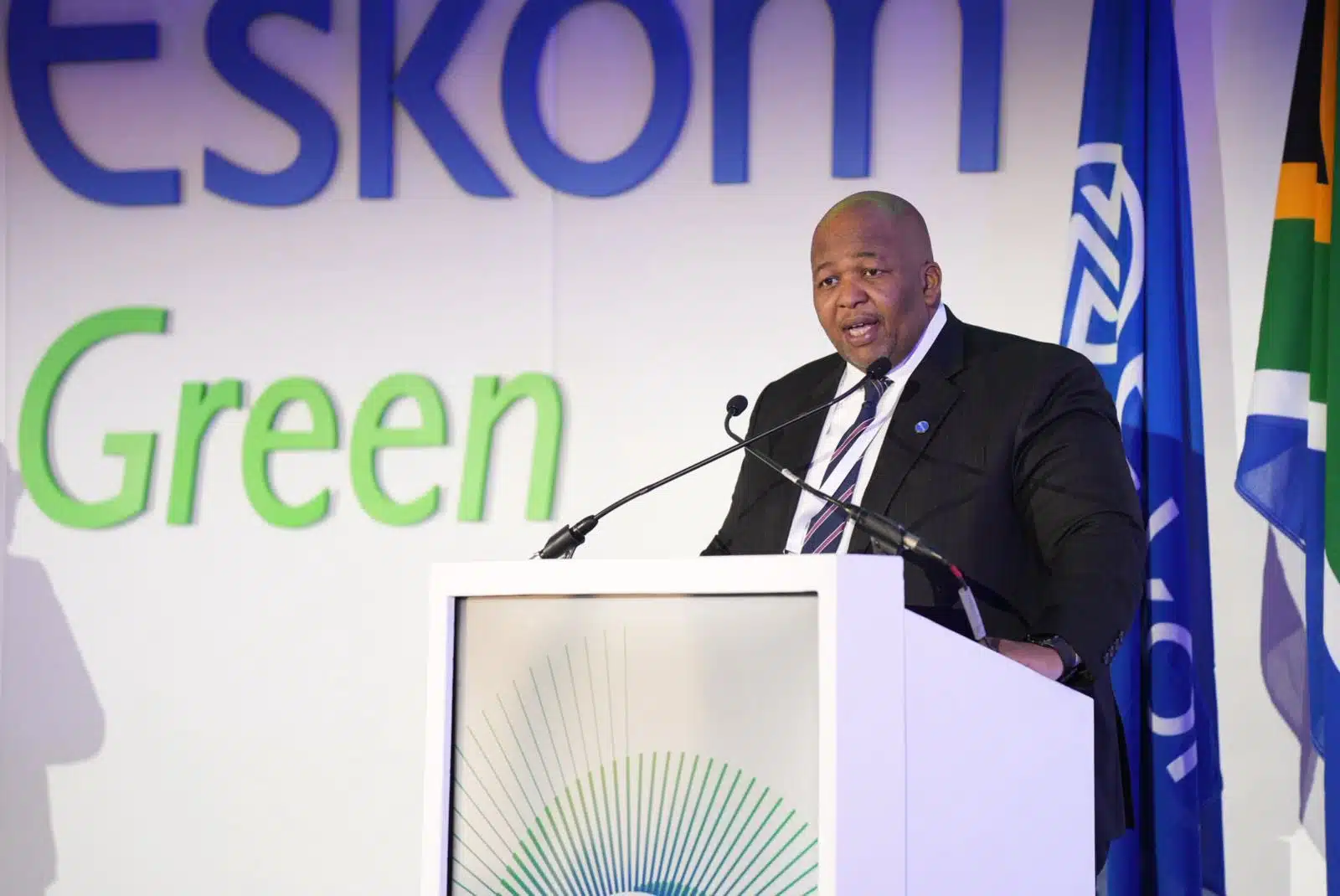


Eskom, South Africa’s state power utility, is targeting an operational lifespan of up to 80 years for the Koeberg Nuclear Power Station — double its original 40-year design life — as the country anchors its baseload energy strategy around nuclear power’s cost and reliability advantages.
Velaphi Ntuli, Eskom’s Chief Nuclear Officer, made the disclosure at African Energy Week (AEW) 2026, telling delegates that extending Koeberg’s life first from 40 to 60 years was already critical for South Africa.
The extension secures 1,800 MW of clean baseload capacity and, according to Ntuli, came in at a lower cost than any replacement energy source — a significant consideration for a country still managing chronic electricity affordability pressures.
Koeberg, located near Cape Town and the only commercial nuclear power station on the African continent, is currently in its 42nd year of operation.
Eskom now wants to push beyond the 60-year threshold to reach 80 years, a target Ntuli said would require diligent maintenance and sustained investment over the next two decades.
The ambition sits within a broader national nuclear expansion plan. South Africa has outlined intentions to develop up to 10 GW of new nuclear capacity, though no specific timeline or regulatory approval dates for that programme have been confirmed.
Skills gap flagged as primary risk
Ntuli identified human capital as the single biggest challenge facing the extended Koeberg programme.
South Africa’s relative geographic and industrial isolation in the global nuclear supply chain means the country cannot easily draw on external expertise at scale.
Eskom, he said, must grow local talent and deepen partnerships with domestic industry to sustain the plant through its extended operational life.
The skills concern is not unique to South Africa. Across Africa, nuclear ambitions are outpacing the available technical workforce, making talent development a continent-wide constraint rather than a purely national one.
Ntuli pointed to Egypt’s nuclear programme — the El Dabaa plant being developed with Russian state nuclear corporation Rosatom — as a continental reference point, suggesting that a successful delivery there could help multiply nuclear technology and expertise across Africa.
Egypt’s programme represents the most advanced new-build nuclear project on the continent and is widely watched as a test case for African nuclear development.
Baseload economics driving the case
The economic argument for life extension rather than replacement is central to Eskom’s position.
Nuclear baseload power, once a plant’s capital costs are sunk, typically delivers electricity at lower marginal cost than building equivalent new capacity — whether gas, coal, or large-scale renewables paired with storage.
For South Africa, which has spent years managing load-shedding and its economic consequences, retaining 1,800 MW of dispatchable, weather-independent generation carries strategic weight beyond the unit cost calculation.
The Koeberg extension also aligns with South Africa’s stated intent to reduce carbon emissions from its electricity sector, which remains heavily dependent on ageing coal infrastructure.
Nuclear power produces no direct carbon emissions during operation, making Koeberg’s continued output a low-cost contribution to the country’s energy transition without sacrificing grid stability.
Whether Eskom can execute the 80-year ambition will depend on regulatory approvals, sustained capital allocation, and — as Ntuli made clear — building the human infrastructure to match the technical one.