
Grace Eneh runs a small hair salon in Ikorodu, on the edge of Lagos. Every morning she checks two things. The weather and her diesel tank. For years the second mattered more than the first. Power cuts in her part of the city can last twelve hours. A generator kept her dryers running but it ate into her earnings fast. Fuel alone could swallow nearly half of what she made in a week.
Stories like hers explain why Nigeria’s electricity problem is not really about wires and turbines. It is about small shops like Grace’s, the tailors, welders, grinders and salons that make up much of the country’s economy.
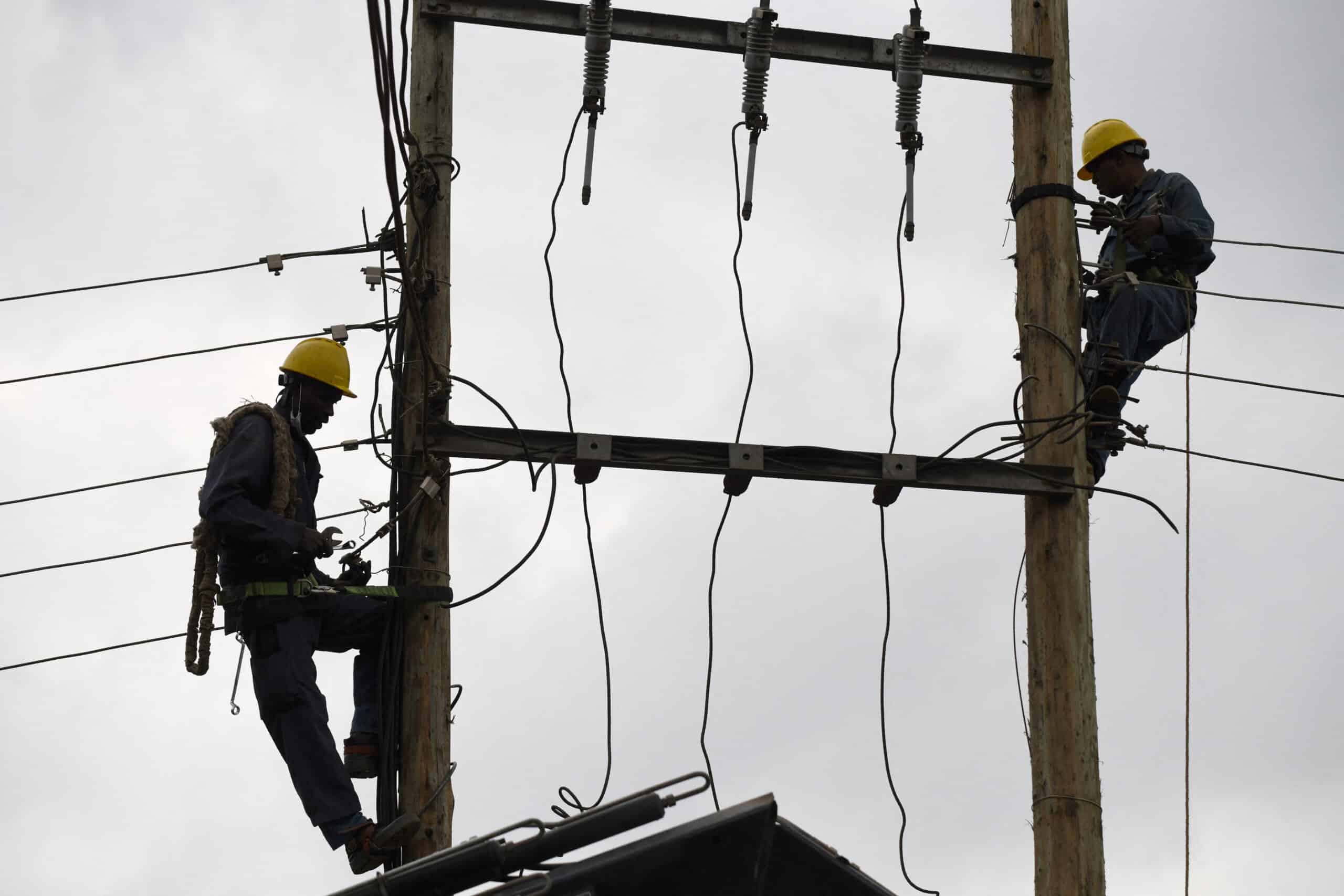
Roughly 85 million Nigerians still have no connection to the national grid, and even those who do rarely get steady power.
For a country of over 220 million people, that is not a footnote. It is the main event.
A programme with a number attached
The scale of the gap has produced an equally large response. Mission 300, a joint effort of the World Bank and the African Development Bank, aims to connect 300 million people across Sub-Saharan Africa to electricity by 2030, with the World Bank Group targeting 250 million of those connections and the African Development Bank the remaining 50 million.
Nigeria’s piece of that plan is called DARES, short for Distributed Access through Renewable Energy Scale-up.
It is backed by a $750 million credit from the World Bankand is meant to reach around 17.5 million Nigerians, replacing more than 250,000 diesel generators along the way.
Dayo Olowoniyi, the technical lead for Mission 300 in Nigeria, explains the mechanics simply. “The government through a programme, a World Bank programme called DARES, provides some level of capital subsidy to companies like Sun King, which then reduces the burden and the cost to Nigerians.”
In practice this means solar firms get a discount on the equipment they sell, so households and businesses do not have to absorb the full cost themselves.
The numbers so far are real but more modest than the headline figure suggests.
By one recent count DARES has extended new or improved electricity to about 5.3 million Nigerians against an eventual target of 16.2 million, with solar home unit deployments reaching just over 1 million of a 2.75 million goal.
Researchers at ODI, a London think tank, have also questioned how much of the progress claimed for Mission 300 is genuinely new rather than carried over from an older electrification scheme, noting that a large share of Nigeria’s reported connections trace back to the previous Nigeria Electrification Project rather than fresh disbursements under DARES.
Big development numbers, in other words, deserve a second look before they are repeated as fact.
Where the private sector comes in
This is the gap that companies such as Sun King are trying to fill, and where the subsidy actually meets the customer.
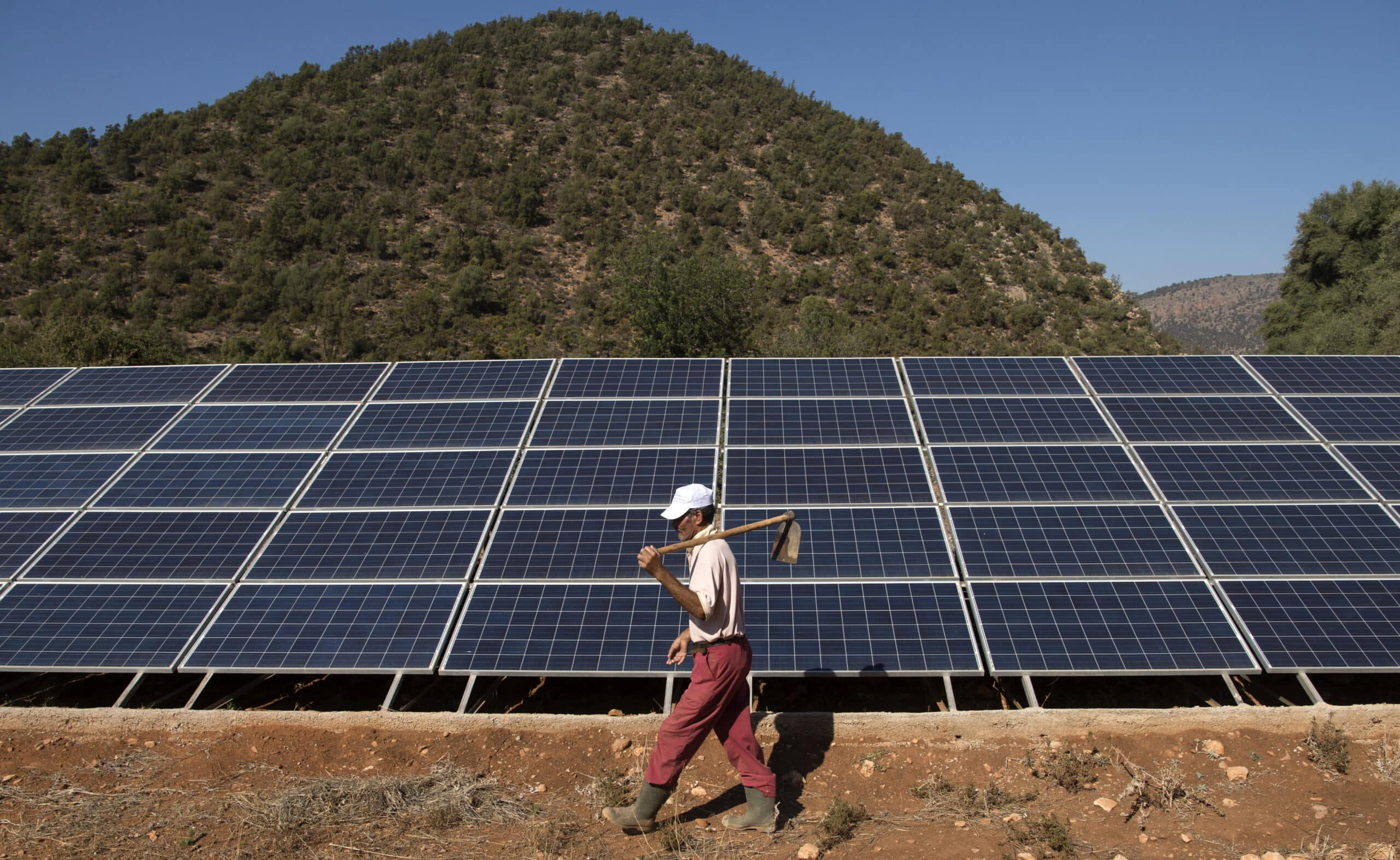
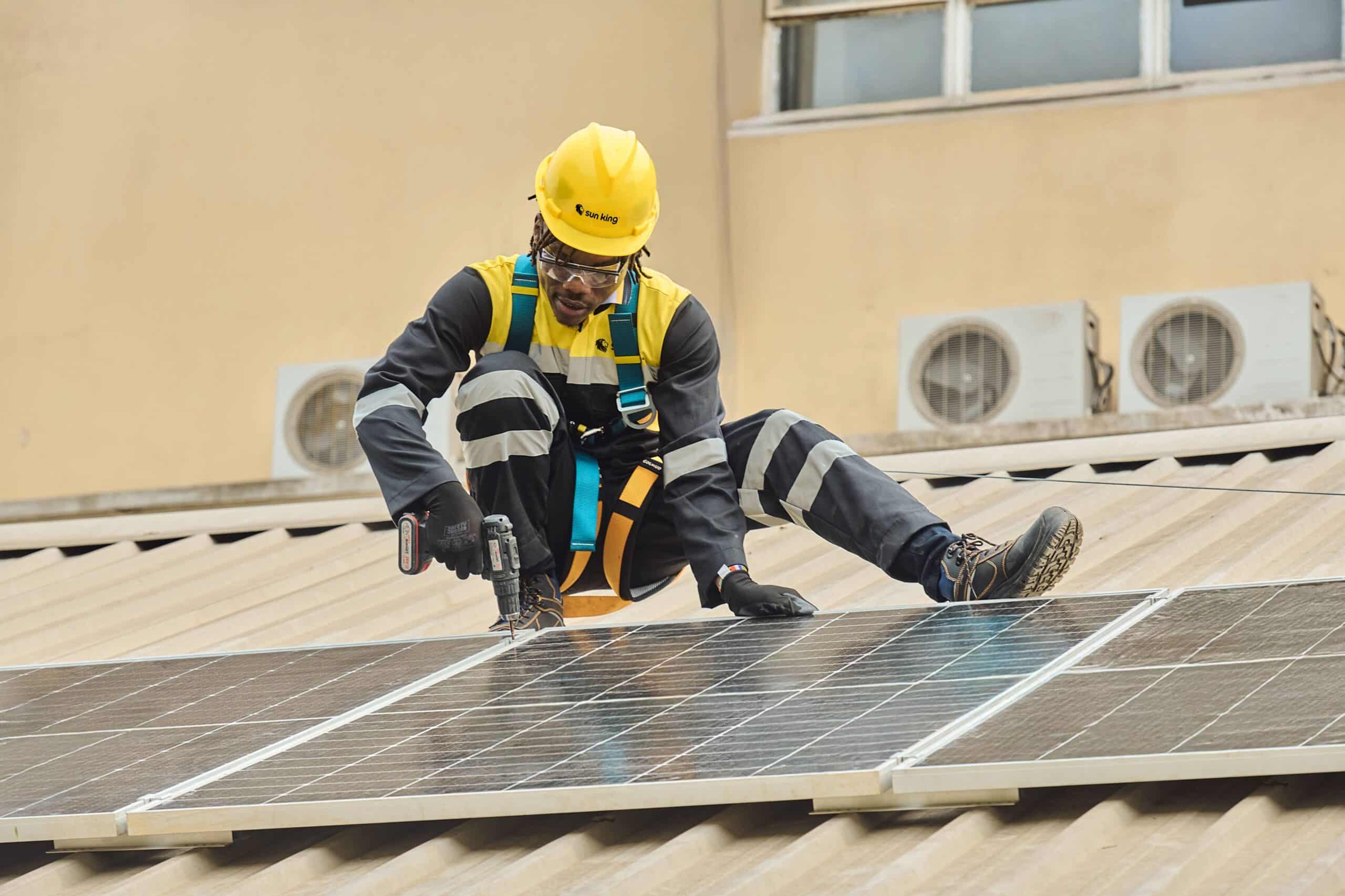
Sun King calls itself the world’s largest off grid solar company, and it has just added two new products to its Nigerian lineup called the Power Hub Pro.
These products were launched in Lagos Nigeria last Friday, and in attendance a Businessfront correspondence.
Omoyemi Tuga, the company’s vice president for its pay as you go arm in western and central Africa, describes it as a step up from the firm’s existing 2kVA and 3.3kVA inverters.
In addition to the existing 2.2 kVA and 3.3 kVA systems, Sun King has introduced new PowerHub options of 5 kVA, 10 kVA, 15 kVA and 30 kVA.
The bigger obstacle for most customers is not choice but cash. Few small business owners can pay for a solar system outright. Sun King’s answer is a financing scheme it calls EasyBuy. “It’s very difficult for a customer to buy the product at once to pay for it outrightly. That’s why we have our in-house financing which we call EasyBuy,” says Tuga.

Customers pay in instalments, often through mobile money, spreading a large cost into smaller weekly or monthly sums that fit a shop’s cash flow.
The pitch, according to the company, is that a business can start small and grow into more power as it needs it.
“Our rooftop solar range now runs from a hyper affordable solar home system all the way to 30 kVA of inverter power,” says Ogunsanmi, another Sun King executive. “Customers can start where their budget is, expand as they grow, and stay with one company throughout.”
For small businesses, solar offers something diesel generators cannot
For a welder or a cold room operator, that range matters more than any single product launch.
For Nigeria’s small business owners the appeal is less about kilovolt amps than about certainty. Diesel prices swing with the naira and with global oil markets. Sunlight does not. Reliable power also means Grace can open earlier, close later and stop worrying about whether a client’s blow dry will be interrupted halfway through.
Whether distributed solar can really close a gap of 85 million people is a separate question, and one that depends on financing reaching far beyond the customers a single company can serve profitably.
Mission 300 has set an ambitious 2030 deadline, and officials describe it as more than a target, framing it as a push for reforms that lower costs and draw in private investment. Grace does not think about any of that.
She thinks about her dryer, her tank and, for the first time in years, a monthly bill she can actually predict.