Earlier this month, Nigeria introduced a modest petrol discount to cushion consumers against the sharp rise in prices triggered by the ongoing conflict in the Middle East.
The government said the measure, while not a return to the controversial fuel subsidy regime, would provide temporary relief for motorists and households.
Nigeria removed its popular but costly fuel subsidy in May 2023. Since then, petrol prices have surged significantly. The conflict involving Iran, which has pushed up crude oil prices — the main input in petrol production — has further compounded the energy crisis in the West African country.
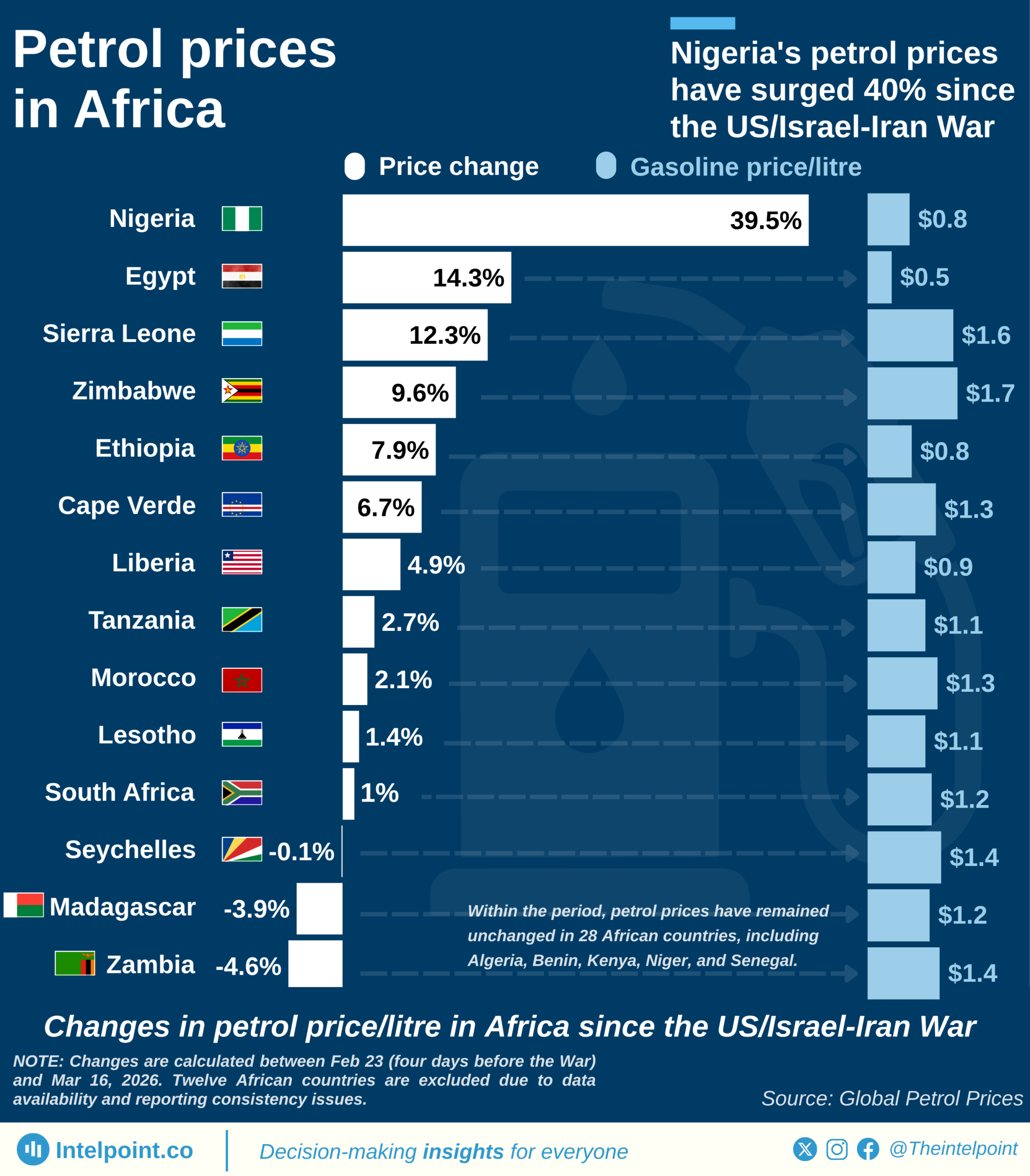
Since the war began in August, petrol prices in Nigeria have risen by more than 40%. The increase has prompted public calls for the government to reintroduce some form of subsidy to help contain prices.
In response, the government has directed state-owned oil companies and other importers to absorb part of the cost, while insisting that the arrangement does not amount to a new petrol subsidy.
But the proposed price ceiling raises a critical question: if suppliers must initially bear costs above the benchmark, who ultimately reimburses them, and under what terms?
The government’s answer remains ambigious.
NNPC is giving up its margin
On his part, Nigeria’s Finance Minister, Taiwo Oyedele, described the discount as a commercial decision by government-owned retail stations rather than a return to the fuel subsidy regime.
Meanwhile, the state-owned oil firm says the offer does not alter market-based pricing or establish a uniform pump price nationwide.
According to estimates from various reports, the network of government-owned petrol stations sells about 70 million litres of petrol monthly.
If the entire volume qualified for the discount, the company would forgo an estimated ₦4.62 billion (about $3.47 million) in gross sales revenue over a month. This represents a potential reduction in revenue, not a verified loss in profit. The actual cost will depend on the volume of petrol sold at the discounted rate.
For now, NNPC says it is absorbing the immediate cost by accepting a lower retail margin on qualifying sales. Under the announced arrangement, the government is not required to reimburse the company directly for the discount.
However, the offer is temporary, and its overall cost will depend on how many customers benefit before it expires.
The bigger question is who pays for the price ceiling
On the other hand, the government announced plans to negotiate a ₦1,350-per-litre ceiling on petrol’s landing or ex-gantry cost, subject to monthly review. Under the proposal, suppliers would carry costs above the benchmark and recover the difference when crude prices or exchange rates become more favourable.
The ceiling would not set a uniform pump price nationwide. Distribution and retail costs could still affect what motorists pay. Its purpose is to limit volatility in supply costs, rather than guarantee a single price at every filling station.
The crucial distinction is between who finances the shortfall initially and who ultimately bears the cost. If suppliers pay more than the benchmark allows, they would have to use their own funds to cover the difference until recovery becomes possible. Whether they can recover the full amount, how quickly they will be repaid and what happens if market conditions do not improve remain unresolved.
This uncertainty matters in a market where crude prices and exchange rates influence petrol supply costs. It also comes as high fuel prices continue to test Nigeria’s post-subsidy reforms.
Refiners want to know when they will recover the difference
On their part, the Crude Oil Refiners Association of Nigeria (CORAN) has questioned how the proposed ceiling was calculated and how refiners would recover costs above it. The association has also called for transparent, commercially sustainable terms for forward crude sales.
Bakre Lateef, an oil and gas analyst, told Businessfront that the plan would only work if the government clearly explained who would bear the difference between the benchmark price and suppliers’ actual costs.
“When suppliers are required to sell below their costs, there must be a clear and credible mechanism for them to recover the difference. Otherwise, it could put pressure on their cash flow and make it difficult for them to sustain supply over time,” Lateef said.
For refiners and importers, a promise of future recovery is not enough without clear rules. They need to know how the shortfall will be calculated, what conditions trigger repayment and whether the mechanism guarantees that eligible costs will be recovered. Without those details, suppliers cannot fully assess the financial risks of participating.
The government has yet to publish a complete recovery formula. Until it does, suppliers may have to finance the difference without knowing precisely when they will get their money back.
Does the relief reach consumers?
Moreover, the reach of the discount is itself in doubt. Motorists at filling stations run by the state-owned oil company in the nation’s capital were reported to have paid about ₦1,405 a litre, while those who used its app and paid digitally were charged ₦1,339.
While it is a small gap offers some comfort to drivers, it is temporary and does not set a national pump price. The company has not said how many customers have benefited or how much petrol has been sold at the lower rate.
The two measures also fall on different shoulders in the short term. The government-owned fuel retailer is absorbing its discount through a thinner margin, while refiners and importers would initially carry any costs above the proposed ceiling. Who finally foots that bill is far from clear.
Until the government publish how the ceiling is being calculated and how the money will be recovered, the true cost, and the party left holding it, will remain a mystery.
For now, motorists are being asked to celebrate a discount without being told who is paying for it.