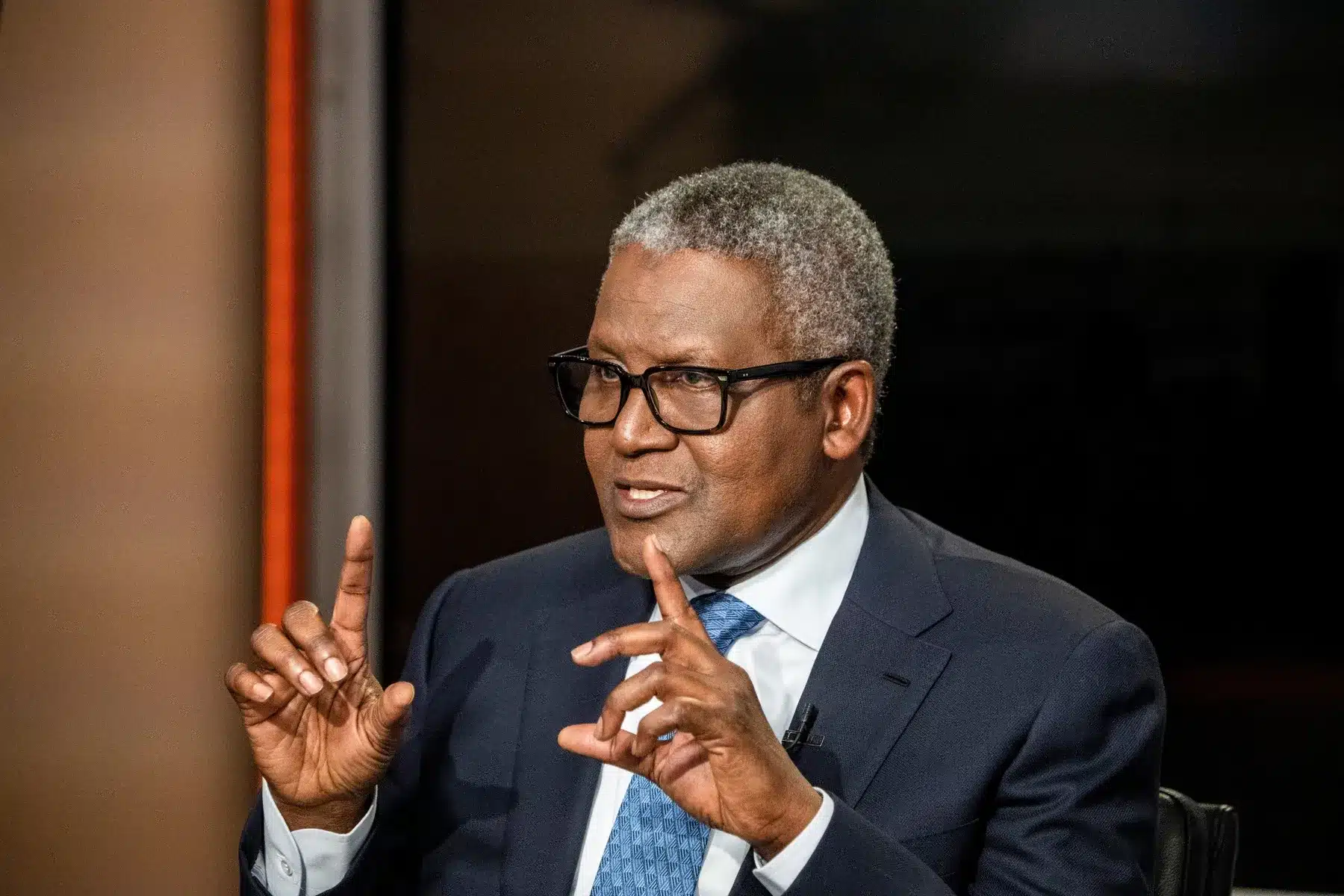
Africa’s richest man alive, Aliko Dangote, wants every cab driver, market woman, school teacher and rural farmer to own a piece of his refinery.
On September 14th Dangote opened what he has branded a “people’s IPO,” offering 4.1 billion shares in Dangote Petroleum Refinery and Petrochemicals at ₦525 ($0.39) apiece. The minimum buy-in is ten shares, or ₦5,250 (about $4), cheap enough for a market trader or a civil servant to afford. The offer runs until October 13th and could raise as much as $2.1 billion, valuing the refinery, the largest in Africa, at roughly $50 billion.
It is the biggest share sale in the continent’s history.
The pitch has landed. Nigerians have flooded fintech apps and bank branches to subscribe, some queuing outside banks that ran short of application forms. TikTok and Facebook posts are full of explainer videos walking first-time investors through the process. Much of the excitement traces back to one line from Mr Dangote himself. Asked what a modest investor might expect to earn, he told an interviewer that anyone putting in around ₦100,000 ($76) over a year or two “is talking about becoming a millionaire.”
No doubt, this is a striking promise for a stake that amounts to only about 3% of the company, with Mr Dangote keeping the other 97%. It also sits awkwardly next to Nigeria’s own securities rules. The Securities and Exchange Commission (SEC) has repeatedly warned the public against platforms and pitches guaranteeing unrealistic returns, noting that any of such promises are in violation of its Investments and Securities Act. The commission’s warnings so far have targeted fraudulent schemes riding on the stock market and crypto’s coat-tails rather than Mr Dangote’s own remarks. But the gap between casual millionaire talk and regulatory caution about guaranteed riches is not a small one.
The making of a millionaire from a thin capital market
Moreover, the numbers make Mr Dangote’s optimism harder to square with Nigerian reality. Despite a population above 220 million, the country’s capital market has only about 1.8 million active retail investors, according to Jude Chiemeka, the Nigerian Exchange’s managing director, who wants that number to reach 30 million.
A 2023 survey also found that only 3% of Nigerian adults had ever bought a stock or share. By contrast, well over half of American adults own equities in some form, whether directly or through pension funds, and stock ownership there has helped build multi-generational wealth over decades of steady compounding. Nigeria’s market has no such track record. The NGX All-Share Index has had good years and dreadful ones, and inflation, which has run in double digits for years, quietly erodes gains that look impressive only in naira terms.

Nkechi Aliu, a schoolteacher in Lagos who has applied for the minimum allotment, said she hoped the shares would grow into something meaningful for her children, perhaps even worth millions in the coming years. Adeoye Isaac, a Lagos-based investment banker, cautioned against reading too much into the frenzy. Nigeria’s capital market, he said, “still lacks that buoyancy to make people millionaires overnight” the way Microsoft or SpaceX have done for early backers in deeper, more liquid markets, though he expects the excitement to cool once market fundamentals reassert themselves.
His point is echoed by the sheer scale of the float. With only about 3% of the refinery available to the public, the free-floating stock will be thin once trading begins on the NGX in November. Thin floats tend to swing wildly on small volumes of buying and selling, which makes them exciting on the way up and painful on the way down, especially for small investors who need to cash out in a hurry and may struggle to find a buyer at a fair price.
Analysts are also picking apart the refinery’s recent numbers, which underpin much of the enthusiasm. The company swung from a loss of about $476 million for all of 2025 to net income of $1.82 billion in the first half of 2026 alone. Some of that turnaround reflects genuine operational progress, as the refinery ramped up to average utilisation above 80%. But a good part of it came from unusual conditions.
Refining margins spiked as high as $33.70 a barrel in the first quarter of 2026, lifted by disrupted crude and fuel flows tied to the recent conflict involving Iran, before settling back to a more ordinary $24.50 average in the following months. A private placement earlier this year also helped the refinery pare down debt, flattering its books ahead of the listing.
One analyst put the awkward question bluntly in a research note: “How much of that additional $2.35 billion in gross profit can the refinery earn again under more ordinary market conditions and what evidence supports the answer embedded in the IPO price?”
On the other hand, Renaissance Capital, one of the brokerage for refinery, pencilled in a full-year margin forecast of $27.55 a barrel, a more sober anchor than the war-inflated peak.
True riches locked in at the very top
There is also the matter of how much Mr Dangote is actually giving away. He has built his reputation across cement and sugar by keeping tight control of his companies, typically retaining around 90% of each one. The refinery listing looks generous by comparison, but the founder remains locked in at 85% even after the float.
He has signalled he would sell more if demand justifies it. “We will give up more shares. We are locked at 85 per cent,” he said at the IPO launch, adding that strong demand could push the raise from $1.6 billion towards $2 billion or beyond, with headroom to expand the offer by around 35% if it is oversubscribed, which looks likely given the rush so far.
He framed the flexibility as a matter of honouring ordinary applicants, saying he could not bear the thought of returning his own driver’s money, and pledging to do whatever it takes to satisfy those who paid in.
None of this settles the question that matters most to the people actually buying the shares: will ₦100,000 really turn into a million? The arithmetic is unforgiving. A thin 3% float, margins inflated by a war that will not last forever, and a founder who has never given up meaningful control of anything he has built are not, on their own, the ingredients of a millionaire-making machine.
They are the ingredients of a stock that could be volatile, illiquid and hard to exit at a good price, however the refinery itself performs. Mr Dangote’s driver may yet do well. So might the schoolteacher, the market trader and the millions of other small investors who have queued up this month. But their fortunes will depend on refining margins holding up once the war-driven premium fades and on a founder proving as generous with control as he has been with words.
Until then, the promise of overnight riches looks less like a forecast and more like the opening pitch of a very long sales campaign.